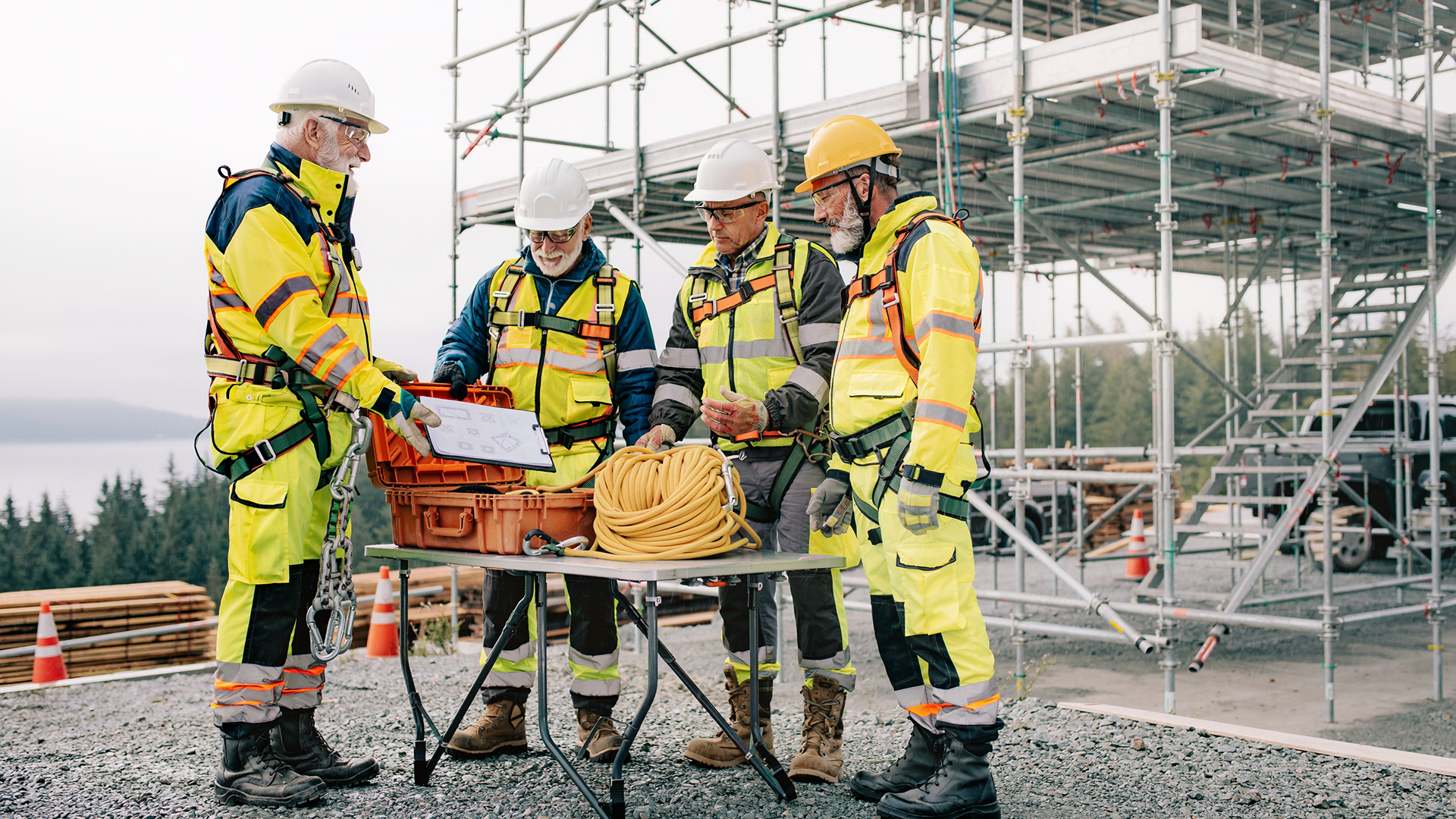
Quick Answer: Fall protection training should be discussed in relation to the site’s actual arrangements for responding when a worker needs rescue. Victoria employers should clarify the work, responsible people, and course scope before booking. A general fall protection session must not be assumed to provide specialist rescue competence or approve the workplace’s rescue arrangements.
A booking conversation can focus heavily on harnesses and course dates while leaving one question unanswered: how does the learning relate to the plan the employer expects the crew to follow? That question matters before the session, especially when different people are responsible for training, site planning, and emergency arrangements.
Employers arranging fall protection training in Victoria should bring the relevant plan and role questions into the enquiry. VIF Safety Training can discuss its course scope and the information needed to relate learning to the work. This guide focuses on that pre-booking discussion rather than explaining how to carry out a rescue.
Why Rescue Planning Belongs in the Training Conversation
Training has greater practical relevance when the employer can explain the work and arrangements to which it relates. A course described only as fall protection may leave participants and supervisors with different expectations about what will be covered.
Rescue planning is one place where those expectations can diverge. An employer may expect the session to prepare a named response team, while the provider is discussing a general course on personal fall protection. Unless that difference is addressed, the booking may appear complete while an important scope question remains unresolved.
Start by describing the actual work area and the systems the employer expects workers to encounter. Then identify the plan or arrangements that need to connect with the learning. The purpose is to help the provider understand the enquiry, not to ask a general trainer to approve every technical aspect of the site.
WorkSafeBC’s guide to creating a fall protection plan includes site-specific details and rescue procedures among the planning topics it addresses. Use the applicable official guidance and qualified input for your workplace rather than treating a course outline as a complete plan.
Not every task or site has the same circumstances. The employer should confirm the current WorkSafeBC requirement for its situation and establish which planning provisions apply. This article does not set a universal legal trigger for a written plan or prescribe one response for every work-at-height assignment.
Bringing the discussion forward also protects the meaning of the training outcome. Workers should understand what the course prepared them to do and which specialist roles remain outside it. Clear limits are useful knowledge, not an indication that every course must teach every possible emergency function.
What the Employer Should Have Reviewed Before Booking
A provider needs enough information to understand how the requested learning connects with the workplace. Prepare the relevant facts and identify what is still awaiting qualified review. Avoid presenting an incomplete arrangement as a finished plan simply because a training date is approaching.
The Work Area and Fall Protection System
Describe the tasks and the places where they occur. The relevant context may include roofs, platforms, equipment access, or other elevated work areas. A general phrase such as working at height does not show the provider which situations the crew actually faces.
Explain the systems the employer expects to use and share available documentation appropriate to the enquiry. Different systems and locations can raise different learning questions. The trainer should not have to infer the site’s arrangements from a photograph of a harness or a generic equipment list.
Identify changes in the work since the existing plan or earlier training was prepared. A different location or task can affect the information that needs reviewing. The provider should know whether the enquiry concerns established work or a new arrangement still being developed.
Technical suitability of systems, anchors, access, and the rescue arrangements needs the appropriate qualified input. A booking discussion can reveal those questions without settling them. Keep the course provider’s role distinct from the people responsible for reviewing the actual design and plan.
The People and Resources in the Plan
Identify the roles the employer expects people to carry out. Someone attending general instruction, someone supervising the work, and someone assigned a specialist response function may need different preparation. A list of names alone does not explain those differences.
Share the relevant existing arrangements and ask what the course will and will not address. Do not assume that the presence of rescue equipment means the participants have been prepared to use it or that the equipment is suitable for every location.
Communication between the people involved also needs consideration. The person booking the course may not be the person maintaining the plan. Give the provider a contact who can answer the relevant scope questions or obtain the necessary information.
Where a role or resource remains unconfirmed, record that status. A planned purchase, proposed team, or intended procedure should not be described as something already in place. This keeps the training conversation connected to what the workplace can actually confirm.
Where a Fall Protection Course Fits
Read the provider’s course objectives before deciding what the booking will achieve. Ask whether the session is intended as awareness, practical personal-equipment instruction, further learning, or another defined scope. Similar course names can conceal different expectations.
A discussion of rescue awareness can help workers understand why arrangements matter and where their responsibilities end. It does not automatically prepare every participant to perform a specialist rescue. Keep that distinction clear in the enquiry and in the employer’s records afterward.
The same applies to demonstrations or examples. Seeing an example during a course is not equivalent to a complete site-specific plan or assessment of a response role. Ask what practical evidence, if any, the session is intended to establish.
Our existing article on matching fall protection training to site heights and systems covers the broader relationship between the course and the job. The question here is narrower: what the employer should clarify about rescue responsibilities and course exclusions before confirming the booking.
Discuss previous learning as evidence rather than as an automatic answer. A worker may have completed useful training while still lacking preparation for a newly assigned role. Equally, a relevant specialist record should be reviewed for its actual scope rather than ignored because it was earned elsewhere.
If specialist rescue instruction is needed, confirm that need separately with appropriately qualified providers. Do not assume VIF Safety Training’s advertised fall protection course includes that service. Asking directly prevents an unrelated capability from being added to the booking by implication.
What Needs Clarification Beyond Course Attendance
Attendance is a fact about participation. Readiness for a role depends on what was taught, assessed, and established for the actual situation. The employer needs to connect those facts with its own plan rather than use a single course label to answer every question.
Communications and Role Understanding
Ask how workers will know what the employer expects of them and whom to contact when a concern arises. This is a question about the workplace’s arrangements, not a set of rescue instructions. The training discussion should identify any relevant learning needs.
Confirm that supervisors understand the scope being booked. A supervisor who expects specialist preparation may interpret an attendance record differently from the provider. Sharing the actual course objectives helps prevent that misunderstanding before workers return to the site.
Think about people who join the crew later or transfer between areas. They need the appropriate information for the role and workplace, not only a copy of an older course record. The employer should decide how those changes are reviewed within its established process.
Gaps Requiring Qualified Follow-Up
A gap may concern the plan, equipment suitability, assigned roles, or the learning itself. Different gaps can need different people to resolve them. Avoid treating every unresolved issue as something that another general course will fix.
Ask for the next action to be described clearly. If a specialist review is needed, identify that need without pretending it has been completed. If the course scope needs clarification, obtain the provider’s answer before confirming attendance as the solution.
The following comparison can help organize a pre-booking discussion. It identifies information and questions rather than providing a rescue procedure or equipment specification.
| Planning area | Information to share | Question to resolve |
|---|---|---|
| Work location | Relevant site and task context | Whether the course reflects the actual work |
| Assigned people | Roles described in the employer’s plan | What preparation each role requires |
| Existing resources | Confirmed workplace arrangements | Who reviews suitability and availability |
| Course objectives | Proposed learning and assessment scope | What remains outside the booking |
| Changes | New work equipment or personnel | Which arrangements need another review |
Keep unresolved questions in the project record. A short note showing what still needs attention is more useful than a broad assurance that training has been arranged. The employer can then follow the issue through to the right decision.
Consider a crew whose supervisor books a general course while another manager assumes that session will establish a rescue team. Both may be acting in good faith. The problem is the different expected outcome, which can be addressed by reviewing the plan, roles, and course objectives before the booking is finalized.
In another workplace, specialist arrangements may already exist, while new workers need to understand the limits of their own role. That enquiry is different again. The provider needs to know whether the objective is general awareness, personal-equipment learning, or another defined need.
These examples show why a longer equipment list does not necessarily produce a clearer training request. The most useful description explains what the participants are expected to understand or demonstrate and which matters remain with other qualified people.
One useful way to clarify the enquiry is to write the expected course outcome in an ordinary sentence. For example, the employer may want participants to understand the relevant personal-equipment topics and the limits of their role within the site’s arrangements. If another manager expects those same participants to perform specialist rescue duties, that difference should be resolved before the course is booked.
Ask the people responsible for the plan to review that sentence. They may identify a learning question or a specialist need that the booking contact has missed. Bringing them into the discussion early is more effective than trying to reinterpret the attendance record after the session.
The participant list should identify relevant roles without assuming one level of preparation for everyone. A supervisor attending to understand the program and a worker preparing for a defined task may have different questions. Share those differences with the provider so the scope can be discussed accurately.
Keep any existing specialist arrangements distinct from the new course. If trained personnel or reviewed resources are already in place, identify them as context rather than imply the general session created those capabilities. If they are still being arranged, record the outstanding work clearly.
This also helps with future staff changes. A record explaining why a course was selected and what it established can be reviewed when another person joins the crew. It is more useful than a vague note that everyone completed rescue training when the actual booking had a narrower purpose.
What to Bring to a Victoria Training Discussion
Prepare enough information to make the scope visible. You do not need to resolve every detail in the first enquiry, but you should distinguish what is confirmed from what is being developed. That allows the provider to ask relevant questions.
- The actual work areas and tasks involving fall protection
- Relevant existing planning information and the responsible employer contact
- The systems and equipment the crew is expected to encounter
- Roles or responsibilities that need clearer understanding
- Questions about the course objectives, exclusions, and further learning
Ask the provider what documents are useful and how information should be shared. Avoid sending an unexplained collection of records and expecting the trainer to infer the employer’s intended outcome. A short account of the specific booking question provides context for the documents.
Also explain the participants’ background. New workers, experienced workers changing roles, and supervisors may need different discussions. The course arrangement should reflect those facts rather than treat every attendee as having the same experience and responsibilities.
Identify any equipment or work changes expected before the training date. A plan prepared around one location may need reviewing if the project moves. Keep the provider informed so the session does not rely on an outdated description.
Where the work also uses a boom lift, consider how the relevant enquiries connect. Our article on reviewing boom-lift work near overhead power lines explains why operator learning cannot replace resolution of an electrical hazard. Different training needs can relate to the same job without becoming one universal authorization.
Scheduling should follow the confirmed scope. Do not assume that a course designed for one objective can absorb additional specialist preparation without a new discussion. Ask what can reasonably be planned and what must be arranged separately.
After the enquiry, keep a record of the provider’s actual response. It should be clear what is proposed, what information remains needed, and what is outside the service. This is the basis for a useful booking rather than an unsupported promise about emergency readiness.
How VIF Safety Training Clarifies Fall Protection Scope in Victoria
VIF Safety Training can discuss fall protection learning in relation to the work and people described by the employer. Explain why rescue planning is part of your question and ask how that relates to the advertised course objectives.
Share the systems, participant background, and relevant planning context. The team can then clarify the training enquiry and any information needed before arrangements are confirmed. Do not treat a general service description as confirmation of a specialist rescue qualification.
Aerial lift operator training in Victoria may be a related need for some crews. Where it is relevant, identify the equipment and actual duties rather than assuming that a fall protection booking automatically includes operator assessment.
Onsite arrangements can be discussed directly with the provider. Confirm the course scope, area, equipment, participants, and timing needed for the proposed learning. Any special requirement should be raised explicitly before it becomes an assumed part of the session.
The employer retains its role in establishing the workplace plan and responsibilities. VIF Safety Training should not be presented as approving every rescue arrangement, selecting every resource, or preparing every response role through a general course.
A clear outcome identifies what the session is intended to establish and how that will be recorded. Where further specialist input is needed, keep it visible in the employer’s follow-up. This connects training with the actual workplace without overstating what attendance means.
Contact VIF Safety Training to discuss fall protection learning for your Victoria crew and clarify how the course relates to the site’s arrangements. Share the work, participant roles, and relevant questions before booking. Call (250) 889-2074, email info@vanisleforklift.ca, or contact VIF Safety Training to review the proposed scope.