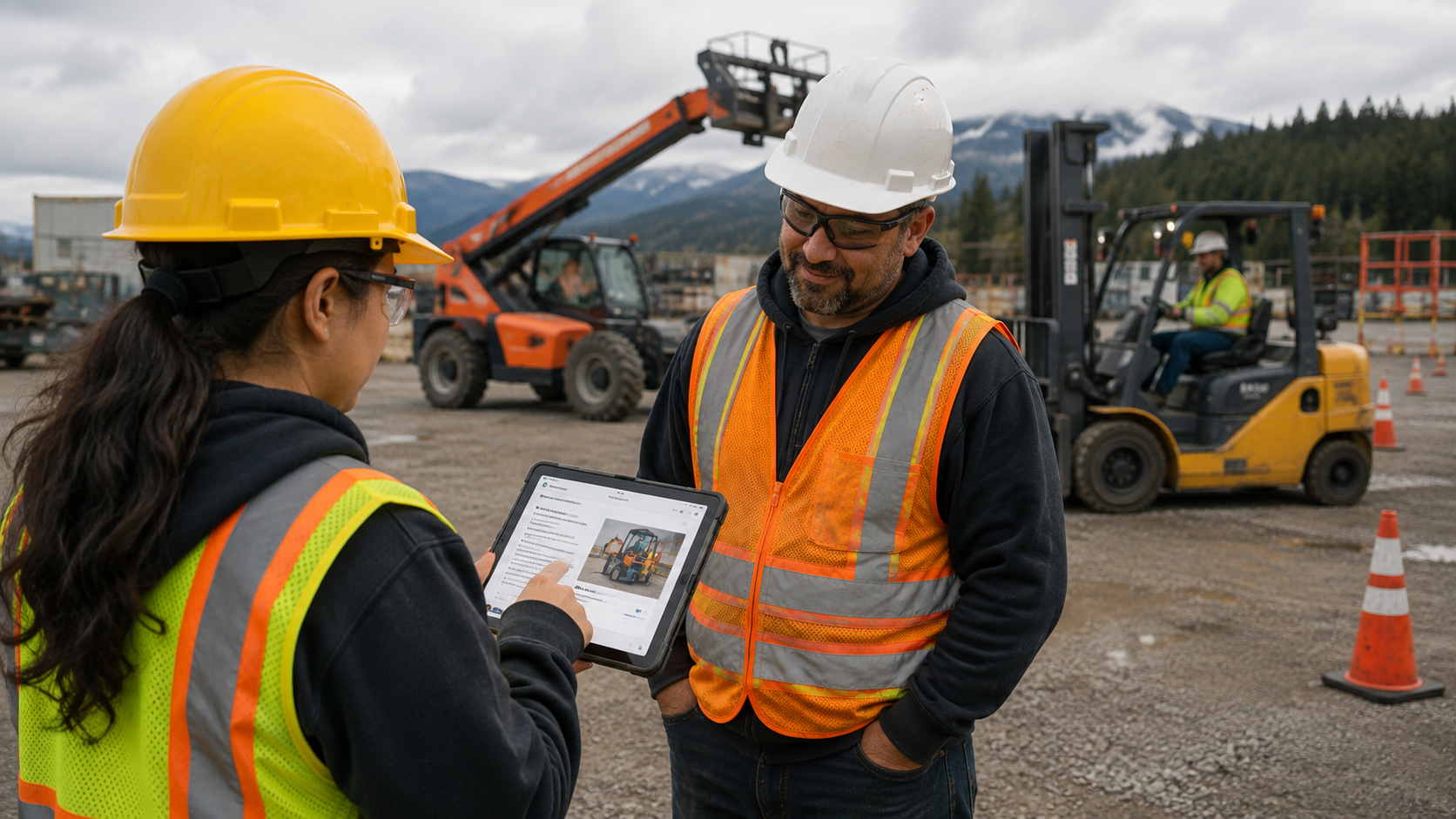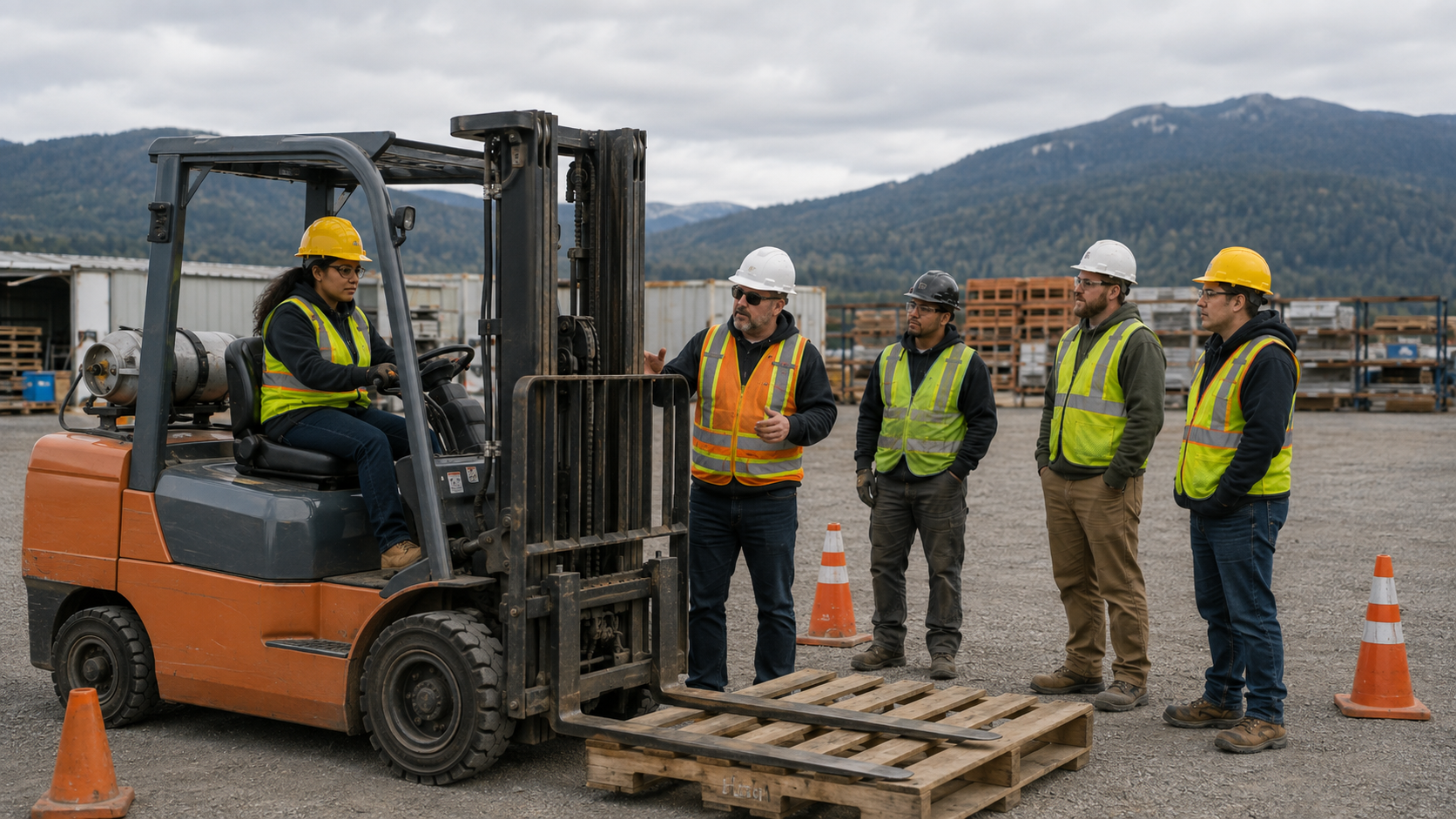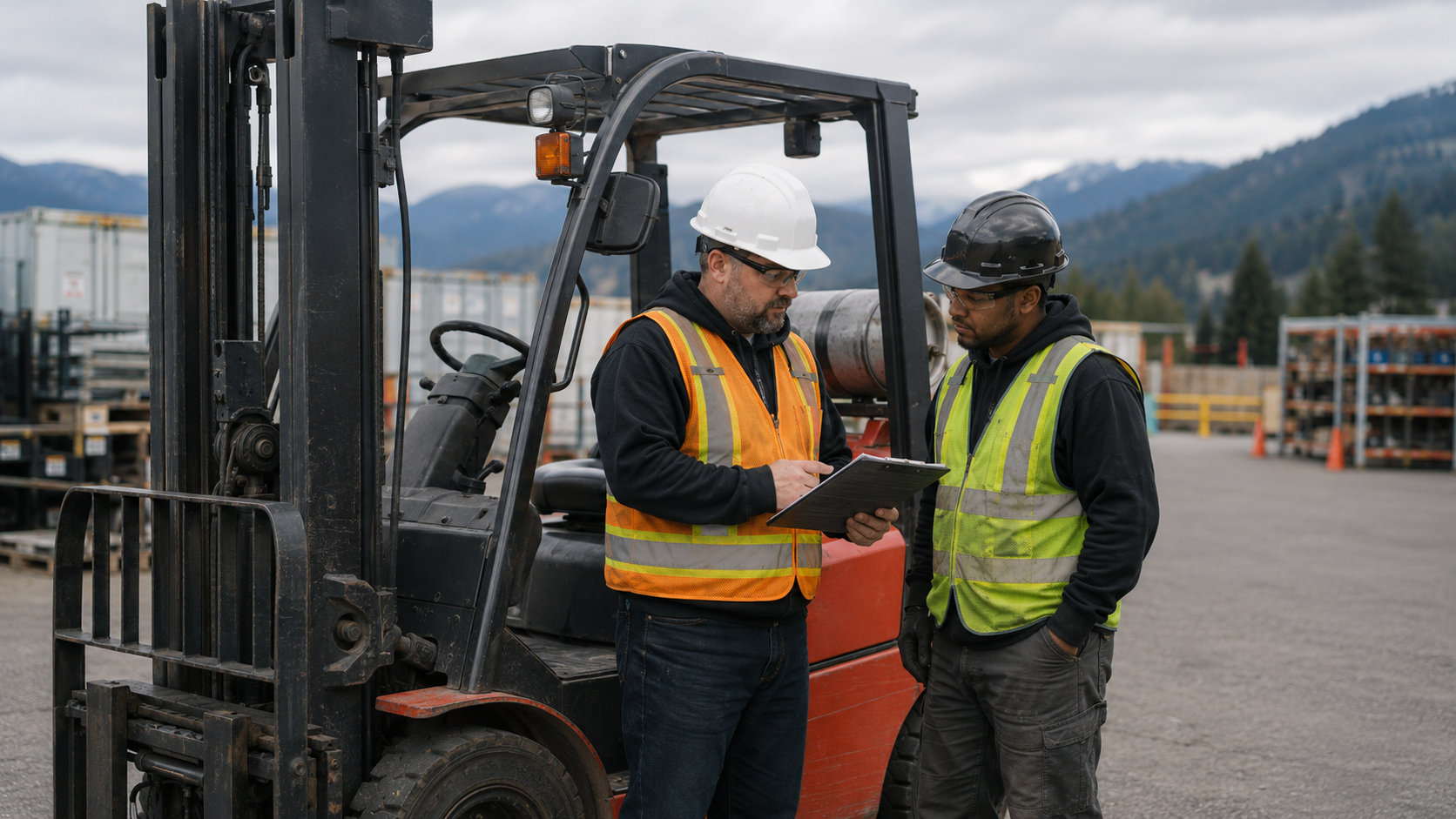
The training tension that almost every Victoria supervisor recognizes shows up when the crew booked for a session includes both seasoned operators and workers who have never touched the equipment. The experienced operators sit through introductory material they have heard many times. The newer workers struggle when the discussion moves past basics into territory the experienced people handle automatically. The session somehow needs to serve both groups without losing one to boredom and the other to confusion. The supervisor watching this dynamic from the back of the room sometimes wonders whether the training is doing its job for either side, and whether the operation could have used the time better in some other configuration.
The challenge is real, but the solution is not to skip training for the experienced operators or to delay training for new workers until they can be grouped together. The solution is to plan the training with the mixed experience in mind, share the crew composition with the trainer in advance, and structure the session so both groups gain something from the time. A practical training conversation can do this when the supervisor and the trainer think about it together before the booking is finalized. The session becomes useful for everyone in the room, even if the experienced operators take less from it than the newer workers do.
This blog walks through how to plan training for mixed experience teams without losing operational momentum in the process. It covers why mixed experience makes training harder to plan, how to group workers thoughtfully before booking, what to share with the trainer in advance, how onsite training supports mixed teams specifically, and how supervisors can reinforce the learning in the days after the session. The goal is to make training a useful event for the whole crew rather than something the operation endures because it has to happen.
Why mixed experience makes training harder to plan
Experienced workers may not need the same support as new workers
Experienced equipment operators bring real value to a training session. They ask sharper questions, recognize the nuances faster, and often have field stories that reinforce points the trainer is making. They also bring habits that may have drifted from the original training, blind spots in areas the operator handled the same way for years without question, and the natural skepticism of someone who has seen the basics many times before. A training session that treats experienced operators as if they need the introductory material misses an opportunity to address what they actually need. A session that treats them as if they need nothing at all misses the chance to surface the drift and the blind spots that experience itself sometimes creates.
The Mobile Equipment Trainer In Victoria conversations that produce good outcomes for experienced operators usually involve the trainer being told in advance that the crew includes seasoned workers. The trainer can then adapt the discussion to address scenarios that challenge experienced operators rather than running through material that wastes their time. The experienced workers leave the session with something useful rather than viewing the training as a mandatory ritual that interrupts their work.
New workers need context without slowing the entire crew
New workers in a training session need the foundational discussion that experienced operators have heard many times. They need time to absorb the equipment basics, the operating considerations, and the conditions that shape decisions on the job. The challenge is delivering this foundation without making experienced operators feel that the entire session is dedicated to people who do not need the same support they need. A thoughtful trainer can navigate this by using the experienced operators as resources during the discussion, framing the basics in ways that still hold the attention of veterans, and structuring hands-on time so newer workers get the practice they need while experienced operators reinforce their own skills.
Supervisors can support this further by preparing newer workers in advance with materials, conversations, or short orientations that bring them closer to the experience level of the rest of the crew before the formal training begins. This is not a substitute for the training. It is preparation that lets the training session run more efficiently because the newer workers arrive with some context already in place.
How to group workers before booking
Separate role experience from equipment familiarity
Two different forms of experience often get conflated when supervisors think about who should attend training. Role experience is how long the worker has been in their position, regardless of what equipment they have operated. Equipment familiarity is how much hands-on time the worker has actually had on the specific equipment the training covers. A worker can have years of role experience without much equipment familiarity if their position only occasionally involves the machine in question. A worker can have substantial equipment familiarity in a relatively short role tenure if their daily work has been centered on that equipment. Recognizing this distinction helps supervisors group workers thoughtfully rather than grouping by tenure alone.
Among the operations where mixed-experience training has worked well, the supervisors typically thought about the actual equipment familiarity rather than the general role experience when deciding who fit into each session. A 10-year facility worker who has only operated a scissor lift a few times needs the same training depth as a 6-month new hire who has not operated one at all. A 2-year worker who has been running the equipment daily during that time may need less support than the 10-year worker in this scenario. Grouping by equipment familiarity rather than tenure produces sessions where the experience mix is more workable.
Identify high-use and occasional operators
High-use operators run the equipment as part of their daily routine. Their familiarity is reinforced through repetition, but their habits can drift over time as the routine becomes automatic. Occasional operators run the equipment when the work calls for it but spend most of their time on other tasks. Their familiarity is less practiced, and their judgment is less reinforced through daily repetition. Both groups need training. The emphasis may differ. High-use operators benefit from training that addresses the drift and surfaces blind spots that routine can hide. Occasional operators benefit from training that builds the foundation deeply enough that they can rely on it during the less frequent times they actually use the equipment.
Identifying these two groups before booking helps the trainer structure the session appropriately. Sometimes the right approach is to run the training together with attention to both groups during the discussion. Sometimes the right approach is to run separate sessions, one for high-use operators with a focus on habit refinement, and one for occasional operators with a focus on foundational reinforcement. The choice depends on the crew size, the equipment, and the operational scheduling realities. The booking conversation with VIF Safety Training can surface the right approach based on the inputs the supervisor shares.
What to share with the trainer in advance
Crew size schedule and shift needs
The basic logistics of the training session start with the crew size and the schedule realities of the operation. A crew of six is a different session than a crew of fifteen. Workers spread across multiple shifts may require either a session timed for when they can all attend or multiple sessions scheduled to cover the shift coverage. Operations that cannot pause for training have to think about how the session fits around active work, which sometimes means an onsite forklift training Victoria approach where the trainer comes to the worksite during a productive timing window rather than the crew traveling to a training facility. Sharing these logistics with the trainer in advance lets the booking conversation produce realistic scheduling rather than a session timed for theoretical convenience.
Among the forklift training services in Victoria delivered through VIF Safety Training, the sessions that crews appreciate most tend to be the ones where the scheduling worked for the operation. The training arrived during a window that did not force the crew to compress real work to accommodate it. The trainer arrived prepared for the crew size and the experience composition. The session ran efficiently because the logistics were settled before the booking. These details may sound mundane, but they affect how the crew experiences the training and how much value the operation extracts from the time invested.
Known pain points and recurring mistakes
Supervisors who have been watching the crew operate equipment over time usually know where the recurring issues sit. Workers consistently struggle with one particular maneuver. Common shortcut habits that have crept in over the months. Recurring near misses tied to specific conditions. Operator questions that keep coming up without ever getting fully addressed. Sharing these patterns with the trainer in advance lets the session address them directly rather than leaving the issues to be raised, if they get raised at all, during the open discussion. The crew benefits because the training addresses what they actually struggle with. The trainer benefits because the discussion has clear targets rather than running through generic material.
This kind of sharing is not about framing the training as disciplinary or making workers feel singled out. It is about giving the trainer the operational context to make the session useful. The trainer handles the delivery with appropriate framing. The supervisor’s role is to provide honest information about where the crew could use additional attention. Among the operations that have built strong training relationships with VIF Safety Training, this kind of candid pre-session sharing is typically part of the working pattern.
How onsite training can support mixed teams
Training in the work environment they actually use
Onsite training brings the trainer to the worksite rather than asking the crew to travel to a training facility. The advantage for mixed experience teams is substantial. Experienced operators see the training conducted in the environment they know, which keeps the examples relevant and lets them engage more readily because the discussion fits their daily reality. Newer workers see the training in the environment they will be working in, which builds their familiarity with both the equipment and the surroundings at the same time. The hands-on portion happens on the actual equipment the crew uses rather than on equivalent equipment that may differ in small ways from what the operators encounter on the job.
Onsite forklift training Victoria operations that have transitioned to this approach often describe the change as significant. The same training content delivered onsite versus offsite tends to produce different operator engagement, partly because the contextual fit is closer and partly because the operators are not commuting to a facility and back. The investment in time is similar. The return on that investment tends to be higher when the training happens in the work environment rather than in a training room where workers cannot connect to their daily tasks.
Less disruption for crews that cannot all leave site
Operations that cannot pause to send workers to an offsite training facility benefit from onsite delivery in a practical operational sense. The crew remains on the property. The work can continue around the training schedule with adjustments rather than requiring a full operational pause. Workers in the training session can return to active tasks immediately when the session concludes rather than spending additional time traveling back. For mixed experience crews where the supervisor is trying to keep operations moving while still investing in training, this can be the difference between training that gets scheduled and training that keeps getting deferred.
The onsite approach does have practical requirements. The trainer needs access to the equipment, an appropriate space for the classroom portion of the session, and the operational coordination that lets the training happen without conflict with active work. These details get covered during the booking conversation. None of them is unusual. They are part of how VIF Safety Training plans onsite delivery for Victoria operations that prefer this format.
How supervisors can reinforce learning after training
Make expectations visible after the course
Training has a natural drop-off curve. Workers leave the session with the material fresh and apply it consistently for a while, then habits begin to settle and some of what the training reinforced starts to fade. Supervisors who treat the training as a one-time event and return to normal operations tend to see this drop-off more dramatically than supervisors who reinforce the training expectations in the weeks that follow. The reinforcement does not have to be elaborate. Brief mentions during regular team meetings. Visible attention to the practices the training emphasized. Recognition when workers handle equipment well. Conversations about specific situations where the training applies. These small ongoing reinforcements convert the training into durable practice rather than a memory that fades.
Among the Mobile Equipment Trainer In Victoria engagements that produce lasting value, the supervisor follow-through is often the variable that matters most after the training ends. The session itself is well-delivered. The crews leave prepared. What happens next determines whether the preparation sticks or whether the operation reverts to whatever it was doing before the training.
Watch for uneven adoption across the team
Some workers apply training thoroughly. Others apply it selectively or revert to previous habits faster than the supervisor would like. The uneven adoption is normal, but it is also something supervisors should watch for. The worker who is reverting may be doing so because the training did not fully address something specific to their work, or because their habits are deeper than the session could displace, or because the reinforcement after the session was not strong enough. Each of these has a different appropriate response. Recognizing the pattern early lets the supervisor address it before the gap widens.
Sometimes this watching reveals that the original training was right but needs another session or a focused follow-up for specific workers. Sometimes it reveals that the operation needs a structural change in how work is assigned or supervised rather than additional training. Either way, the observation period after training is part of how the supervisor closes the loop between what the training delivered and what the operation actually needs.
| Crew Composition Pattern | Planning Consideration | Practical Approach |
| Mostly experienced with one or two new workers | Avoid making the session feel introductory for veterans | Prepare new workers in advance, frame session around real scenarios |
| Roughly even split of experienced and new operators | Both groups need meaningful content from the session | Trainer adapts discussion, uses experienced workers as resources |
| Mostly new workers with one or two veterans | Veterans can support learning, but their needs may differ | Build session around foundational material, give veterans active role |
| High-use operators only | Focus on habit refinement and blind spot surfacing | Session emphasis on advanced scenarios and drift correction |
| Occasional operators only | Build foundation deeply for less-practiced workers | Session emphasis on basics and confidence-building |
| Multiple shifts across one operation | Coordinate so all shift workers receive coverage | Multiple sessions or scheduled timing that covers all shifts |
| Onboarding wave of new hires | New workers need consistent foundation | Dedicated session for new hire group, paired with workplace mentoring |
| Operation cannot pause for offsite training | Onsite delivery preserves operational continuity | Onsite forklift training scheduled during productive windows |
How VIF Safety Training can help plan the right session
Discuss crew mix before booking
The booking conversation with VIF Safety Training works best when the supervisor shares the crew composition openly. The mix of experienced and new operators. The equipment familiarity within the crew. The known pain points that have surfaced during regular operations. The schedule and shift realities. With this context, the trainer can propose a session structure that fits the actual crew rather than running a default course that may or may not match the experience mix. The Mobile Equipment Trainer In Victoria approach VIF Safety Training brings is shaped by the IVES Certified background and the practical mobile equipment experience that informs how mixed sessions get structured.
Mixed sessions can absolutely work when the trainer is prepared. The risk with mixed sessions is when the trainer arrives without context and tries to deliver a single approach that addresses neither end of the experience spectrum well. The advance conversation removes that risk by setting the trainer up to handle the actual crew thoughtfully.
Choose the service page that fits the need
If the training will be onsite at the operation, the Onsite Forklift Training Victoria service approach fits. If the training will cover multiple equipment categories, the Mobile Equipment Certification Victoria conversation is a useful starting point. For the Mobile Equipment Trainer In Victoria service approach that covers structured training planning for varied crews, the Mobile Equipment Trainer service page is the right next step. Visit the service page or contact VIF Safety Training directly with the crew details and operational context to begin the planning conversation.
Mixed experience teams can absolutely be trained well, and the training can absolutely happen without grinding the operation to a halt. The planning conversation is what turns a potentially uneven session into one that serves both ends of the experience spectrum. If you are planning training for a mixed crew in Victoria and want a session that respects the experienced operators while building real readiness in the newer workers, reach out to VIF Safety Training with the crew composition, equipment context, and operational schedule. The session that follows fits the actual crew rather than running a default approach that suits neither group well.
Frequently Asked Questions
How do I train new and experienced equipment operators together?
Mixed sessions work when the trainer is prepared in advance for the experience mix. Share the crew composition with VIF Safety Training during booking, including how many operators are new, how many are experienced, and the equipment familiarity within both groups. The trainer can then structure the session to address both ends of the spectrum rather than running material that fits neither group well.
Can equipment training be planned around active shifts?
Yes. Training can be scheduled around shift structures with thoughtful planning. Multiple sessions may be needed to cover workers across different shifts. Onsite delivery during productive windows can reduce the disruption that offsite training would create. The booking conversation with VIF Safety Training can propose scheduling options that work for the operation.
Should experienced operators still attend training?
Yes, when the training is structured to address their needs. Experienced operators benefit from training that surfaces habit drift, addresses blind spots that routine can hide, and reinforces the practices they may have stopped consciously thinking about. Sessions that treat experienced workers as if they need only the basics waste their time, but sessions designed for the mixed audience produce value for both groups.
What should I tell a trainer about my crew before booking?
Share the crew size, the experience mix between high-use operators and occasional or new workers, the equipment the crew operates, the work environment, the schedule realities including shift structure, and any known pain points or recurring issues you have noticed during regular operations. With this context, the trainer can propose a session structure that fits the actual crew.
Can onsite training help reduce disruption for mixed experience teams?
Often yes. Onsite forklift training Victoria operations book through VIF Safety Training keeps the crew at the worksite, removes travel time, and lets the training happen on equipment the workers actually use. The mixed experience dynamic also benefits because the environment is familiar to both veteran and newer workers, which supports engagement across the experience range.
How do I choose a mobile equipment trainer for my crew?
Look for a trainer with the credentials, the field experience, and the willingness to plan the session around your specific crew rather than delivering a default course. The booking conversation tells you a lot about how the trainer will approach the session. VIF Safety Training brings IVES Certified instruction and substantial mobile equipment experience to mixed-team planning, with the booking conversation focused on understanding the crew before structuring the session.