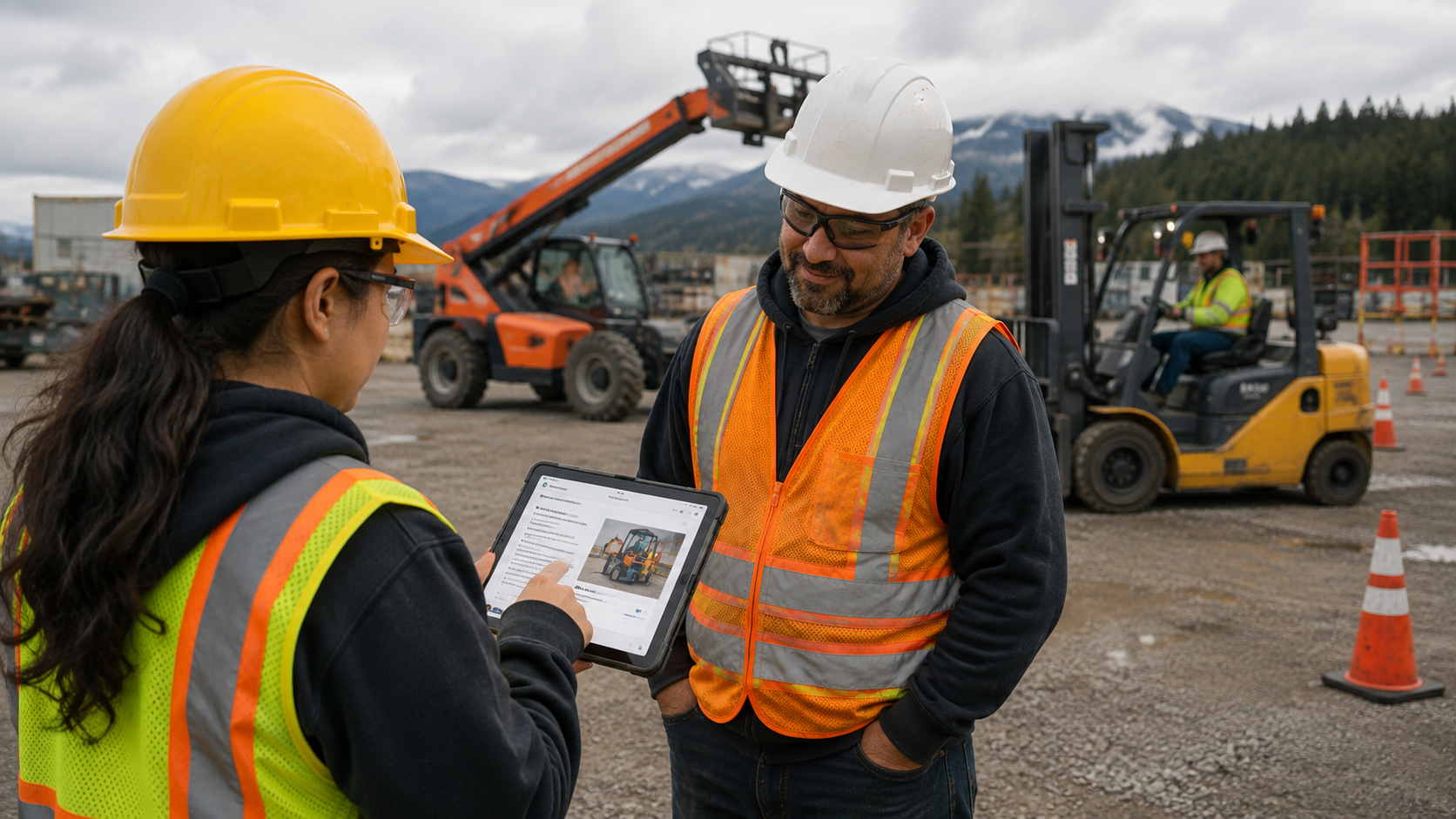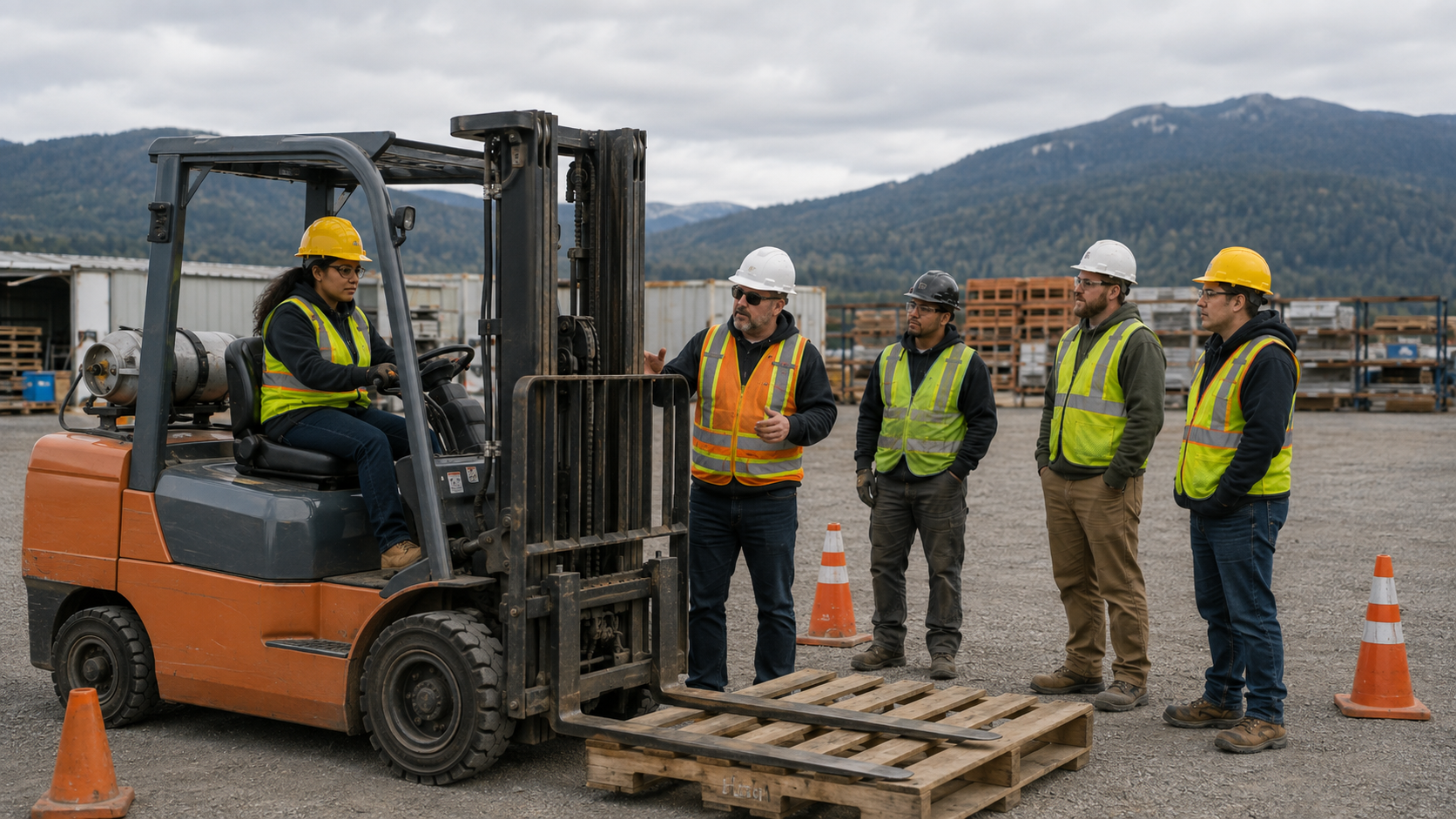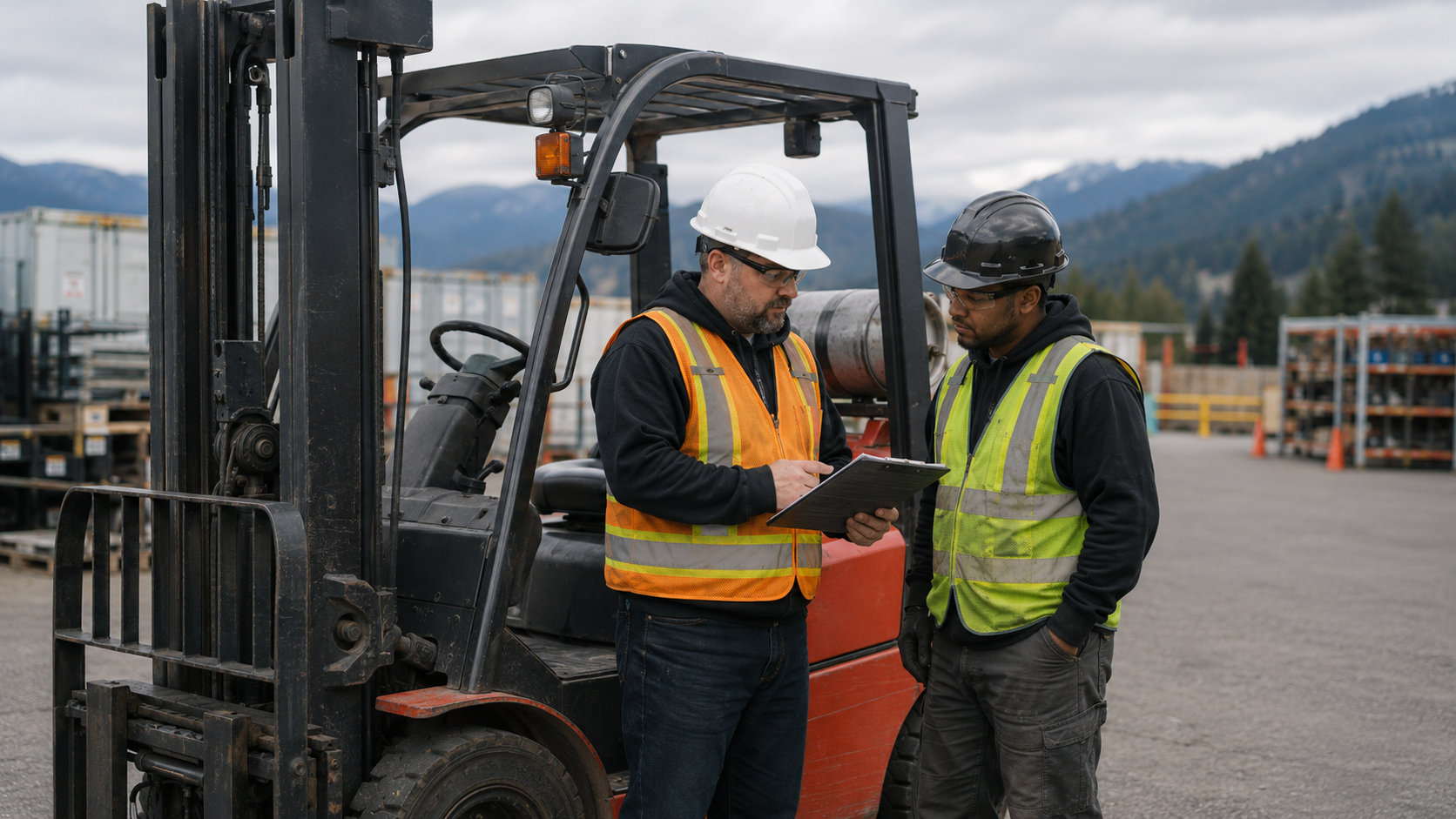
Training gaps rarely appear because someone made a deliberate decision to leave them in place. They appear because the operation evolved faster than the training picture got updated. A worker who started on forklifts began running scissor lifts during a busy stretch and never came back through dedicated scissor lift training. A new attachment arrived for the telehandler and was put into service before the operators got the supplemental training that should have come with it. A worker who came back from a long absence returned to running equipment they had been certified on years earlier without any review. Each individual situation looked manageable at the time. Together they form a gap pattern that the supervisor only sees when something prompts a closer look at the training picture against the actual equipment use.
The audit exercise itself is straightforward. The supervisor or safety lead lists the equipment, lists the operators, lists what the training records show, and compares that picture to what is actually happening on the operation. Gaps surface immediately. Workers operating equipment without current training. Operators using attachments their original training did not cover. Returning workers running equipment without refresher review. New project work that introduced equipment the existing training did not contemplate. None of this is alarming when it surfaces. It is the natural condition of an operation that has been busy and reactive rather than systematic about training. The audit gives the supervisor a clear picture of where to invest training attention next.
This blog walks through how Victoria employers can audit training coverage against actual equipment use and address the gaps that surface during that exercise. It covers why multi-equipment operators are easy to overlook, how to compare training records against actual work, where gaps most commonly appear, how to prioritize what training to schedule first, how documentation supports cleaner operations, and how VIF Safety Training approaches the gap review conversation. The content is written for supervisors and safety leads who want a practical framework for getting the training picture aligned with the actual operation.
Why multi-equipment operators are easy to overlook
The role changes faster than the training record
Worker roles in active operations evolve continuously. The forklift operator who covers vacation absences for the scissor lift operator becomes a regular dual-equipment user within a few months without the role change ever getting formally documented. The maintenance technician who started operating the telehandler for one specific recurring task gradually expands into other telehandler work because the team has come to rely on that arrangement. The new hire whose original role was defined by one piece of equipment grows into a broader equipment portfolio as the operation finds value in having flexible operators. Each of these role expansions happens organically, and the training record almost never updates at the same pace as the role change.
The result is the situation that almost every multi-equipment operation eventually faces. Workers are running equipment that does not appear on their training record. The work is getting done, often well, but the documented readiness picture has drifted from the actual practice. This drift is not anyone’s fault. It is the natural consequence of busy operations where the work moves faster than the recordkeeping. Recognizing this pattern is the first step toward addressing it. The Mobile Equipment Certification Victoria conversations that close these gaps usually begin when a supervisor or safety lead pauses to actually look at the picture rather than assuming the records reflect the operation.
Similar equipment can still require different judgment
One assumption that makes multi-equipment gaps easier to overlook is the belief that training on similar equipment broadly covers related machines. Forklift training does provide useful foundation, but it does not prepare an operator for the reach mechanics of a telehandler or the elevated platform dynamics of a scissor lift. Scissor lift training does not prepare an operator for the dynamic positioning of a boom lift. Each piece of equipment requires its own training because each one creates its own combination of controls, hazards, and judgment requirements. Treating the foundation as if it covers everything tends to leave operators handling equipment they understand at a surface level rather than at the level the work requires.
Among the mobile equipment training contexts that have produced reliable operator readiness, the operations that treated each equipment type as requiring its own training have produced the most consistent results. The shared foundational principles still matter, but the equipment-specific training is what builds the real readiness. An audit that surfaces gaps based on this distinction tends to identify training opportunities that an audit looking only at certification dates would miss.
How to compare training records against actual work
Start with the equipment list
A practical training audit starts with the equipment inventory. Every piece of mobile equipment the operation runs should be on the list, including occasional-use equipment that workers touch only sometimes. The list does not have to be elaborate. Equipment type, location where it operates, and approximate use frequency are usually enough. With the equipment list in hand, the next step is identifying every worker who has operated each piece of equipment in the last twelve to eighteen months, regardless of whether they are listed as the primary operator. This second list often surprises supervisors. Workers turn up as operators of equipment that nobody had been tracking, and equipment turns up with operators the supervisor was not aware were using it.
Comparing this picture against the training records produces the gap inventory. Workers who have operated equipment without current training documentation. Workers whose training is documented but is older than the operation’s refresher cadence would suggest is current. Workers with training on related equipment but not the specific machine they have actually been operating. Each entry on this gap inventory becomes a candidate for the training schedule going forward, with priority based on the operational realities the audit helps surface.
Match equipment to tasks not just job titles
Job titles in operations rarely capture the full equipment picture for individual workers. A maintenance technician title does not tell anyone which specific equipment that technician operates. A general laborer title may cover work across forklifts, telehandlers, and other equipment depending on the day. Auditing by title tends to miss the actual operating picture because the titles were not designed to communicate equipment qualifications. Auditing by equipment and actual operator history produces a more accurate gap inventory than auditing by role designation would.
This is part of why supervisor input is essential during the audit exercise. The training records can show who has been formally certified. The supervisor knows who has actually been running what equipment. The combination produces the real picture. Among the forklift training services in Victoria and broader mobile equipment training engagements VIF Safety Training delivers, the audit conversations that produce useful gap inventories typically rely on this combined view rather than treating the training records as the complete source of truth.
Common places gaps appear
Occasional operators and backup workers
Workers who operate equipment occasionally rather than as their primary role are one of the most reliable places to find training gaps. They were never the focus of the training scheduling. They picked up the equipment because the team needed someone to cover an absence or handle a specific task. Their original training may have been delivered when they first showed interest, or it may have been deferred because they were not expected to use the equipment often. Either way, their training picture often does not match the work they actually do, particularly when the occasional use has grown over time without anyone tracking the expansion.
Backup workers face a related issue. They are trained to step in when needed, but the training they received may be older than the regular operators’ training because backup roles get less attention during refresher scheduling. When the backup worker actually steps in, they are operating with training that may not reflect current operational practices, current attachments, or current site conditions. Including backup workers explicitly in the gap audit produces a more complete picture than treating them as already covered by their original certification.
New attachments new tasks and new locations
Equipment changes that did not come with corresponding training updates create another common gap category. A new attachment for the telehandler that the operators figured out on their own. A new task that exposes operators to conditions the original training did not contemplate. A new project location with different surface, traffic, or environmental conditions than the operation has previously dealt with. Each of these introduces operating considerations that the original training may or may not have addressed depending on how the session was structured. The audit should specifically look at recent operational changes and identify whether the training picture caught up to the changes or fell behind them.
Among the aerial lift operator training Victoria sessions, telehandler sessions, and other mobile equipment training programs delivered through VIF Safety Training, the operations that schedule supplemental training when new attachments or task types appear tend to maintain better readiness than the operations that wait for the gaps to surface during incidents or near misses. Anticipating these gaps during the audit is meaningfully cheaper than addressing them after something goes wrong.
How to prioritize what training to schedule first
Frequency exposure and operational importance
The gap inventory rarely fits into a single training session. Operations need to prioritize which gaps to address first based on practical factors rather than alphabetical order. Frequency of equipment use is one input. Workers operating uncovered equipment daily warrant more urgent attention than workers operating uncovered equipment monthly. Exposure level is another input. Equipment that operates around other workers, customers, or in higher-traffic environments creates more potential for incidents than equipment that operates in isolated zones. Operational importance is the third input. Equipment that supports critical work the operation cannot easily pause should be prioritized over equipment that supports work that has more scheduling flexibility.
These factors do not lead to a single ranking algorithm. They inform the supervisor’s judgment about which gaps to close first. The audit produces the list. The prioritization produces the order. The training schedule converts both into a practical sequence of bookings. Among the Mobile Equipment Certification Victoria engagements where gap closure has worked well, the supervisor brought a prioritized list to the booking conversation rather than asking the trainer to figure out where to start. The conversation moves faster, and the training that gets booked first addresses the highest-priority exposures.
Equipment used around other workers or customers
Equipment operating in shared environments deserves additional priority weight during gap closure planning. A forklift in a busy warehouse with other workers moving around it is a higher-exposure situation than the same forklift operating alone in an isolated yard. A scissor lift in a public-facing facility creates considerations that a scissor lift in a closed industrial setting does not. Aerial lift work near pedestrian traffic differs from aerial lift work in a fenced-off construction zone. The prioritization should reflect these contextual factors rather than treating all equipment use as equivalent for the purposes of gap closure.
Supervisors who think about exposure context during prioritization tend to close the higher-risk gaps first, which is the rational sequence even if it does not match the alphabetical order of the equipment list. The booking conversation with VIF Safety Training can incorporate these exposure considerations when discussing how to sequence the training that closes the inventory of gaps the audit revealed.
How documentation supports clearer operations
Know who is trained for what
Documentation that maintains an accurate picture of which workers are trained for which equipment supports operational clarity in ways that go beyond audit readiness. Supervisors can make assignment decisions faster. New hires can be onboarded with clearer training paths. Workers themselves know what equipment they are qualified to operate. The documentation is most useful when it gets updated as training happens rather than catching up later. Operations that have moved from periodic catch-up updates to ongoing maintenance of the documentation tend to find that the picture stays accurate, which means the next audit reveals fewer surprises.
VIF Safety Training provides documentation as part of the training delivery, but the employer’s responsibility is to maintain the records on the operational side. Simple documentation tools work well. The discipline of updating them as training happens is the part that determines whether the records stay useful or drift back into the gap pattern that the audit was supposed to resolve.
Use training records as a planning tool
Training records can be more than a compliance artifact. They can be a planning tool that supports the operation’s forward decisions. When the operation is considering adding new equipment, the records show which workers already have related training and which would need to start from scratch. When projects come up that require specific equipment qualifications, the records show who is ready and who is not. When workers move into new roles, the records help identify what training the role change requires. Used this way, the documentation supports operational planning rather than just confirming what training was delivered in the past.
This forward use of training records tends to produce better operational outcomes than treating the documentation purely as a backward-looking compliance artifact. Among the mobile equipment training engagements where employers extract the most value from the training investment, the records are typically treated as a working operational tool rather than as files that get reviewed only when an audit requires them.
| Gap Category | What to Look For During the Audit | Typical Priority Weight |
| Workers operating equipment without current training | Operator history vs documented training | High priority for closure |
| Workers with related but not specific training | Training on similar equipment but not the actual machine in use | High priority, especially for distinct equipment categories |
| Backup workers with older training | Training dates that have aged past the refresher cadence | Medium to high priority depending on use frequency |
| New attachments not covered in original training | Equipment changes that did not trigger supplemental training | High priority when use is routine |
| New tasks or locations adding unfamiliar conditions | Operational changes since the original training | Medium priority, depends on exposure level |
| Workers returning from extended absence | Time gap since last training and operating refresher status | Medium priority, refresh before active operation |
| Occasional users with informal coverage | Workers operating equipment that is not their primary role | Variable priority based on use frequency and exposure |
| Outdated certifications regardless of category | Training that has aged past the operational refresher cadence | Low to medium priority unless other factors elevate it |
How VIF Safety Training can support a gap review
Bring the equipment and crew list
The most productive gap review conversation with VIF Safety Training starts with the equipment and crew lists the supervisor has built during the audit exercise. The trainer can then talk through the gap inventory, propose a sequencing approach that fits the operation’s priorities, and confirm the practical details of the training that follows. The conversation moves quickly when the supervisor has already done the audit work. It moves slower when the audit has not happened yet and the trainer has to help build the picture during the booking discussion. Either approach works, but the prepared approach tends to produce better results in less time.
VIF Safety Training is led by an IVES Certified instructor with substantial mobile equipment and lockout field experience. The gap closure conversations reflect that combination of credential and practical background. The training sessions that close the gaps focus on the operator readiness the work actually requires rather than on certificate generation as the primary outcome. The Mobile Equipment Certification Victoria approach VIF Safety Training brings is built around this readiness emphasis.
Start with mobile equipment certification
If your operation is recognizing that the training picture has drifted from the actual equipment use, the practical next step is to complete the audit on your side and reach out to VIF Safety Training with the gap inventory. Visit the Mobile Equipment Certification Victoria service page for service details, or contact VIF Safety Training directly to begin the gap closure conversation. The training that follows reflects the actual operational picture rather than running through default content that may or may not address the gaps the audit revealed.
Training gaps in multi-equipment operations are normal, but they are also addressable through a deliberate audit and a closure plan that prioritizes the highest-exposure gaps first. The audit exercise itself is not complicated. The follow-through that closes the gaps is where the operational benefit shows up. If your Victoria operation is ready to align the training picture with the actual equipment use, reach out to VIF Safety Training with the gap inventory and start the closure conversation. The training that follows reflects what your operation actually needs rather than running through generic certification categories.
Frequently Asked Questions
How do I know if operators have training gaps across equipment types?
Run a practical audit. List every piece of equipment the operation runs, list every worker who has actually operated each one in the last twelve to eighteen months, and compare that picture against the training records. Gaps surface immediately. Workers operating equipment without current training, occasional users with informal coverage, and backup operators with older training are common categories the audit reveals.
Can one worker need training on several types of equipment?
Yes, and this is common in multi-equipment operations. Workers who shift between forklifts, scissor lifts, telehandlers, aerial lifts, or other equipment need training on each category they operate. Foundational training on one machine does not substitute for equipment-specific training on the others, because each machine has its own controls, behaviors, and judgment requirements.
What should I review before scheduling mobile equipment certification?
Review the equipment inventory, the operator history showing who has actually been using each machine, the current training records, and any recent operational changes including new attachments, new tasks, or new locations. With this information, the booking conversation with VIF Safety Training can address the actual gaps rather than running through generic certification categories.
Can VIF Safety Training help identify which courses my team may need?
Yes. The gap closure conversation with VIF Safety Training can include identification of which training your operation needs based on the equipment, the operators, and the work the crew performs. Sharing your audit findings, equipment inventory, and operator history during the booking conversation produces a recommendation that fits your actual operation.
Should backup operators be included in training planning?
Yes. Backup operators are often overlooked in training scheduling because they are not the primary users, but they are sometimes the workers operating equipment in less familiar conditions because their use is less frequent. Including backup operators explicitly in the gap audit and the training plan produces a more complete coverage picture.
Where should I start if my team uses multiple types of equipment?
Start with the audit exercise on your side. Build the equipment list, the operator history, and the current training records. Then reach out to VIF Safety Training with this picture to start the gap closure conversation. Visit the Mobile Equipment Certification Victoria service page for service details or contact VIF Safety Training directly to begin.