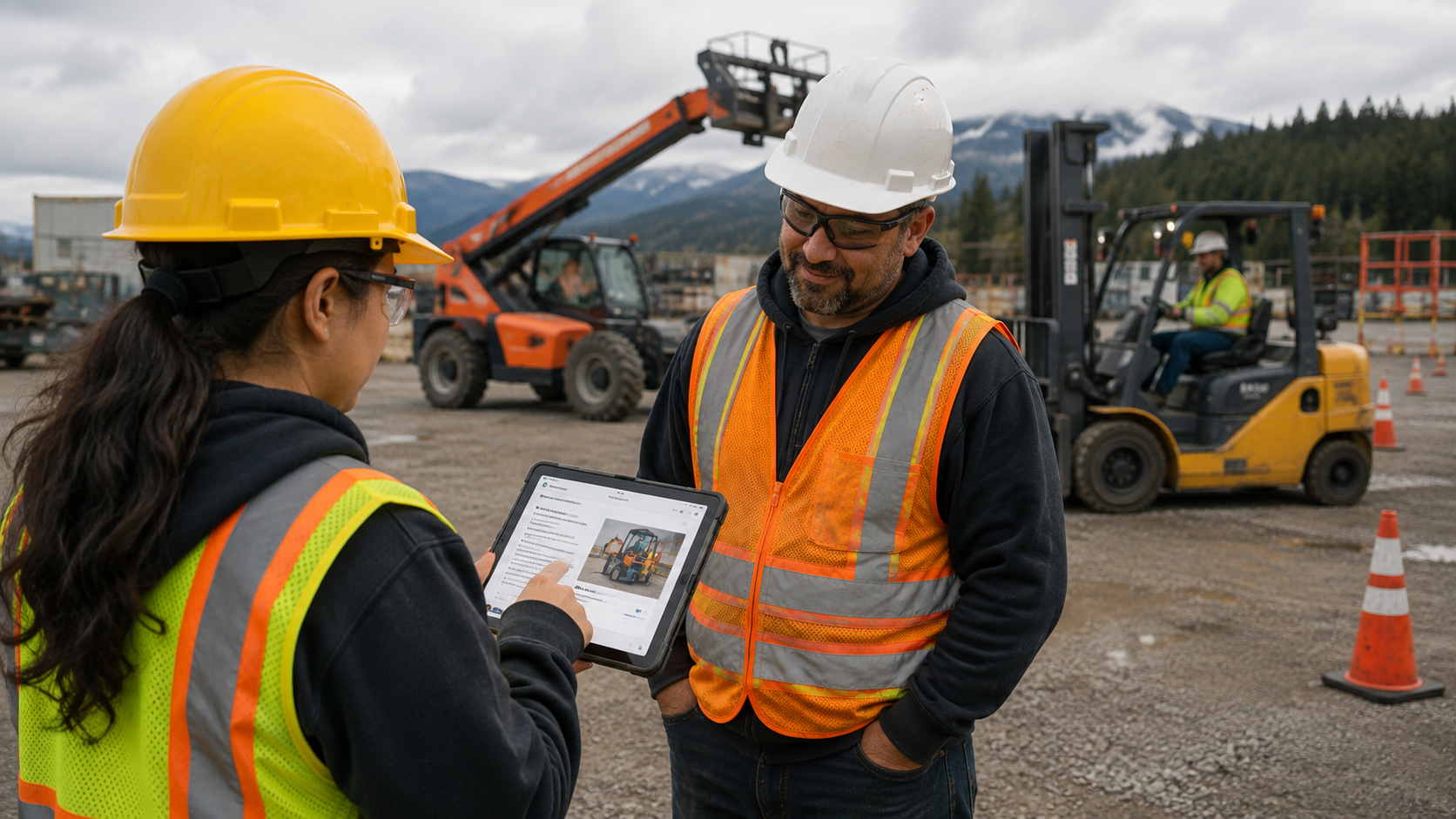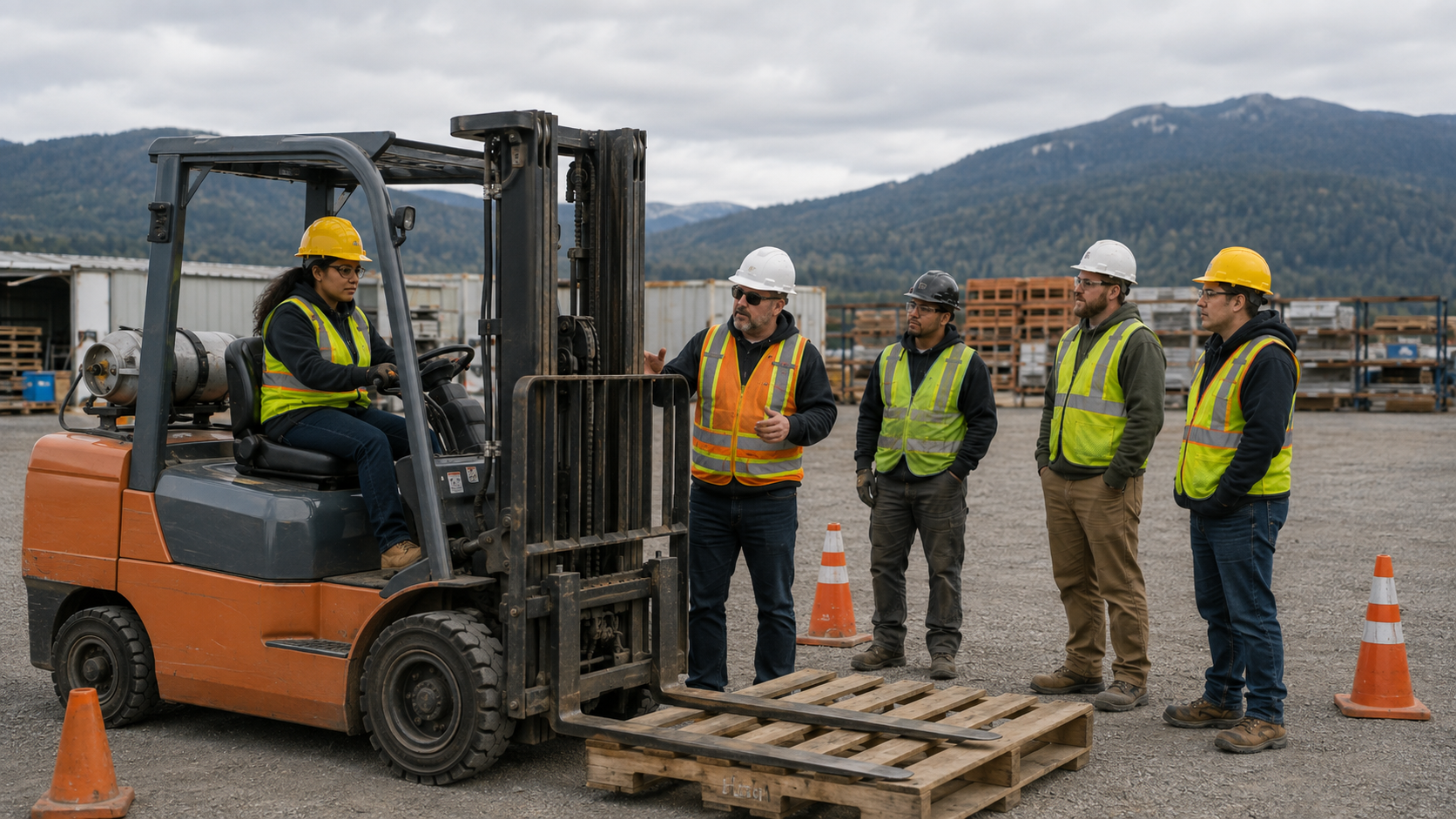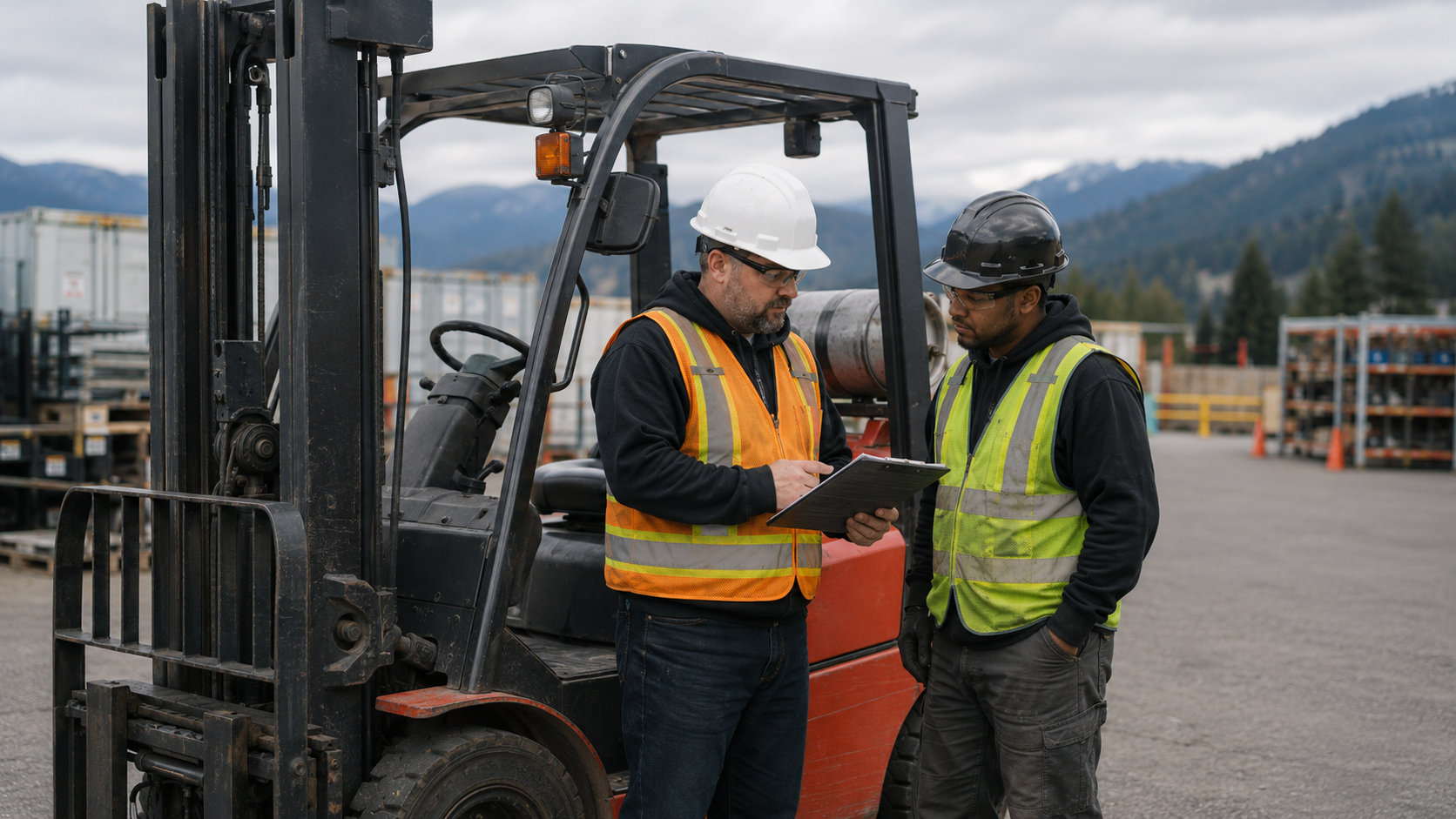
Picture this: it is mid-morning and a supervisor is fielding the same kinds of questions again. Who can run the telehandler today? Is that operator cleared for the reach work? Can someone cover the forklift while the usual operator is off. None of it is a crisis. But it is friction, and it adds up across a shift, a week, a month.
A lot of employers think of equipment training as a safety and paperwork exercise. It is that, but it is also something else. Training shapes the daily clarity of an operation. When it is done well, a lot of that small recurring friction quietly goes away. When it is missing or thin, the friction stays.
This blog connects equipment training to daily operations. We will look at where friction usually shows up, how better training supports supervisors, why the training has to match the work environment, and what employers can do before booking. We are not promising training boosts productivity. We are saying operational clarity is a reasonable thing to expect from it.
Why Equipment Training Affects More Than Safety Paperwork
Training Shapes Daily Decisions
Equipment training is not just a record that sits in a file. It shapes the decisions that operators, supervisors, and coworkers make all day. Who runs what, under what conditions, with what understanding of the work around them.
When the whole crew has consistent training, those decisions get easier because everyone is working from the same expectations. When the training is uneven or thin, the expectations are uneven too, and that shows up as small daily uncertainty. Training is a safety matter, but it is also an operational one.
Small Uncertainties Create Repeated Friction
Friction in an operation is rarely one big thing. It is a pile of small ones. A moment of hesitation before a task. A piece of work that has to be redone. A job reassigned because the first person was not the right fit. Unclear responsibility for who handles what.
Each of those is minor on its own. Together, repeated across every shift, they are a real drag on how smoothly the operation runs. A lot of that friction traces back to uncertainty, and a lot of that uncertainty traces back to gaps in training. Closing the training gap closes some of the friction.
The tricky part is that this kind of friction is easy to normalize. It becomes just how the operation runs, so nobody questions it. Stepping back to notice the pattern is often the first step toward fixing it.
Where Daily Friction Usually Shows Up
Who Can Operate Which Equipment
The most common friction point is also the simplest to describe. Nobody is quite sure who is cleared for what. The supervisor ends up tracking it in their head, and that tracking breaks down the moment someone is off or the crew changes.
Clear, consistent training fixes a lot of this. When the crew is trained and the records are clear, role clarity follows. Task assignment stops being a daily guessing exercise and becomes something the supervisor can do quickly and confidently. That is friction removed.
It also reduces the quiet risk of someone being put on equipment they are not the right fit for, simply because the picture was unclear at the moment. Clarity protects against that kind of rushed call.
How Work Moves Through the Site
The other common friction point is movement. How material moves, how equipment travels, how timing lines up, how pedestrian flow and equipment flow share the same space.
When operators are trained with the worksite in mind, they make more consistent decisions about movement, loading, and timing. When the training is never connected to the actual site, every operator improvises a little differently, and those small differences create friction at the shared points. Training that addresses site movement smooths those points out.
| Friction Point | What It Looks Like Day to Day | How Better Training Helps |
| Who runs what | Supervisor tracks clearances in their head | Clear training and records make role clarity easy |
| Task assignment | Daily guessing when crew changes | Assignment becomes quick and confident |
| Site movement | Every operator improvises differently | Consistent decisions at shared points |
| Hesitation | Operators pause, unsure of the right call | Training builds steadier judgment |
| Rework | Tasks redone because the approach was unclear | Clearer shared expectations reduce rework |
| Scheduling | Hard to plan around who is available | More confident crew planning across shifts |
How Better Training Supports Supervisors
Clearer Expectations After the Session
Supervisors carry a lot of the operational load, and training either lightens that load or leaves it heavy. After a strong session, supervisors have clearer expectations to communicate. They know what the crew has been trained on, so they can set standards that everyone shares.
That shared baseline is worth a lot. When a supervisor and the crew are working from the same understanding, communication gets shorter and clearer. When they are not, the supervisor spends the day filling gaps. Good equipment training gives supervisors a baseline to work from instead of a gap to manage.
It changes the supervisor’s role for the better. Instead of constantly re-explaining the basics, they can focus on the judgment calls and coordination that actually need their attention. The training handles the foundation so the supervisor does not have to keep rebuilding it.
More Confident Scheduling and Crew Planning
Scheduling gets easier when a supervisor knows what their crew can do. Mixed shifts, cross-trained workers, coverage when someone is off. All of it depends on having a clear picture of crew capability.
When training is consistent and well documented, that picture is clear, and the supervisor can plan with confidence. When it is patchy, scheduling becomes a series of small uncertainties. We are not promising training makes scheduling effortless. We are saying it gives the supervisor a clearer foundation to plan on.
Why Training Should Match the Work Environment
Equipment Type and Site Conditions
Training reduces friction only when it matches the work. A session built around a generic operation does not connect cleanly to your specific equipment and conditions, and the gap between the training and the reality becomes its own small friction.
At a high level, the training should reflect the machines your crew runs, whether the work is indoor or outdoor, what the surfaces and material movement look like. Forklift training services in Nanaimo that account for your actual environment give the crew something they can apply directly, instead of something they have to adapt on the fly.
Onsite Context Can Make Learning More Useful
For some operations, training on the actual worksite adds a layer of relevance that a generic setting cannot. The crew learns in the space they work, with the equipment they run, on the routes they travel.
We are mentioning this where it is relevant, not as a universal answer. Onsite forklift training Nanaimo employers choose tends to help most when the site layout and conditions are a real part of the daily work. Where that is the case, the onsite context can make the training connect more directly, which means less friction translating it later.
What Employers Can Do Before Booking
Identify Recurring Points of Friction
Before you book training, do a little diagnosis. Where does the friction actually show up in your operation? A short, honest list is more useful than a vague sense that things could run smoother:
- Assignment confusion: moments where nobody is sure who is cleared for a task.
- Hesitation points: spots or tasks where operators slow down, unsure of the call.
- Rework: work that gets redone because the approach was not clear.
- Coverage gaps: times when someone being off creates a scramble.
- Shared-space friction: points where equipment and people movement collide.
Map Equipment Tasks to Workers
The second step is a simple mapping exercise. List the equipment tasks your operation depends on, and note which workers currently handle each one. Gaps and over-reliance both tend to jump out fast.
This map does not need to be formal. It is just a clear picture of who does what, where the coverage is thin, and where training would close a gap. Bringing that map to the booking conversation turns a vague training request into a focused one, and a focused request gets you a more relevant session.
How VIF Safety Training Can Help Reduce Training-Related Friction
Discuss the Operational Problem First
The conversation with VIF Safety Training can start with the operational problem, not just the course. Share where the friction shows up, how your crew is structured, what equipment the work depends on. From there, the discussion can shape training around the actual issue.
That problem-first approach is what makes the training useful operationally, not just on paper. You are not booking a generic course. You are planning training aimed at the friction you actually want to reduce.
Use Forklift Training or Mobile Equipment Certification as the Next Step
Once the operational picture is clear, the path forward is clear. For most crews, the Forklift Training Services In Nanaimo page is the starting point. Depending on the operation, mobile equipment certification Nanaimo or onsite forklift training Nanaimo may be the better-fitting next step.
The format follows the problem. Visit the Forklift Training Services In Nanaimo page for service details, or reach out to VIF Safety Training directly. Bring your friction list and your task map, and the conversation moves quickly to training that fits.
Equipment training is a safety matter, but it is also an operational one. The right training, matched to your equipment and worksite, can quietly remove a lot of the small daily friction around task assignment, crew confidence, and worksite flow. We are not promising a productivity boost. We are saying operational clarity is a reasonable thing to expect.
Diagnose your friction points, map your equipment tasks, and bring the picture to VIF Safety Training. The conversation can shape training around the real issue. Call 250-889-2074 or use the contact form to start.
Frequently Asked Questions
How can equipment training reduce daily operational friction?
When training is consistent and matched to the work, it builds the role clarity, shared expectations, and steadier judgment that reduce small recurring friction. That shows up as easier task assignment, less hesitation, and smoother movement through the site. Training is an operational tool, not just a safety record.
Can training help supervisors assign equipment tasks more clearly?
Yes. When the crew is trained consistently and the records are clear, supervisors have a usable picture of who can operate what. Task assignment becomes quick and confident rather than a daily guessing exercise, especially when the crew changes or someone is off.
What signs show that a crew needs better equipment training?
Watch for recurring friction: confusion over who is cleared for a task, operators hesitating because the right call is unclear, work being redone, scrambles when someone is off, and friction where equipment and people movement collide. These patterns often trace back to gaps in training.
Should onsite training be considered for operational issues?
It can help where the site layout and conditions are a real part of the daily work. Onsite forklift training lets the crew learn in the space they work, with the equipment they run, which can make the training connect more directly. Whether it fits depends on your operation, which the booking conversation can confirm.
Can VIF Safety Training help with mixed equipment crews?
Yes. VIF Safety Training works with crews that run forklifts, lifts, telehandlers, and other mobile equipment. Share your full equipment picture and where the friction shows up, and the conversation can shape training, or a planned set of sessions, around your actual operation.
How do I start planning equipment training for my team?
Identify your recurring friction points and map which workers handle which equipment tasks. Then visit the Forklift Training Services In Nanaimo page for service details, or call VIF Safety Training at 250-889-2074. Bringing your friction list and task map makes the conversation focused and productive.