Picture this: you are close to booking a mobile equipment trainer. You have a name, a phone number, and a general sense they do training. But you are about to commit your crew’s time and your budget based on not much more than that. The provider says they offer training. So does everyone else.
The questions you ask before booking are what separate a good fit from a guess. A provider can sound fine on a quick call and still deliver a generic session that does not match your equipment, your crew, or your worksite. The right questions surface before you commit, not after.
This blog gives you those questions, grouped by what they reveal: equipment and tasks, the crew, format and logistics, and documentation and follow-through. Each one comes with the reasoning behind it, so you are not just reading a checklist. You are learning what a strong answer sounds like.
Why the First Questions Matter
A Good Trainer Should Understand the Operation
Here is a useful way to think about the early conversation. A good trainer should be asking you questions, not just answering yours. They should want to understand your equipment, your crew, and your worksite conditions before they quote anything.
Why this matters: a trainer who wants to understand the operation is planning to build the session around it. A trainer who is ready to book without learning anything about your worksite is planning to run the same session everyone gets. The direction of the questions tells you which one you are dealing with.
The Employer Should Not Have to Guess Course Fit Alone
Choosing the right training should not be a puzzle you solve by yourself. A good provider is consultative. They help you work out what fits, rather than handing you a course list and leaving you to guess.
Why this matters: you know your operation, but the provider knows the training. The right fit comes from putting those two together. A mobile equipment trainer in Nanaimo worth choosing treats the booking conversation as a planning conversation, where their job is to help you land on the training that actually matches your crew.
Questions About Equipment and Tasks
What Types of Machines Will the Training Address
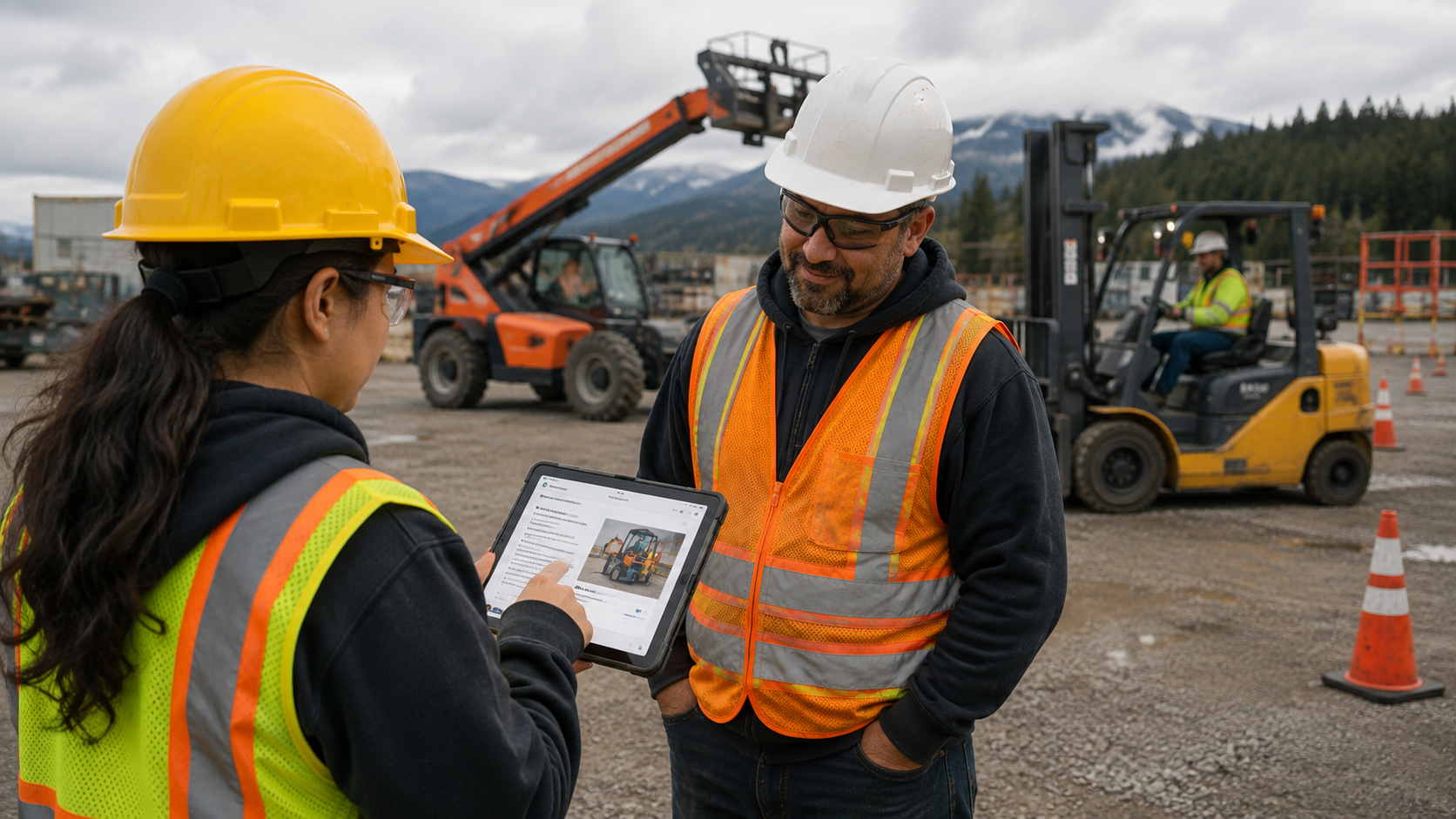
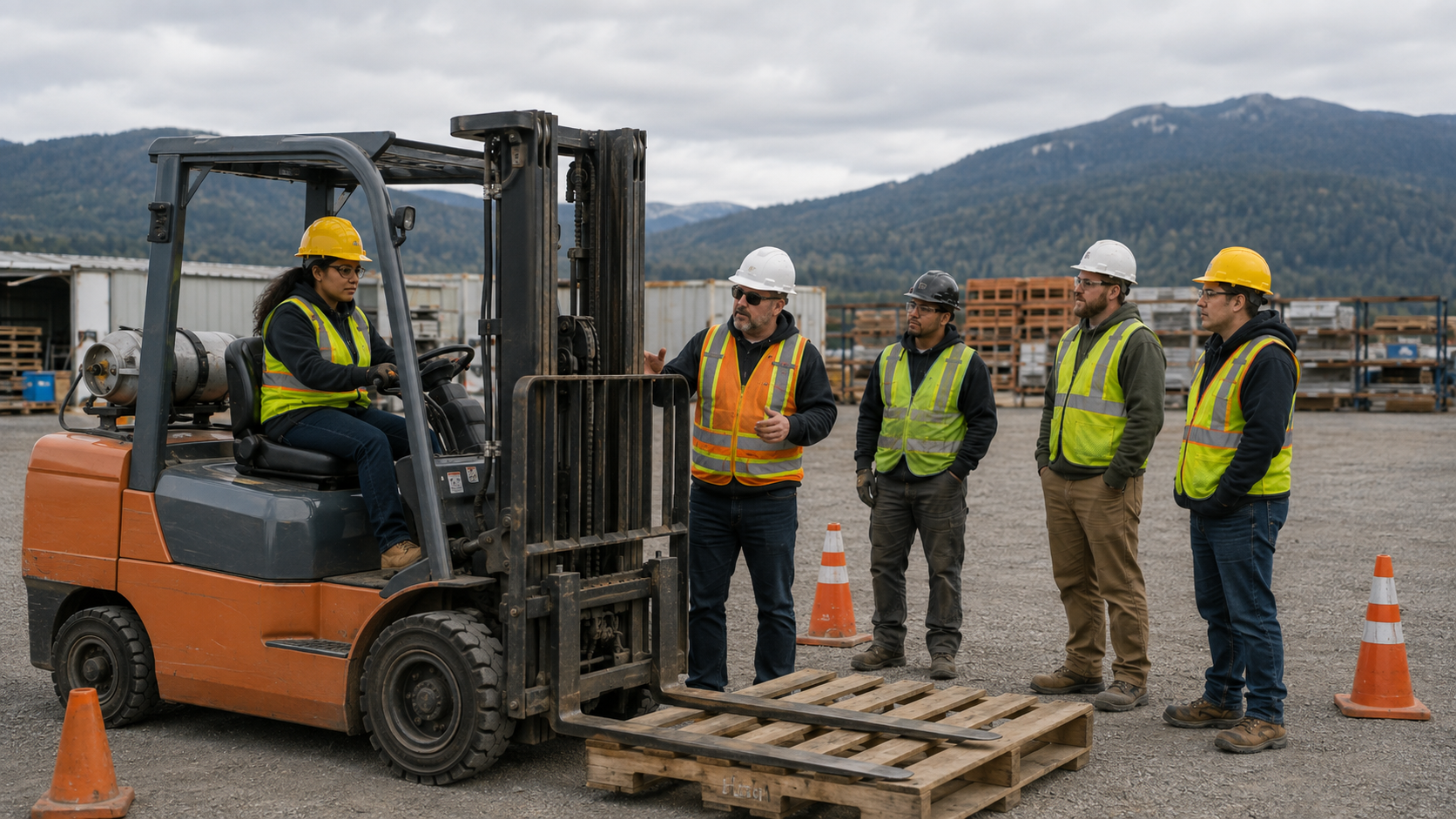
Ask the provider directly what equipment the training will cover. If your crew runs forklifts, a couple of lifts, and a telehandler when the work calls for it, the training conversation should reflect that mix, not just one machine.
Why this matters: mobile equipment is a broad category, and a session built around one machine type does not automatically prepare a crew for another. A provider who asks which machines you run, and how they are used, is preparing for your operation. A provider who just says they cover equipment training, without the follow-up, may be planning something more generic than you need.
It is a fair question to put to any equipment trainer Nanaimo employers are considering. The answer tells you whether the session will be shaped around your fleet or pulled from a fixed template that ignores what your crew actually operates.
How Will Training Connect to the Work Being Done
Beyond the machines, ask how the training will connect to the actual work. What examples will be used. What site context will shape the session. How the training reflects the tasks your crew performs day to day.
Why this matters: the examples are where a session connects or drifts. A trainer who can talk about scenarios that match your kind of work is planning a relevant session. One who falls back on generic examples is planning a session that could apply to anyone. Asking about the connection to real work tells you which you are getting.
Strong mobile equipment training Nanaimo employers can rely on is built from the real work, not dropped onto it. The connection between the lesson and the job is what makes the training stick once the crew is back on the floor.
Questions About the Crew
How Will Mixed Experience Levels Be Handled
Most crews are not uniform. You have new hires, experienced operators, and people who run the equipment only occasionally. Ask the provider how they handle that range in a single session.
Why this matters: a one-size approach tends to fail both ends. It can bore the veterans and overwhelm the new workers. A strong answer shows the trainer has handled mixed groups before, maybe by adjusting hands-on time or using experienced operators as a resource during discussion. A weak answer treats everyone the same and hopes it works.
It is also worth asking how they keep experienced operators engaged specifically. Veterans disengage fast when a session feels generic, so a trainer who has a real answer for that has thought about the whole room, not just the new hires.
Who Should Attend Besides Operators
Ask whether anyone beyond the operators should be part of the training. Supervisors and leads often have a role here, even if they are not the ones running the equipment.
Why this matters: supervisors carry the training forward through assignment and reinforcement. A provider who can advise on whether supervisors should attend, get a separate briefing, or simply be looped into the planning is thinking about how the training fits your whole operation. That is more useful than a provider who only thinks about the operators in the room.
| Question Area | What a Strong Answer Sounds Like | What a Weak Answer Sounds Like |
| Equipment | Asks which machines you run and how they are used | Says they cover equipment training, no follow-up |
| Connection to work | Talks about examples that match your tasks | Falls back on generic examples |
| Mixed experience | Has a clear approach for veterans and new hires | Treats every attendee the same |
| Who attends | Advises on supervisors and leads, not just operators | Only thinks about the operators in the room |
| Logistics | Asks about shifts, space, and equipment access | Expects you to fit their standard format |
| Follow-through | Explains documentation and reinforcement | Implies the certificate is the whole job |
Questions About Format and Logistics
Can Training Be Planned Around Shifts or Active Work
Ask how the provider handles scheduling around a working operation. Can the training be planned around your shifts? Can it happen onsite? What does the provider need from you to make that work?
Why this matters: most operations cannot simply stop for training. A provider who asks about your shifts and your timing constraints is planning training that fits your operation. We are not going to claim training comes with zero disruption, because that is not realistic. But thoughtful scheduling keeps it manageable, and that starts with the provider asking the right logistics questions.
What Does the Employer Need to Provide
Ask the provider plainly what they need from you. Equipment access, a crew roster, a suitable space for the hands-on portion, any site details that affect the session.
Why this matters: a provider who can clearly tell you what they need is a provider who has planned real sessions before. The answer also helps you prepare, so the day runs smoothly instead of starting with logistics that should have been sorted earlier. Vagueness here is a small warning sign worth noticing.
Questions About Documentation and Follow-Through
What Will Be Documented After Training
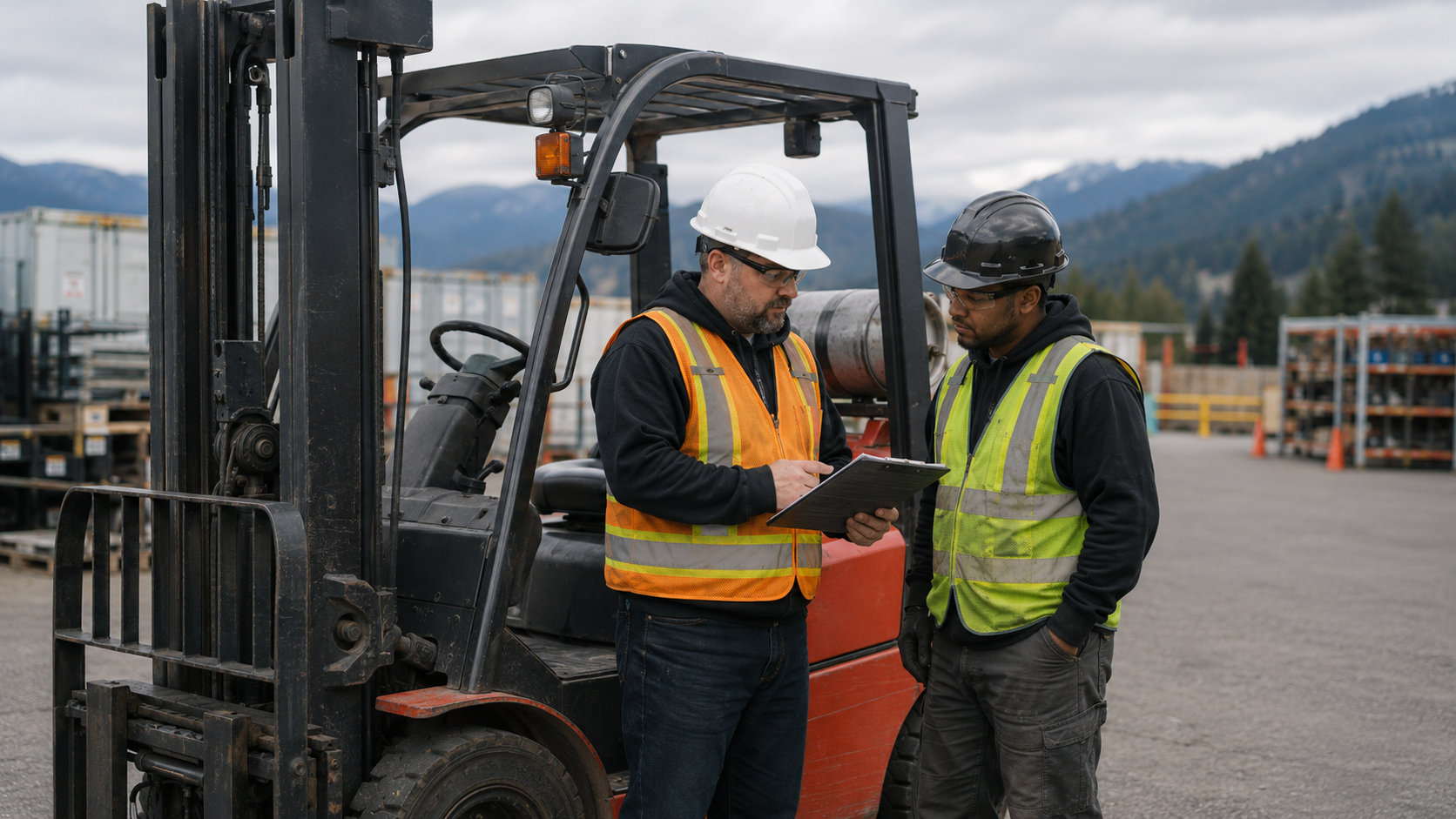
Ask what records the training produces and what they cover. You want a clear picture of the documentation you will receive once the session is complete.
Why this matters: training records are a management tool that helps you track who has been trained on what. We are wording this carefully, because records are useful for planning and tracking, not a promise of legal protection. A provider who can explain the documentation clearly is giving you a tool you can actually use. One who is vague about it is leaving you with less than you should have.
How Should Supervisors Reinforce Expectations
Ask the provider how supervisors should carry the training forward after the session. A good provider has thoughts on this, because they understand training is one phase, not the finish line.
Why this matters: the session builds the foundation, and supervisor reinforcement keeps it standing. A provider who talks about the after, about reinforcement and task assignment, is giving you a more complete and honest picture than one who implies the certificate solves everything. That honesty is part of what makes a provider worth choosing.
How VIF Safety Training Can Answer These Questions
Use the Questions in the Booking Conversation
The simplest way to use this blog is to bring the questions straight into your conversation with VIF Safety Training. The booking conversation is built for exactly this kind of discussion: equipment, crew, logistics, follow-through.
You do not need to hold back the questions or save them for later. A consultative provider wants them, because the answers are how the session gets shaped around your operation. Bring the list, and the conversation moves quickly to what training actually fits your crew.
CTA to the Mobile Equipment Trainer Page
Once the questions are answered, the path forward is clear. The Mobile Equipment Trainer In Nanaimo page is the starting point for the booking. If the conversation points toward a specific certification path, mobile equipment certification Nanaimo fits as the connected next step.
Visit the Mobile Equipment Trainer In Nanaimo page for service details, or call VIF Safety Training directly. Bring your equipment, crew, and logistics details, and the questions in this blog become a fast, productive planning conversation.
Choosing a mobile equipment trainer should not come down to who answers the phone first. The questions you ask about equipment, crew, logistics, and follow-through are what reveal whether a provider fits your operation or just offers a generic session.
Bring these questions to VIF Safety Training and use them to shape the booking conversation. You will get clear answers and a session planned around your crew. Call 250-889-2074 or use the contact form to start.
Frequently Asked Questions
What should I ask before choosing a mobile equipment trainer?
Ask what equipment the training will cover, how it connects to your actual work, how mixed experience levels are handled, who should attend besides operators, how scheduling works around your shifts, and what documentation you will receive. Each question reveals whether the provider plans to build the session around your operation or run a generic one.
How do I know if a trainer understands our worksite?
Listen to the questions they ask you. A trainer who wants to understand your equipment, crew, and worksite conditions before quoting is planning a session built around your operation. A trainer ready to book without learning anything about your site is planning the same session everyone gets.
Can a mobile equipment trainer help with several equipment types?
Yes, a good one can. Share the full mix of machines your crew runs during the booking conversation, and the training, or a planned set of sessions, can reflect that mix. A provider who asks which machines you run and how they are used is preparing for your actual operation.
What should employers prepare before training?
Be ready to share your equipment list, crew roster with rough experience levels, work environment, scheduling constraints, and preferred training location. Also mention any recurring issues your supervisors have noticed. This information makes the booking conversation faster and the session more relevant.
Should supervisors be involved in choosing the trainer?
Yes. Supervisors usually know the crew mix, the recurring issues, and the scheduling realities better than anyone. Including them in the conversation helps you ask sharper questions and choose a provider whose session will fit the operation supervisors actually run.
How do I contact a mobile equipment trainer in Nanaimo?
Visit the Mobile Equipment Trainer In Nanaimo page for service details, or call VIF Safety Training at 250-889-2074. Bring your equipment, crew, and logistics details so the questions in this blog become a fast, productive planning conversation.