If you are planning to put a new hire on a lift truck or bring a returning operator back up to speed, one of the first questions you will ask is how long the whole thing takes. It is a fair question, because every hour an operator spends in training is an hour they are not moving product. The honest answer is that forklift training does not run on a single fixed clock. A focused course for one experienced operator can often be wrapped up in a single day, while a group of brand new operators learning from scratch can take longer, and a quick refresher can be shorter still. This guide walks through what actually drives the timing, so a Victoria employer can plan around production instead of guessing. For businesses that want a clear, employer friendly path, Forklift Training Services In Victoria can be scheduled to fit the size of your crew and the equipment you actually run.
The goal here is to give you a realistic sense of ranges, not a promise stamped on a calendar. Anyone who quotes you an exact hour count before knowing your operators, your equipment, and your site is guessing. What follows is how a practical provider thinks about duration, so you can walk into a booking conversation already knowing the right questions to ask.
What Determines How Long Forklift Training Takes
The length of a forklift course is shaped by a handful of variables, and each one can move the timing up or down. Understanding these factors is the difference between planning a training day that runs smoothly and one that spills over and eats into a second shift. Before you lock a date, it helps to think through where your operators and your worksite sit on each of these points.
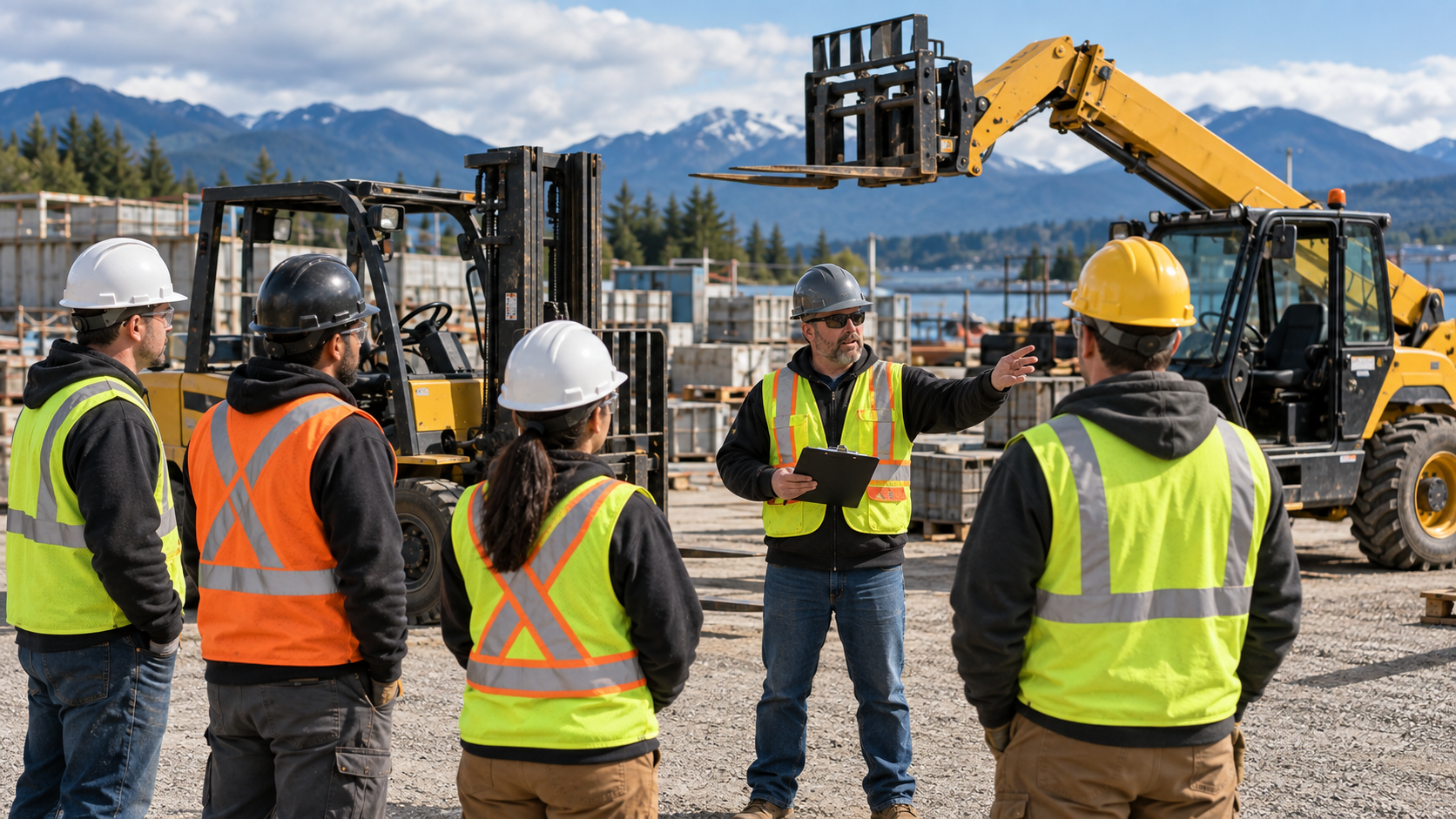
The biggest driver is the experience level of the people being trained. Someone who has never sat in the seat needs time to build basic handling skills, learn the controls, and get comfortable with load balance and travel. Someone who has years behind the wheel and simply needs their skills re-evaluated is a very different session. A second major factor is the type of equipment. A standard counterbalance forklift is not the same machine as a reach truck, an order picker, or a rough terrain unit, and training that covers more than one class of equipment naturally takes longer than a single machine session.
The format matters as well. Training one person on their own tends to move at that person’s pace, while a group session has to balance the needs of several learners and give each of them enough seat time to be properly evaluated. Whether the session is a full course or a refresher changes things too, since a refresher assumes a baseline of prior knowledge and skips the ground up teaching. Finally, the worksite itself plays a role. An operator who will run a machine in a tight, busy warehouse aisle needs practice that reflects those conditions, and building that realism into the day adds value even if it adds a little time.
Here is a plain list of the factors that most often shift the length of a forklift training session in one direction or the other.
- Operator experience, from first time in the seat to a seasoned driver needing re-evaluation
- The class of equipment, such as counterbalance, reach truck, order picker, or rough terrain
- The number of operators in the session and how much individual seat time each one needs
- Whether it is a full course or a shorter refresher for already trained operators
- The complexity of the worksite, including aisle width, load types, ramps, and traffic
- How much theory review is required before operators move to the practical hands on portion
None of these factors work in isolation. A single experienced operator on one familiar machine sits at the shorter end of the range, while a mixed group of new hires learning across two equipment types sits at the longer end. When you understand which combination describes your situation, the timeline stops feeling like a mystery.
It is also worth remembering that the standard being applied does not change with the calendar. Whether a course runs long or short, the operator still has to demonstrate that they can handle the machine competently before they are signed off. The time is a byproduct of reaching that standard, not a target in itself. This is why a thoughtful provider will talk about your situation first and give a time range second, rather than leading with an hour count and squeezing the training to match it.
New Operators Versus Experienced Operators
The single clearest split in forklift training duration comes down to whether you are training new operators or requalifying experienced ones. These are genuinely different jobs, and treating them as the same is where a lot of scheduling frustration comes from.
New Operators Starting From Scratch
A new operator is building everything at once. They need a theory that explains how a lift truck behaves, why it tips, how load weight and height change stability, and how to read a data plate. Then they need real seat time to turn that knowledge into muscle memory, practicing pick ups, travel, stacking, and controlled maneuvering under the eye of an instructor. Because that hands on skill cannot be rushed, a full course for new operators is usually the longest format. In many cases a focused session can still be completed in a day for a small group, but a larger group or an operator who needs extra practice may need more time so nobody is pushed through before they are genuinely ready.
The important point for an employer is that seat time is not padding. An operator who is signed off before they can consistently handle a load safely is a risk on your floor, and a rushed course does not save money if it produces someone who cannot do the job. A good provider will give honest guidance on how much time a group of new operators realistically needs rather than compressing the day to hit a number.
Experienced Operators and Refreshers
An experienced operator who has run lift trucks for years is in a completely different position. They already understand load dynamics and machine behavior, so the training becomes less about teaching and more about confirming that their habits are current and their skills are sharp. A refresher or re-evaluation for this kind of operator is often much shorter than a full course, sometimes a partial day for an individual, because the instructor is verifying competency rather than building it from nothing.
That said, experience is not the same as being current. An operator who learned informally on the job, picked up bad habits, or has not run a particular machine class in a long time may need more than a quick check. The length of a refresher depends on how the evaluation goes, which is why it is framed as a range rather than a guaranteed short slot. The value of working with a provider who evaluates honestly is that your genuinely skilled operators move through quickly, while anyone who needs more attention gets it.
How Onsite Training Can Shorten the Disruption
When employers ask how long training takes, what they usually mean is how long their operation will be disrupted. Those are two different measurements, and this is where onsite training changes the math. The clock on the course itself may be similar, but the total time your business loses can be very different depending on where the training happens.
Sending operators away to an offsite facility means travel time, lost hours around the edges of the day, and often coordinating around a fixed class schedule that may not line up with your production calendar. Bringing the training to your own yard removes a lot of that friction. Operators train on the ground they already work, using conditions that mirror the real job, and there is no commute cutting into the day. For a crew of several people, the saved travel and coordination time alone can be significant.
Onsite delivery also lets the practical portion reflect your actual environment. Instead of practicing in a generic space, operators handle the kind of loads, aisle widths, and traffic patterns they will face on your floor. That realism means the training transfers directly to the job, so you are not paying for time that has to be re-learned in your own setting later. When the goal is to get competent operators back to work with the least interruption, keeping the training close to the work is often the most efficient choice.
There is a planning benefit as well. Onsite sessions can frequently be scheduled around a shift, run during a slower stretch of the week, or split so that not every operator is off the floor at once. That flexibility is harder to arrange when you are fitting into someone else’s classroom calendar. The result is that the disruption to your operation, which is what really costs you, can be managed far more tightly.
What a Typical Training Day Includes
Understanding what happens during a training session makes the time it takes feel a lot more reasonable. A well run day is not a single long lecture followed by a rushed test. It moves through distinct stages, each of which serves a purpose, and each of which contributes to an operator who can actually do the job when it is over.
The day generally opens with the theory portion. This covers how the machine works, stability and load handling, hazard awareness, pre-use inspection, and the responsibilities that come with operating powered equipment. It is the foundation that makes the hands on portion meaningful rather than mechanical. From there the session moves to a practical pre-operation inspection, where operators learn to check the machine before it ever moves, because a walk around habit catches problems before they become incidents.
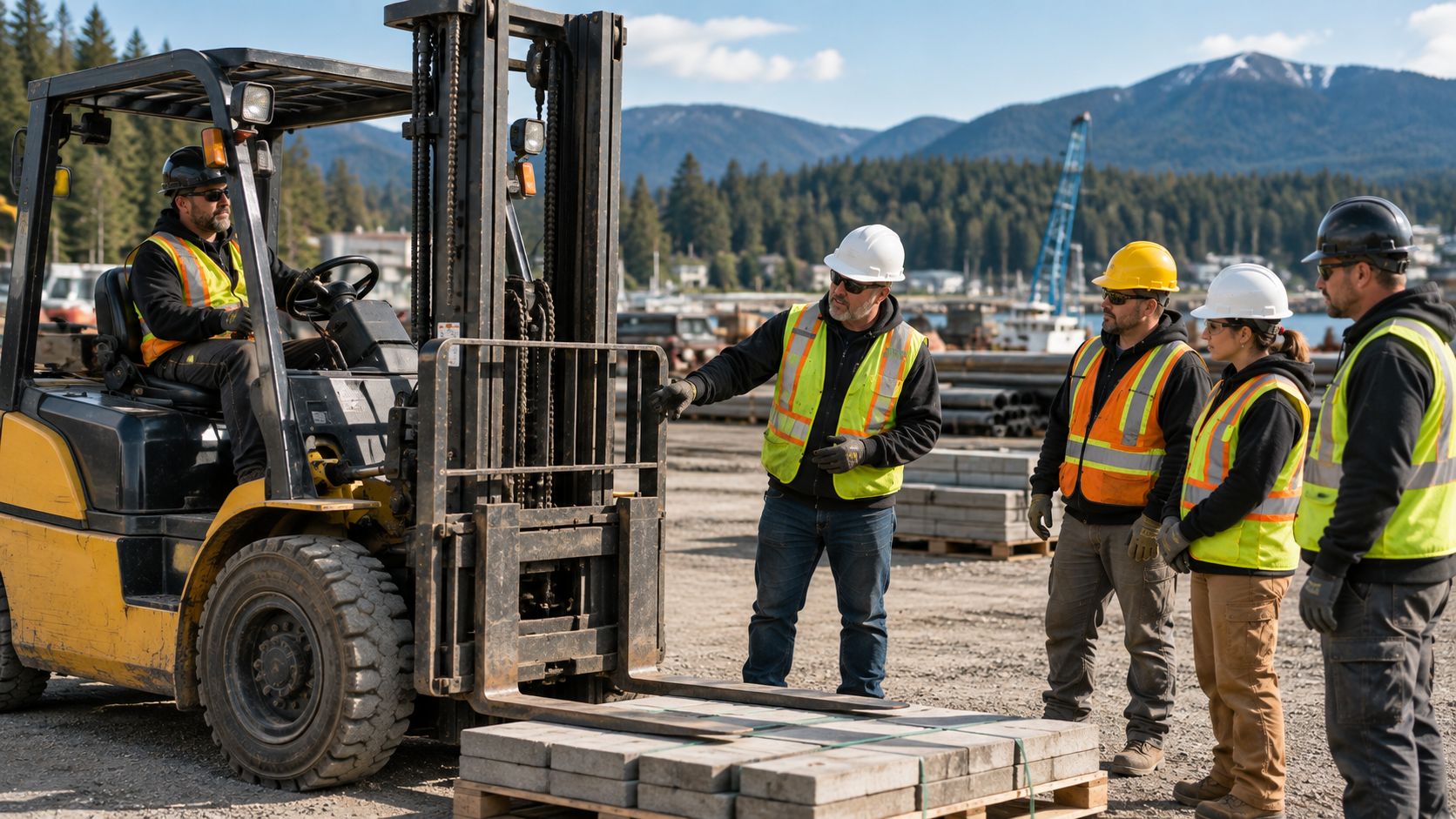
The core of the day is the hands on operation. This is where operators spend real seat time maneuvering the machine, handling loads, traveling, stacking and de-stacking, and working through the conditions that reflect the job. An instructor observes, corrects, and coaches throughout, which is why group size affects timing so directly. The day closes with an evaluation, where each operator is assessed against the standard and given feedback, and where the provider documents the outcome for the employer’s records.
The table below gives a general sense of how the pieces of a training day tend to fit together. These are illustrative ranges to help with planning, not fixed times, and the actual split shifts with group size, equipment, and experience.
| Training Stage | What It Covers | General Time Guidance |
| Theory session | Machine behavior, load stability, hazard awareness, inspection basics | A portion of the morning, longer for new operators |
| Pre-use inspection | Hands on walk around and machine checks before operation | A short focused block early in the day |
| Practical operation | Seat time, load handling, maneuvering, and skill building | The largest share of the day, scaled to group size |
| Evaluation and sign off | Individual assessment, feedback, and record keeping | A block near the end, per operator |
When you see the day broken down this way, the total length makes sense. The practical operation stage is where most of the time goes, and it should be, because that is where competency is built and confirmed. A course that shortchanges seat time to finish early is not doing the operator or the employer any favors.
How Forklift Training Services in Victoria Can Fit Your Schedule
The practical question for most Victoria employers is not just how long training takes in the abstract, but how it fits around a working operation that cannot simply stop. This is where a flexible provider earns its keep. Good forklift training services in Victoria are built around the reality that your operators have jobs to do and your production schedule does not pause for a course.
Flexibility shows up in a few ways. Sessions can be scheduled to match your quieter periods, run onsite so travel does not eat the day, and sized to your crew so you are not paying for a format that does not match your needs. If you have a mix of new hires and experienced operators, a provider can structure the day so the experienced group moves through their evaluation efficiently while the newer operators get the extra seat time they need. That kind of tailoring keeps the total time on your site as tight as it can reasonably be.
It also helps to plan ahead rather than booking in a crisis. Employers who wait until an operator is already on the floor without proper qualifying often end up scrambling. Building training into your hiring and seasonal planning means you can pick a date that suits your operation instead of taking whatever is available at short notice. A provider that serves the Victoria area regularly can work with you on timing, group sizing, and equipment coverage so the day runs cleanly.
The other piece of fitting your schedule is coverage across the equipment you actually run. If your operators need to be qualified on more than one machine class, planning that into a combined session is far more efficient than booking separate days weeks apart. A conversation up front about exactly which machines your people run lets the provider design a day that covers your real needs without wasted time.
How Employers Can Minimize Downtime Around Training
Beyond choosing the right format, there are practical steps an employer can take to keep training from becoming a bigger interruption than it needs to be. A little preparation before the day arrives pays off in a smoother, shorter session.
Start by having accurate information ready about your operators. Knowing who is genuinely experienced, who is brand new, and who simply needs a refresher lets the provider size the day correctly instead of discovering the mix on the morning of. Have your equipment available and in working order, since a machine that is down for maintenance on training day can stall the practical portion for everyone. Clear the practice area of unnecessary traffic so operators can get uninterrupted seat time.
It also helps to stagger operators thoughtfully if you cannot spare your whole crew at once. Running training in a way that keeps the floor covered, rather than pulling everyone off at the same time, protects your output while still getting your people qualified. And keeping good records of when each operator was trained and evaluated means you are planning refreshers ahead of time rather than reacting when someone is overdue. WorkSafeBC requirements apply to operator training, and an employer should confirm the current standard for their situation, so staying organized on records keeps you ahead of any renewal timing.
One more habit that pays off is naming a single point of contact on your side for the booking. When the provider can talk to one person who knows your crew, your equipment, and your schedule, the planning happens quickly and there is less back and forth. That person can confirm operator details, make sure the machines are ready, and pick a date that lines up with a slower stretch of the week. Small coordination steps like this often do more to shorten the real interruption than shaving minutes off the course itself, because most lost time comes from poor planning rather than the training day being too long.
How VIF Safety Training Plans Around Your Operation
VIF Safety Training approaches every booking with the understanding that an employer is balancing operator readiness against the cost of downtime. The starting point is a straightforward conversation about who needs training, what equipment they run, and how your schedule looks, so the day is designed around your operation rather than a generic template.
Training is led by Darrell Block, an IVES certified trainer with 24 years of experience driving mobile equipment. That depth means new operators get patient, thorough instruction and experienced operators get an honest, efficient evaluation rather than a one size fits all class. Sessions can be delivered onsite across the Victoria area so your operators train on familiar ground with the loads and conditions they actually work with, which keeps the practical portion relevant and the disruption contained.
Whether you have a single operator who needs a refresher or a group of new hires to bring up to speed, VIF Safety Training will give you a realistic sense of the time involved before you commit to a date, framed as a range that reflects your crew and equipment rather than an empty promise. The aim is simple, which is to send you competent operators and keep your operation moving with the least interruption possible.
If you are planning ahead and want a clear answer on timing for your crew, reach out to VIF Safety Training to talk it through. Call (250) 889-2074 or email info@vanisleforklift.ca to discuss your operators, your equipment, and your schedule, and the team will help you plan a training day that fits your operation in Victoria. You can also contact VIF Safety Training to ask questions or request a booking that works around your production calendar.
Frequently Asked Questions
- How long does forklift training take for a brand new operator in Victoria?
For a new operator learning from scratch, a focused course can often be completed in a single day for a small group, though a larger group or an operator who needs extra seat time may need more. The duration depends on experience, equipment, and group size, so it is best treated as a range rather than a fixed figure. VIF Safety Training will give you a realistic estimate once they know your crew and machines.
- Is a refresher shorter than a full forklift course?
Yes, a refresher for an already experienced operator is usually shorter than a full course because the training confirms existing competency rather than building skills from nothing. The exact length still depends on how the evaluation goes, since an operator with outdated habits may need more time. It is framed as a range so genuinely current operators move through quickly while anyone needing more attention gets it.
- Does training on more than one type of equipment take longer?
Training that covers more than one class of machine, such as a counterbalance forklift and a reach truck, generally takes longer than a single machine session because each machine requires its own seat time and evaluation. Planning a combined session is more efficient than booking separate days weeks apart. Let the provider know exactly which machines your operators run so the day can be designed to cover them without wasted time.
- Can forklift training be done onsite at ourx Victoria workplace?
Yes, onsite delivery is often the most efficient option because it removes travel time and lets operators train on the ground they actually work. Practicing with your real loads, aisle widths, and traffic patterns means the training transfers directly to the job. Onsite sessions can also be scheduled around a shift to keep disruption to your operation as low as possible.
- How can we minimize downtime while getting our crew trained?
Have accurate information ready on who is new, experienced, or due for a refresher so the day is sized correctly, and make sure your equipment is available and working. Staggering operators so the floor stays covered helps protect output while your people are qualified. Keeping good records of when each operator was trained also lets you plan ahead rather than scrambling when someone is overdue.
- Do you need to be certified to operate a forklift in British Columbia?
WorkSafeBC requirements apply to forklift operation, and the general expectation is that operators must be trained and competent before running the equipment. Rather than relying on a specific figure, an employer should confirm the current standard for their situation. Proper training and a documented evaluation are what qualify an operator, and VIF Safety Training provides that documentation as part of the session.
- How far in advance should we book forklift training in Victoria?
Booking ahead is better than waiting until an operator is already on the floor without proper qualifying, because planning early lets you choose a date that suits your production schedule. Employers who build training into their hiring and seasonal planning avoid scrambling for short notice slots. Contact VIF Safety Training early to line up a date, group size, and equipment coverage that work for your operation.