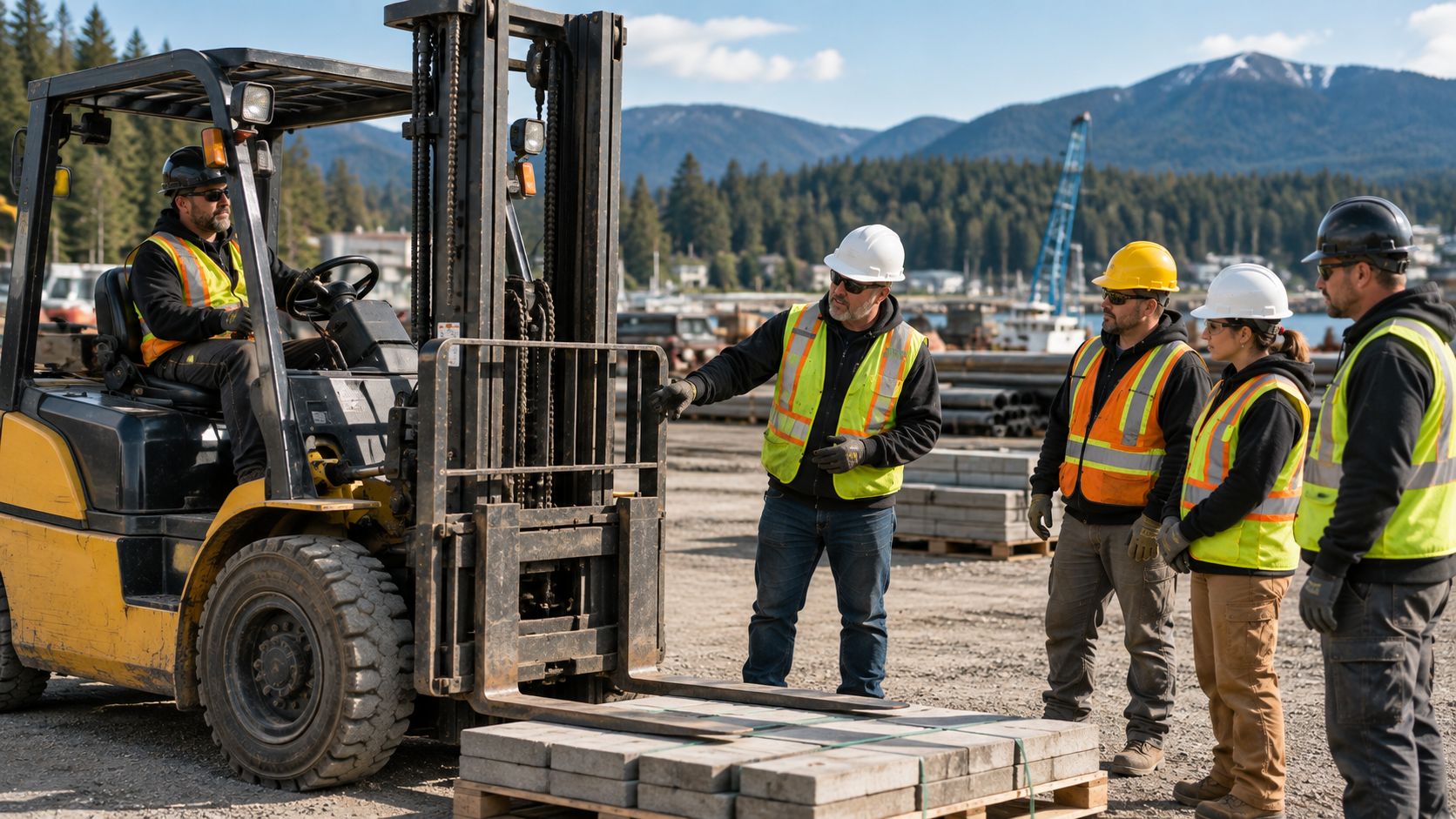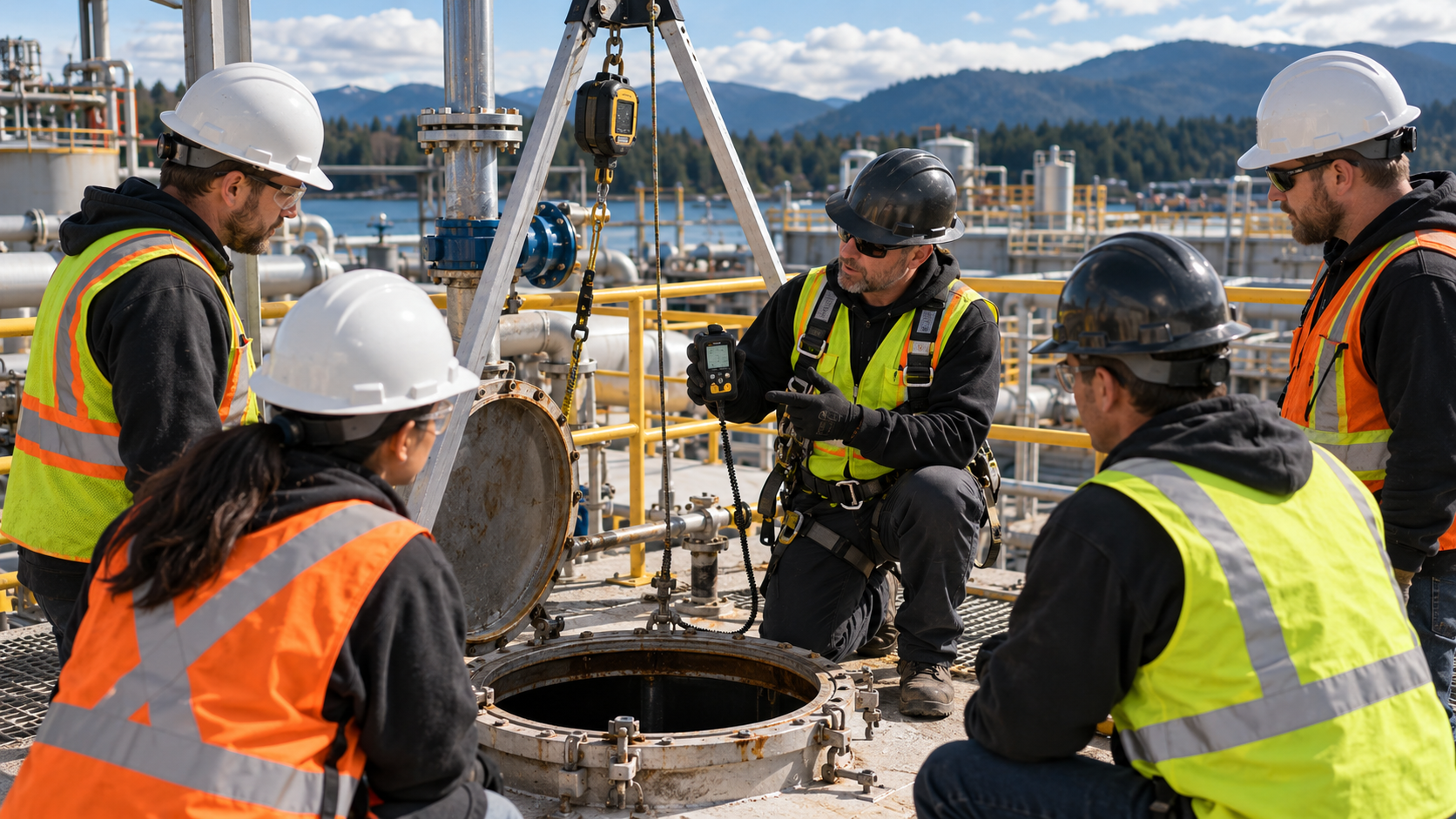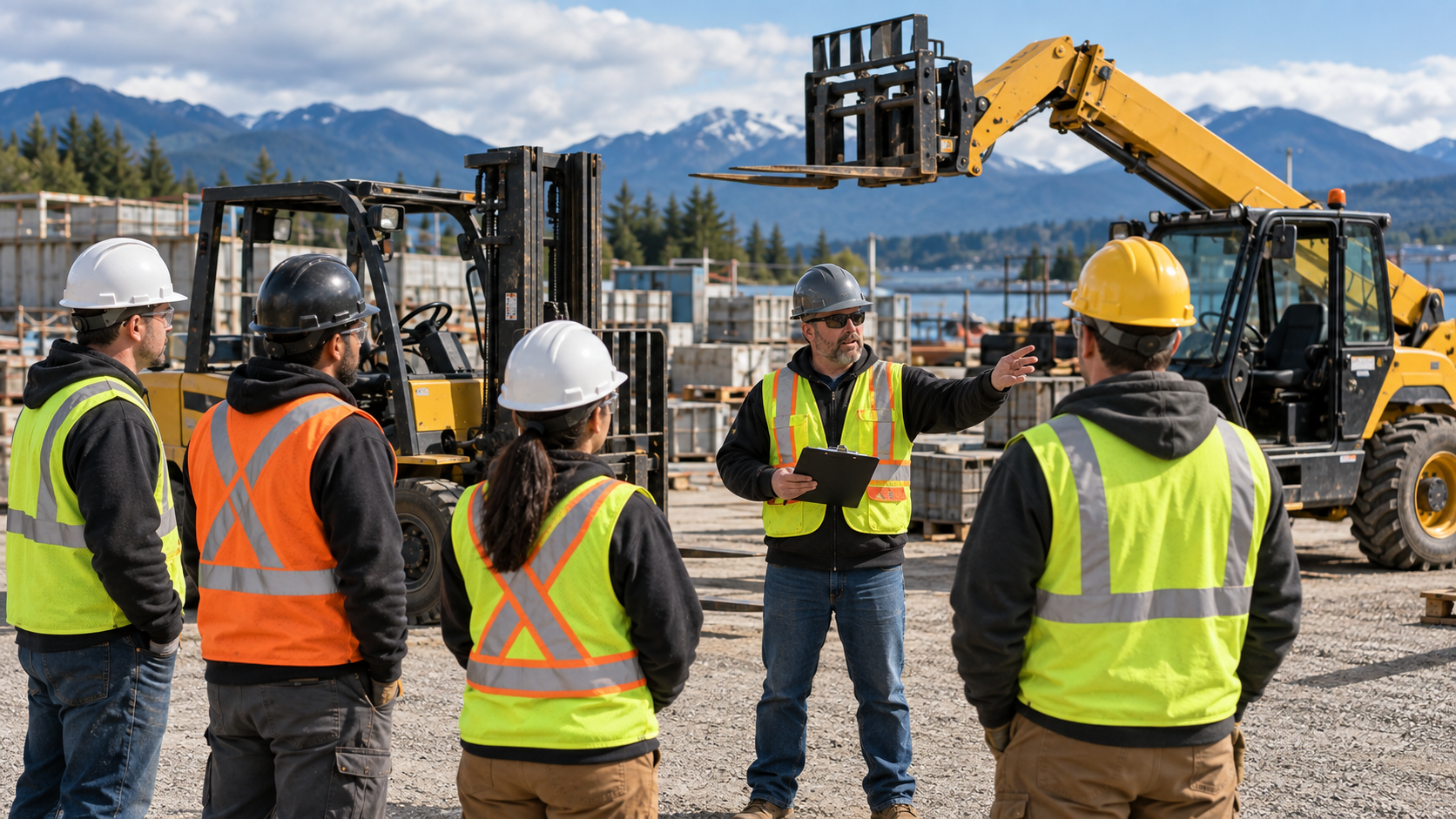
It is one of the most common questions a new hire or a busy supervisor types into a search bar before a shift starts. Do you actually need a ticket to run a forklift in British Columbia, or can an experienced worker just hop on and move a few pallets? The short answer is that operating a forklift without proper training is a real problem in BC, but the way that expectation is written and enforced is often misunderstood. If you are hiring in Victoria, or you are the person being asked to run the machine, it pays to know exactly what the rules ask of you. This guide walks through what WorkSafeBC generally expects, why there is no single government forklift license you can carry in your wallet, and what genuinely makes an operator qualified. It also explains where Worksafe Forklift Training Victoria fits, so you can book a WorkSafe forklift course with a clear idea of what you are paying for.
We will keep the language plain and practical, because the reader here is usually making a scheduling or hiring decision, not studying for an exam. By the end you should be able to tell the difference between a piece of paper and a genuinely job-ready operator, and you should know what to ask a training provider before you commit a crew member to a course.
Is Forklift Certification Legally Required in BC
Here is the honest version. In British Columbia, a forklift is classified as a piece of mobile equipment, and provincial occupational health regulations make it clear that a person operating that kind of machine must be trained and competent before they use it in a workplace. WorkSafeBC oversees workplace requirements in the province, and its expectations apply to employers and workers across sectors, including warehouses, lumber yards, construction sites, and the many industrial operations around Greater Victoria. So while people often frame it as “is it legal to drive a forklift without a ticket,” the more useful way to think about it is that an untrained operator running mobile equipment puts the employer offside with provincial expectations and puts everyone nearby at risk.
The nuance that trips people up is the word “certification.” A lot of readers assume there is a government office that issues a forklift license the way the province issues a driver license for the road. That is not how workplace equipment works in BC. Instead of a single state-issued card, the system relies on documented training and a demonstrated ability to operate the specific equipment involved. An employer is expected to be able to show that each operator was trained, was evaluated, and was found competent for the machine and the environment they work in.
We are deliberately not quoting specific clause numbers, renewal windows, or exact figures here, because those details can change and because the precise wording of provincial requirements should be confirmed against the current WorkSafeBC standard rather than trusted from a blog. What does not change is the underlying principle. If a worker is going to operate a forklift on your Victoria site, you need to be able to demonstrate that the person was properly prepared for the task. That is the requirement worth building your hiring and scheduling around.
What WorkSafeBC Generally Expects From Employers and Operators
It helps to split the expectation into two sides, because responsibility does not sit only with the person in the seat. The operator has duties, and the employer has arguably larger ones. Understanding both is how a Victoria business avoids the awkward situation of assuming a new hire is ready when nobody has actually confirmed it.
On the operator side, the expectation is straightforward. A worker should not run a forklift they have not been trained on and are not competent to use. Competency here means more than having sat in the machine before. It means understanding the controls, the load limits, the stability principles, the pre-use inspection, and the hazards specific to the space they are working in. A worker who has run a small warehouse forklift for years is not automatically ready for a rough-terrain machine on a construction lot, and a responsible operator knows the difference.
On the employer side, the responsibilities run deeper than many owners expect. The employer is generally responsible for ensuring workers are trained, for confirming that training actually matched the equipment in use, for keeping records that show who was trained and when, and for providing the site-specific instruction that a general course cannot cover. A training provider can prepare an operator on the fundamentals and evaluate their handling, but the employer still owns the familiarization with the particular machines, attachments, and layout on their own property. This is the part that gets skipped most often, and it is the part that leaves a business exposed if something goes wrong.
Because the specific record-keeping and refresher expectations are the kind of detail that should be verified against the live WorkSafeBC standard, the smart move for any Victoria employer is to treat training as an ongoing program rather than a one-time box to tick. Confirm the current requirement, keep clean documentation, and revisit operator readiness when equipment, roles, or conditions change.
There is also a practical reason to take the employer side seriously beyond meeting an expectation. An operator who was never truly evaluated is a risk that sits quietly in your operation until the day it does not. Struck-by incidents, tip-overs, and product damage are expensive, and they tend to happen with operators who were assumed to be ready rather than confirmed to be. Treating readiness as something you verify, document, and revisit is not just about staying onside with provincial requirements. It is a straightforward way to protect your people, your equipment, and your production schedule from the kind of avoidable event that stops a Victoria worksite cold.
A Simple Way to Split the Duties
If you want a mental shortcut, think of it this way. The provider gets the operator to a proven baseline of skill and knowledge. The employer confirms that baseline fits the actual job, adds the site-specific pieces, keeps the paperwork, and watches for when a refresher is due. Neither side can fully cover the other, which is why good training and a diligent employer have to work together.
Why There Is No Simple Government Forklift License
One of the biggest sources of confusion is the idea of a forklift “license.” People picture something like a class of driver license, issued once, valid provincewide, recognized by every employer on sight. That model does not exist for workplace forklifts in BC, and understanding why clears up a lot of the anxiety around the question.
A road license certifies that you can operate a passenger vehicle under general public rules. A forklift, by contrast, is used in a controlled workplace under an employer’s direction, on equipment that varies enormously from site to site. A counterbalance forklift in a distribution centre, a reach truck in a narrow-aisle warehouse, and a rough-terrain unit on a Victoria construction site are very different machines with different stability behaviour and different hazards. A single government card could never confirm that a person is genuinely ready for all of them. That is why the system leans on documented training tied to specific equipment classes and on employer sign-off, rather than one universal license.
So when someone asks how to “get their forklift license in Victoria,” what they usually need is a recognized training course that includes a hands-on evaluation, followed by employer familiarization on the actual machine. The certificate or record they receive is proof that they completed recognized training and were evaluated as competent. It is meaningful and it is what employers and WorkSafeBC expect to see, but it is not a lifelong government permit, and it is not automatically transferable to every machine or every site without the employer confirming the fit.
This distinction matters commercially too. A certificate from a legitimate course carries weight because a qualified instructor evaluated the person in a real machine. A certificate printed after an online quiz with no practical assessment does not carry the same weight, and a careful Victoria employer will notice the difference. We will come back to that when we look at what actually qualifies an operator.
What Actually Qualifies a Forklift Operator
If a wallet card is not the finish line, what is? A genuinely qualified operator is someone who has been trained on the relevant equipment, has demonstrated safe handling in a practical evaluation, has been familiarized with the specific machines and site they will work on, and has that preparation documented. Each of those pieces matters, and removing any one of them leaves a gap.
The theory portion builds the knowledge base. This is where an operator learns load capacity and how a rated capacity changes with attachments or raised loads, the stability triangle and why tip-overs happen, pre-use inspection habits, pedestrian awareness, and the reasoning behind safe travel and stacking practices. Theory alone is not enough, but skipping it produces operators who can move a machine without truly understanding why it behaves the way it does.
The practical evaluation is where readiness is proven. A qualified instructor watches the operator handle the machine, complete an inspection, manage loads, navigate tight spaces, and respond to the kinds of situations that come up on a real floor. This is the step that cannot be faked or clicked through, and it is the single biggest reason hands-on assessment is central to legitimate qualifying. An evaluator is not just checking that the operator can drive. They are confirming judgment, control, and habits that hold up under pressure.
Site familiarization is the employer’s contribution and the final bridge to real work. Even a well-trained operator needs time to learn the specific forklift model, its attachments, the aisle widths, the loading dock behaviour, the traffic patterns, and the particular hazards of your Victoria operation. This is why a course completion is a strong foundation but not the whole picture. The operator is ready in general, and the familiarization makes them ready here.
Finally, documentation ties it together. Records that show who was trained, on what equipment, when, and by whom are what let an employer demonstrate that operators were properly prepared. Good records also make it far easier to know when someone is due for a refresher, which protects both the worker and the business over time.
- Recognized training on the relevant class of equipment, covering both knowledge and handling.
- A hands-on practical evaluation by a qualified instructor, not a theory-only quiz.
- Employer familiarization on the specific machine, attachments, and site conditions.
- Clear documentation of who was trained, on what, and when, kept up to date.
- A plan to revisit operator readiness when equipment, roles, or conditions change.
The License Versus Competency Comparison
The table below lays out the difference between the “license” people expect and the training and competency approach BC actually uses. It is a quick reference you can share with a new hire or a manager who is unsure what to ask for.
| What People Expect | What BC Actually Uses | What It Means for You |
| A single government forklift license | Documented training tied to equipment plus employer sign-off | You arrange recognized training, not a trip to a licensing office |
| One card valid for every machine | Preparation tied to the class of equipment and the site | An operator may need familiarization when the machine or site changes |
| A permit that never needs revisiting | Ongoing readiness confirmed against current WorkSafeBC guidance | Plan for refreshers and keep records current over time |
How WorkSafe Forklift Training in Victoria Covers the Requirement
A quality course is built to close the gap between “I have used a forklift before” and “I am genuinely qualified to operate this equipment on this site.” That is the whole point of structured training. Rather than leaving readiness to chance or to an employer’s guesswork, a recognized course combines the knowledge portion with a real practical evaluation, and it produces documentation the employer can rely on.
In and around Greater Victoria, employers value training that can flex to their operation. Some crews need a focused course for new operators who have never run a machine. Others need to confirm the readiness of experienced workers who never had formal training or whose preparation is years out of date. The length of a course varies with the group, the equipment, and whether it is a full course or a refresher. A focused course is often completed in a single day, but that depends on the course and the provider, and it should never be treated as a fixed promise. What stays constant is the structure, which is knowledge, evaluation, and a clear record of the outcome.
Choosing training that reflects the specific equipment your crew runs is what turns a generic course into something genuinely useful. If your operators run counterbalanced forklifts in a warehouse, that is what the practical evaluation should reflect. If they run rough-terrain machines on a job site, the training should speak to those conditions. This alignment is exactly what makes proper Worksafe Forklift Training Victoria employers can trust, because the sign-off actually maps to the work being done rather than to a machine the operator will never touch.
It is also worth thinking about the mix of people on a typical Victoria crew. You rarely have a room full of identical operators. You have a few brand new hires who have never touched a machine, a couple of seasoned workers who have run forklifts for years but never had formal instruction, and maybe someone returning after a long gap. A course that only speaks to one of those groups leaves the others either bored or underprepared. Training that can meet each worker where they are, confirming the fundamentals for the newcomers and genuinely evaluating the veterans rather than waving them through, is what produces a crew that is uniformly ready rather than ready on paper.
A good provider will also help you think past the certificate. They will remind you that the employer still owns site familiarization, they will keep documentation clean so you can demonstrate operator readiness if asked, and they will be candid about when a refresher makes sense rather than selling you more than you need. That kind of practical guidance is worth more than a stack of paper, because it keeps your crew genuinely prepared instead of just technically on file.
Questions Worth Asking Before You Book
Before you commit a worker to any course, it is reasonable to ask a provider a few direct questions. Does the course include a hands-on practical evaluation, or is it theory only? Does the training reflect the class of equipment my operators actually run? What documentation will I receive, and will it clearly show what the operator was evaluated on? Will the instructor explain what site familiarization my team still needs to handle? Good providers welcome these questions, because the answers are exactly what separate real qualifying from a rushed certificate.
How VIF Safety Training Gets Operators Job-Ready
VIF Safety Training focuses on the outcome that actually matters, which is an operator who is genuinely ready to run the machine, not just someone holding a certificate. Training is led by Darrell Block, an IVES certified instructor with more than two decades of hands-on experience operating mobile equipment. That background shows up in the way the practical evaluation is run, because the person assessing your operator has spent years in the seat and knows the difference between someone who can move a machine and someone who can be trusted with it around people and product.
For Victoria employers, VIF Safety Training keeps the process practical. Training can be arranged to match the equipment your crew runs and the realities of your schedule, whether you are preparing brand new operators or confirming the readiness of experienced workers who never had formal instruction. The goal is to minimize downtime while still delivering a real evaluation and clean documentation, so you come away with operators who are prepared and records you can stand behind.
Just as importantly, VIF Safety Training is straight with employers about where the provider’s role ends and the employer’s begins. You will get clear guidance on the site familiarization your team still needs to complete, honest input on when a refresher is worthwhile, and documentation that makes it easy to track who is current. That combination of experienced instruction, practical evaluation, and plain guidance is what turns a training day into lasting operator readiness for your Victoria operation.
If you are trying to sort out whether your crew is genuinely qualified to run forklifts in Victoria, VIF Safety Training can help you get it right. Call (250) 889-2074 or email info@vanisleforklift.ca to talk through your equipment, your schedule, and what your operators actually need. You can also contact VIF Safety Training to ask a question or book a course. A short conversation now can save you from the far more expensive problem of an untrained operator on the floor later.
Frequently Asked Questions
- Do you legally need to be certified to operate a forklift in BC?
In British Columbia, a forklift operator must be trained and competent before running the equipment in a workplace, and employers must be able to show that operators were properly prepared. It is less about carrying a government license and more about documented training, a hands-on evaluation, and employer sign-off. For the exact current requirement, confirm the WorkSafeBC standard that applies to your workplace.
- Is there an official government forklift license in British Columbia?
There is no single government-issued forklift license the way there is a driver license for the road. Instead, the system relies on recognized training tied to the class of equipment plus employer familiarization on the specific machine and site. The certificate or record you receive from a legitimate course is proof of completed training and a passed evaluation, not a lifelong provincial permit.
- What is the difference between a forklift license and proper training?
A license implies a single card that proves you can operate any forklift anywhere, which does not match how workplace equipment actually works. Proper training qualifies you on a specific class of equipment through knowledge and a practical evaluation, and the employer then confirms you are ready for their particular machine and site. The training and competency approach is what BC employers and WorkSafeBC expect to see.
- Who is responsible for making sure a forklift operator is qualified?
Responsibility is shared, though the employer carries the larger load. The operator must not run equipment they are not trained and competent on, while the employer must ensure training happened, confirm it matched the equipment, provide site familiarization, and keep records. A training provider prepares and evaluates the operator, but the employer owns the site-specific pieces and the documentation.
- Does a forklift certificate from one job carry over to another in Victoria?
A certificate shows that an operator completed recognized training and passed a practical evaluation, which is meaningful, but it does not automatically make them ready for a different machine or a different site. A new employer should confirm the training matched the equipment in use and then provide familiarization on their own machines and conditions. Treat the certificate as a strong foundation rather than a universal pass.
- How long does forklift training take in Victoria?
The length depends on the group, the equipment, and whether it is a full course or a refresher for experienced workers. A focused course is often completed in a single day, but that varies by course and provider and should not be treated as a fixed guarantee. VIF Safety Training can help you plan a schedule that fits your operation while still delivering a real evaluation.
- Can you get WorkSafe forklift training done onsite in Victoria?
In many cases training can be arranged around your operation and your equipment so you lose less production time, though the specifics depend on your machines, your space, and the group involved. The important part is that the practical evaluation reflects the equipment your crew actually runs. Contact VIF Safety Training at (250) 889-2074 to discuss what arrangement works for your site.