Quick answer: Onsite forklift training is usually worth booking when you have more than a couple of operators to qualify, when pulling people offsite would cost you real production time, or when your crew runs mixed equipment and experience levels that a generic classroom cannot address. It also makes sense when your yard has conditions an operator needs to be evaluated on directly. If any of those describe your operation, bringing the trainer to your Campbell River site almost always beats sending people away one at a time.
Every Campbell River employer who runs lift trucks eventually asks the same practical question. Is it worth having a trainer come to us, or should we just send operators to a scheduled course somewhere else. The honest answer is that onsite forklift training in Campbell River is not automatically the right call for every situation, but there are clear signals that tell you when it becomes the smarter and more cost effective option. This guide walks through those signals, so you can decide with confidence instead of guessing. If you already know onsite is the direction you want, you can review the details on VIF Safety Training’s onsite forklift training page for Campbell River and plan from there.
Rather than argue that onsite is always better, this article treats it as a decision. Sometimes booking a trainer to come to your yard is obviously the right move. Other times, sending a single operator to a group session elsewhere is the leaner choice. The goal here is to give supervisors and safety managers a straightforward way to tell the two situations apart, using the factors that actually move the needle: how many people you need to qualify, what downtime costs you, how mixed your crew is, and what your worksite is really like.
What Onsite Forklift Training Means When You Book It
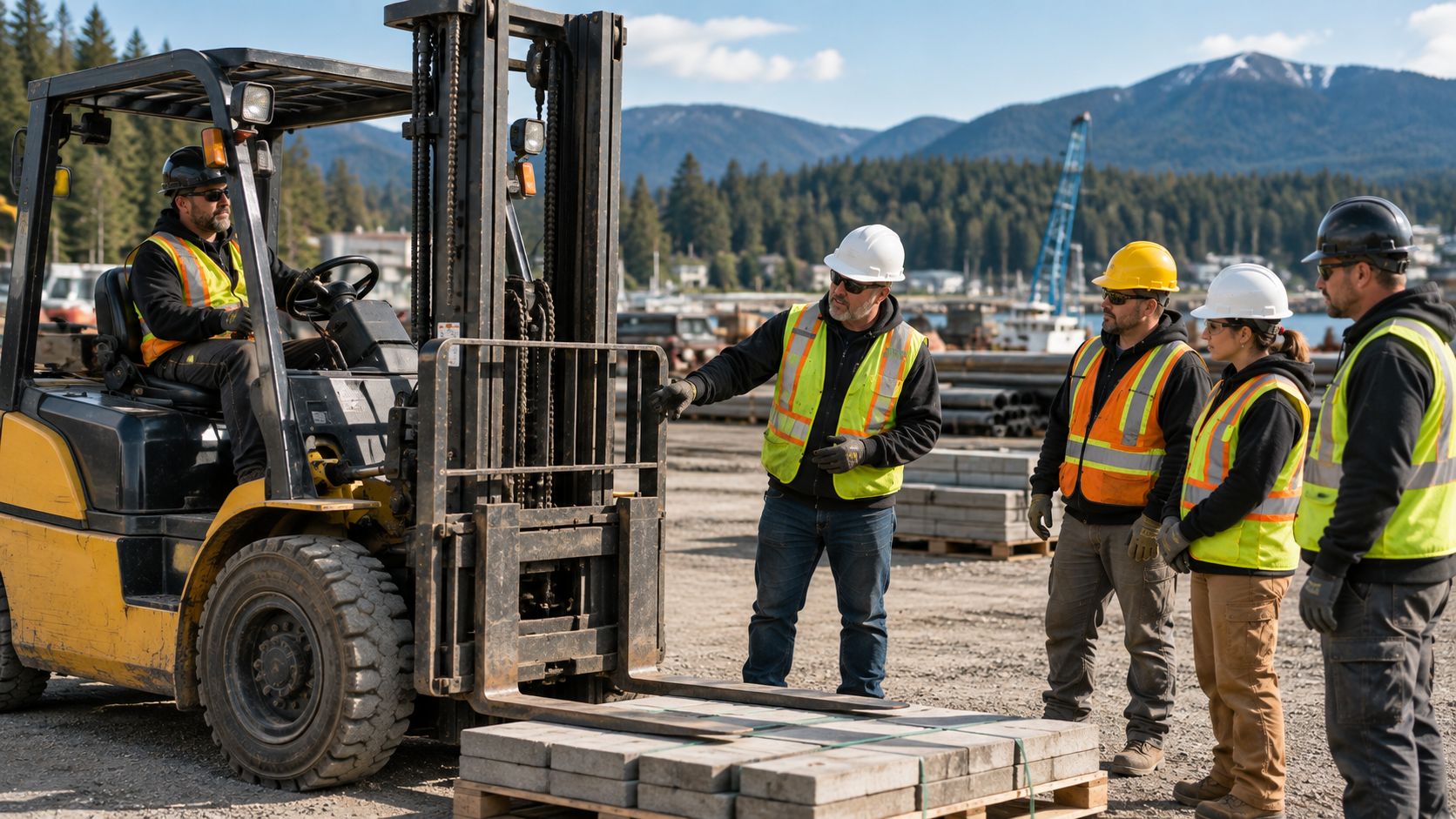
Onsite forklift training simply means the trainer travels to your workplace and delivers the theory and the hands on evaluation using your equipment, on your ground, with your crew. Instead of your operators driving to a fixed course somewhere and running an unfamiliar machine in an unfamiliar space, the training happens where the work happens. The classroom portion is often set up in a lunchroom or office, and the practical portion uses the same lift trucks your operators run every day.
That difference matters more than it first appears. An operator evaluated on the exact forklift, the exact loads, and the exact layout they work in is being assessed on the real job, not a demonstration version of it. For an employer, that is the whole point of booking onsite rather than offsite. The question is not whether onsite is thorough, it clearly can be. The question is whether your specific situation justifies the trainer coming to you, and that comes down to a handful of factors worth walking through one at a time.
The Crew Size Where Onsite Training Starts to Pay Off
Crew size is the single biggest factor in whether onsite training is worth booking. The economics are simple. A trainer coming to your site has a setup and travel component built into the day, and that cost is spread across everyone trained in that session. Train one person and the per operator figure looks high. Train five or six in the same visit and the math shifts firmly in your favour, because you are paying for the trainer’s day once and qualifying a whole group inside it.
Small teams and the tipping point
For a shop with only one or two operators to qualify, sending them to an existing group course elsewhere can be the leaner option, since you are only moving one or two people and not paying for a dedicated visit. The tipping point tends to arrive around three or four operators. Once you are moving that many people offsite, you are losing several workers for part or all of a day, coordinating multiple schedules, and often still paying per seat. At that point, having the trainer come to you usually costs less in total disruption than sending the group out.
Larger and recurring crews
For larger crews, or any operation that qualifies new hires on a regular basis, onsite training moves from occasionally worth it to routinely the better choice. If you bring on operators every few months, a repeatable onsite session becomes part of how you run the business rather than a special event. You control the timing, you train people on the equipment they will actually use, and you keep a consistent record of how each person was qualified. Seasonal operations around Campbell River that staff up for a busy stretch often find this is the only practical way to get a group ready without stalling the ramp up.
When Scheduling and Downtime Tip the Decision Toward Onsite
Downtime is the cost most employers underestimate when they compare training options. Sending an operator offsite is rarely just the course fee. It is travel time, a full or half day away from the job, and the ripple effect on everyone whose work depends on that person. When you add those hidden costs up, the offsite option that looked cheaper on paper often is not.
Onsite training gives you control over the calendar. Because the trainer comes to you, you can schedule the session during a slower part of the week, split a large group across a morning and afternoon, or slot training into a shutdown or maintenance window when the equipment is free anyway. That flexibility is hard to get from a fixed offsite course date that your operation has to bend around. For a busy yard, being able to say when training happens is often worth as much as the training itself.
There is also the productivity angle of keeping people on site. Operators trained in their own workplace can step straight back into the job when the session ends, with no commute at either end of the day. Nobody is stuck in traffic on the Island Highway or losing an afternoon to travel. For an employer trying to protect output while still getting a crew qualified, that recovered time is a real and measurable saving.
It helps to picture the full cost of an offsite day rather than just the seat fee. A single operator sent to a course can mean a half day of travel on either side, a shift another worker has to cover, and a delay to whatever job that operator normally keeps moving. Multiply that across three or four people and the offsite option quietly becomes the expensive one. Onsite training removes most of that hidden cost because the crew never leaves the property, which is why employers who run the numbers honestly often find the visit pays for itself in retained output alone.
Why Mixed Experience and Multi Equipment Crews Get the Most From Onsite
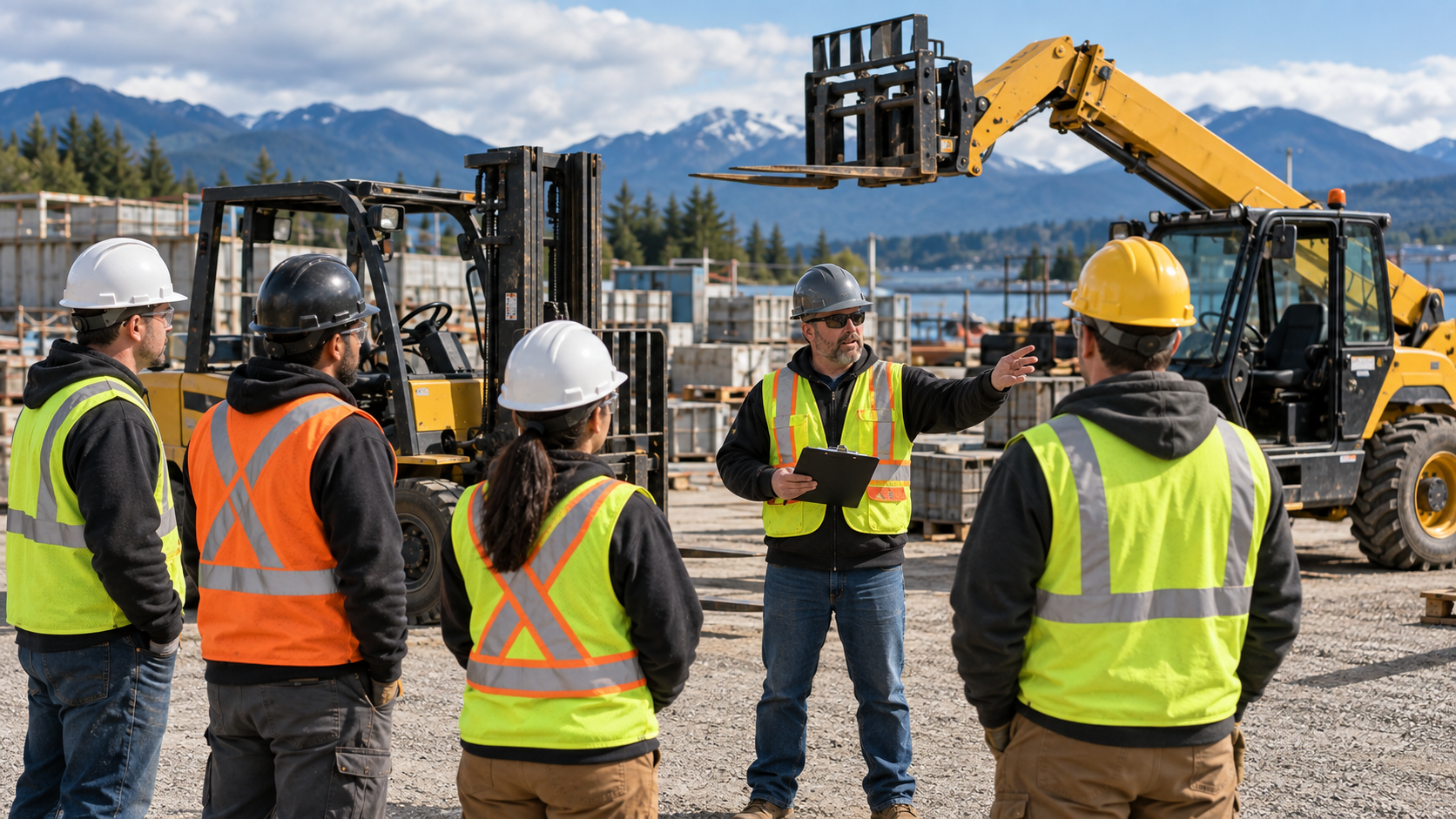
Onsite training shows its biggest advantage with crews that are not uniform, and most real crews are not. You often have a mix of seasoned operators who need a straightforward refresher, newer hires who need the full foundation, and people who move between a counterbalance forklift and other mobile equipment depending on the day. A generic offsite course built for a room of strangers cannot easily flex to all of that. A trainer working with your crew on your site can.
When the session happens at your workplace, an experienced operator can be evaluated efficiently and spend more time demonstrating competency than sitting through basics they already know, while a new operator gets the fuller grounding they need. The trainer sees your actual mix of people and adjusts the depth accordingly. That tailoring is difficult to arrange when your operators are scattered into whatever offsite course had open seats.
A simple example makes the point. Say your crew has two operators who have run the same forklift for years, one who transferred in from another site, and a new hire who has never held a ticket. An offsite course treats all four as identical seats in a room. An onsite trainer can move the two veterans through evaluation quickly, confirm the transfer operator knows your particular machine and layout, and give the new hire the full grounding, all inside one planned visit. Four different needs, one efficient session.
The multi equipment picture is where this matters most. Plenty of Campbell River operations run a forklift alongside other machines, and operator readiness is tied to the specific equipment a person uses, not a single broad ticket. Onsite delivery lets a trainer assess your people on the machines they genuinely operate and flag where someone is confident on one and out of their depth on another. That is far harder to catch in a one size fits all offsite session. If your crew handles more than lift trucks, quality Forklift Training Services in Campbell River delivered onsite can be planned to reflect that reality rather than ignore it.
When Campbell River Site Conditions Make Onsite the Smarter Booking
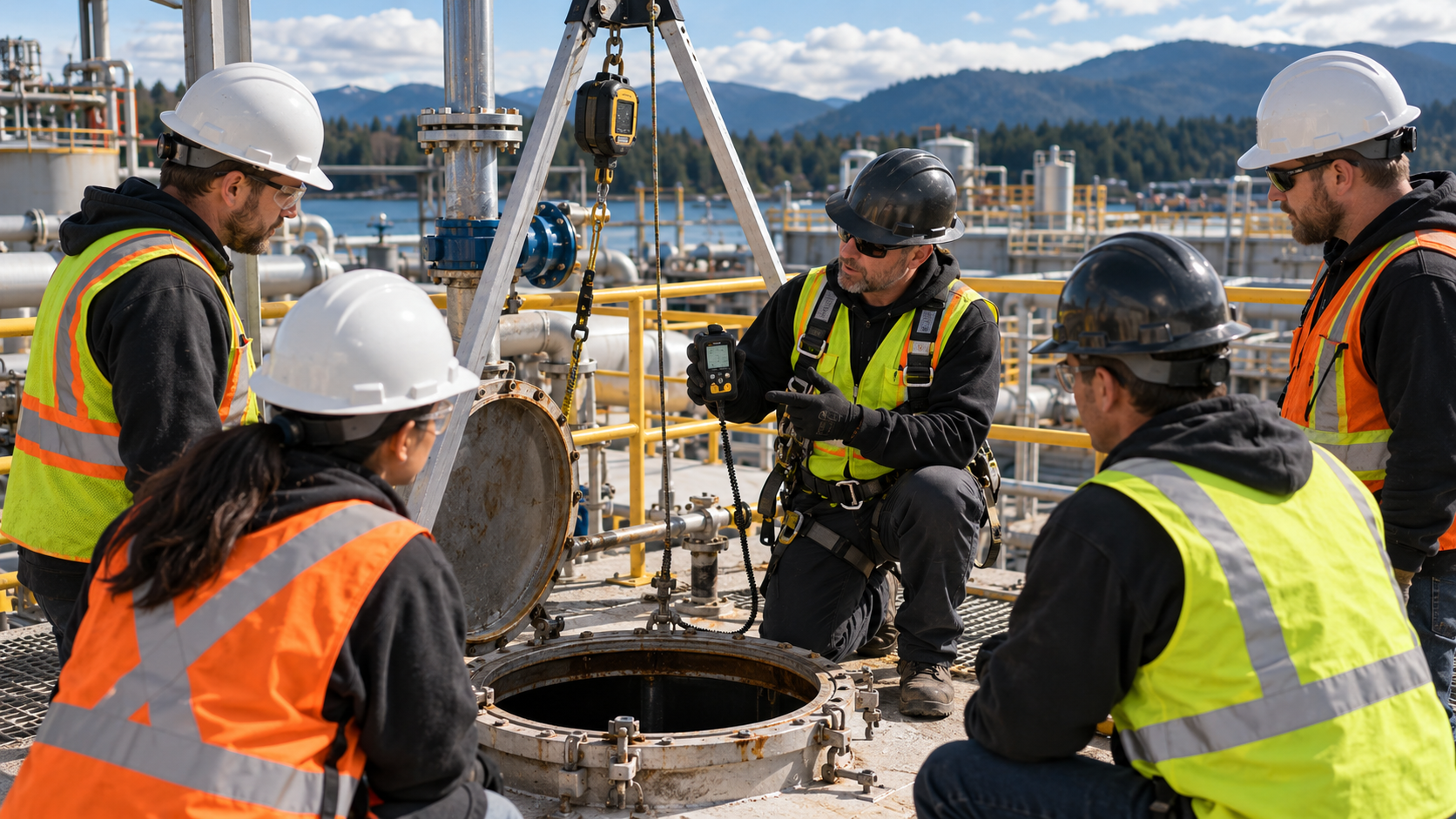
Your worksite itself can be the deciding factor. Campbell River operations often work in conditions a generic training yard never replicates: coastal and marine industrial sites, forestry and log handling yards, uneven or soft ground, tight indoor storage, and the wet weather that comes with an Island winter. An operator who looks perfectly competent on flat, dry concrete at an offsite course has not been tested against any of that.
WorkSafeBC makes the point that even a properly trained operator still needs site specific familiarization with the hazards and conditions of the workplace where they will run the equipment. Onsite training folds that requirement directly into the session, because the evaluation is already happening on your terrain, near your traffic patterns, around your pedestrians and your storage layout. Rather than qualifying an operator in the abstract and then arranging a separate site orientation, you get readiness that already reflects the real job.
This is also where a local trainer earns their keep. VIF Safety Training is based in Campbell River, so onsite delivery in the area is genuinely local rather than a long trip with travel loaded onto your bill. A trainer who knows the kind of yards, weather, and equipment common to Vancouver Island worksites can shape the practical portion around the conditions your operators actually face, which is precisely the value that an out of town or offsite option struggles to match.
A Quick Guide to Deciding If Onsite Is Worth Booking
The table below is a fast reference for supervisors weighing the choice. Read across each row and the pattern is clear. The more of the onsite column that describes your situation, the more sense it makes to bring the trainer to you.
| Factor | Onsite Is Usually Worth Booking | Offsite May Fit Better |
| Number of operators | Three or more to qualify at once | Only one or two people |
| Downtime sensitivity | Losing people to travel hurts output | A single short absence is easy to absorb |
| Crew makeup | Mixed experience or multiple machines | One operator on one standard machine |
| Site conditions | Uneven, coastal, forestry, or unusual layout | Standard flat indoor warehouse work |
| Hiring pattern | Regular or seasonal new operators | A rare one off qualification |
| Equipment | You want people trained on your own machines | Your machine is unavailable or out of service |
No single row decides it on its own, but the picture usually forms quickly. A three person crew running mixed equipment on a wet coastal yard is an obvious onsite candidate. A single new hire joining an operation with a spare, familiar forklift and flexible hours may be perfectly well served by an offsite seat. Most operations land somewhere in between, and the table helps you see which way they lean.
When Offsite Training Still Makes More Sense
Booking onsite is not always the answer, and a trainer worth trusting will tell you so. If you have a single operator to qualify, no group forming any time soon, and a schedule that can absorb one short absence, sending that person to an existing offsite course can be the cleaner and more economical route. There is no reason to pay for a dedicated site visit to train one person when a scheduled seat elsewhere does the job.
Offsite can also be the practical choice when your own equipment is out of service, mid repair, or otherwise unavailable for a training day, since an operator has to be evaluated on a working machine. In that case, a course with equipment ready to go keeps things moving. Some employers use a blend over time, sending the occasional one off operator to a scheduled course while booking onsite sessions whenever a group needs qualifying. The right answer is whichever one fits the specific situation in front of you, not a blanket rule that onsite always wins.
What to Confirm Before You Book Onsite Forklift Training in Campbell River
Once you have decided onsite is the right direction, a short set of checks makes sure the session delivers what you actually need. Running through these before you book protects both your operators and your record of how each person was qualified.
- Confirm the trainer evaluates operators through real hands on operation on your equipment, not just a slideshow or an online module, so competency is observed rather than assumed.
- Confirm the training will be delivered on the specific machines your crew runs, and that any other mobile equipment they operate is addressed rather than lumped under a single generic session.
- Confirm the session includes the site specific hazards and conditions of your yard, since WorkSafeBC expects familiarization with the actual workplace, not just a generic environment.
- Confirm you will receive documentation showing how each operator was trained and evaluated, which a supervisor can produce quickly if it is ever asked for.
- Confirm the plan accounts for refresher needs, since WorkSafeBC points employers to the CSA B335 standard, whose guidance calls for upgrade training at least every three years and sooner when equipment, conditions, or performance change. Verify the current standard with WorkSafeBC when you schedule.
- Confirm the timing works around your production, including whether a larger group can be split across a morning and afternoon to keep the operation running.
None of these is complicated, but skipping them is how an employer ends up with a certificate that does not reflect real readiness. The point of booking onsite is to get training that fits your operation exactly, so it is worth taking a few minutes to confirm that is what you are actually getting.
How VIF Safety Training Delivers Onsite Forklift Training in Campbell River
VIF Safety Training is based in Campbell River and works with Island employers who run lift trucks and mixed mobile equipment every day, so a crew that needs training brought to their own yard is familiar territory rather than a special request. Training is led by Darrell Block, an IVES certified trainer with 24 years of experience operating mobile equipment, which means the practical evaluation is grounded in how real worksites run, not a one size fits all classroom template.
For employers weighing the decision in this article, VIF Safety Training can help you work out whether onsite genuinely makes sense for your situation or whether a smaller need is better served another way. When onsite is the right call, sessions are planned around your schedule and your equipment, with the practical portion delivered on your ground and your machines, and larger groups arranged so the operation keeps moving. The result is a qualified crew and a clear, defensible record of how each operator was trained, without a wasted day.
Because the trainer is local to Campbell River, onsite delivery in the area does not carry the travel overhead that an out of town provider would add, and the training reflects the coastal and industrial conditions Island operators actually work in. That combination of local knowledge and hands on evaluation is what turns a training session into genuine operator readiness rather than a box that got checked.
If you are trying to decide whether onsite forklift training is worth booking for your Campbell River crew, VIF Safety Training can help you weigh crew size, scheduling, and site conditions and then plan a session that fits. Call (250) 889-2074 or email info@vanisleforklift.ca to talk through your operation, and you can also contact VIF Safety Training through the website to get started.
Frequently Asked Questions
- How many operators make onsite forklift training worth booking in Campbell River?
Onsite training usually becomes the better value once you have about three or more operators to qualify in one visit, because the trainer’s day is spread across the group. For one or two people, sending them to a scheduled offsite course can be leaner. The more operators you train in a single session, the stronger the case for booking onsite.
- Is onsite forklift training more expensive than sending operators offsite?
It depends entirely on how many people you are training and what downtime costs you. For a single operator, an offsite seat is often cheaper, but for a group, onsite is frequently the lower total cost once you account for lost production, travel, and per seat fees. VIF Safety Training does not quote a fixed figure here because it varies by crew size and scope, so it is best to discuss your specific numbers directly.
- Can onsite training be done on our own forklifts and in our own yard?
Yes, and that is one of the main reasons to book it. The trainer comes to your workplace and evaluates operators on the exact machines and ground conditions they work with, which gives you readiness that reflects the real job rather than a generic demonstration. It also folds site specific hazard familiarization into the same session.
- Does onsite forklift training meet WorkSafeBC expectations?
Onsite training can fully meet the general WorkSafeBC expectation that operators are trained, evaluated, and competent on the equipment they use, and that they receive site specific familiarization. WorkSafeBC points employers to the CSA B335 standard for lift truck operator training. Confirm the current requirements with WorkSafeBC when you plan, since employers are responsible for meeting the standard in force.
- How often do forklift operators need refresher training?
WorkSafeBC guidance, following the CSA B335 standard, calls for upgrade or refresher training at least every three years, and sooner when equipment changes, conditions change, an incident happens, or an operator’s performance raises concerns. Because the exact requirement can be updated, an employer should verify the current standard with WorkSafeBC. A good onsite plan builds these refreshers into a repeatable schedule.
- Is onsite training worth it for a crew with mixed experience levels?
Yes, mixed crews are one of the situations where onsite delivers the most value. A trainer working on your site can give newer operators the full foundation while evaluating experienced operators efficiently, rather than forcing everyone through the same generic offsite session. That tailoring is difficult to arrange when operators are sent to whatever course has open seats.
- When does it still make more sense to send an operator offsite instead of booking onsite?
Offsite usually makes more sense when you have only one operator to qualify, no group forming soon, and a schedule that can absorb a short absence, or when your own equipment is unavailable for a training day. In those cases a scheduled offsite seat is the cleaner choice. Many employers blend the two, using offsite for rare one offs and onsite whenever a group needs training.