Quick answer: There is no government-issued forklift license in British Columbia, so you cannot simply apply for one at a licensing office. To work as a forklift operator in Campbell River, you need documented operator training, a passed hands-on evaluation, and an employer who confirms you are qualified on the specific equipment. WorkSafeBC requires that this training meet a recognized standard before anyone runs a lift truck on the job.
If you are hiring for a warehouse, a construction crew, or an industrial yard around Campbell River, one question comes up again and again. Do your operators actually need a forklift license to run a lift truck legally, and if so, where do they get it? The honest answer surprises a lot of people, because the thing most workers call a forklift license does not exist the way a driver’s license does. There is no card you collect from a government office and no road test at a licensing branch. What the law does require is documented training, a passed practical evaluation, and an employer who can show each operator is genuinely qualified on the equipment they use. That distinction is why so many local businesses look into Forklift Training Services In Campbell River and proper forklift training in Campbell River before they put anyone on a machine.
This guide explains what the rules really expect, what qualifies an operator, and how to make sure your crew is ready rather than just holding a piece of paper.
Is There Actually Such a Thing as a Forklift License
The short version is that British Columbia does not issue a forklift license to individual workers. Unlike a driver’s license, there is no provincial card, no test at a licensing branch, and no number you renew at the counter. When people say a worker is licensed to operate a forklift, what they almost always mean is that the worker completed an operator training course and passed the evaluations that go with it. The training provider or the employer then issues a record or an operator card confirming that, but it is a training record, not a government license. The wording matters, because it changes what you should actually be looking for.
This misunderstanding leads to real problems on real worksites. An employer who thinks a quick online form produces a legal license can end up with an operator who was never properly evaluated on a machine. A worker who believes an old card from another province or another job automatically transfers can be caught out when a new employer asks for current, equipment-specific proof. In both cases the paper looks fine while the underlying readiness is missing. Understanding that the requirement is about demonstrated ability, not a laminated card, changes how you approach hiring and training from the start.
The reason the license idea sticks around is understandable. Most of us learned to drive through a formal licensing system, so we expect the same model everywhere. Forklifts work differently. The responsibility for qualifying an operator sits with the workplace and the training that happens there, not with a provincial licensing body. Once you accept that, the practical question stops being where do I get the license and becomes how do I make sure this operator is properly trained and evaluated for the work in front of them.
What WorkSafeBC Expects Before You Operate a Forklift in Campbell River
Even without a formal license, operating a forklift on the job is far from unregulated. The provincial regulator sets clear expectations for anyone running powered mobile equipment, and forklifts sit squarely inside those rules. In plain terms, an employer must ensure that every operator has been trained, has demonstrated the required skills, and is qualified for the specific type of equipment they will use. The training has to meet a recognized standard rather than an informal show-and-tell from a coworker on a slow afternoon.
The relevant rules live in Part 16 of the Occupational Health and Safety Regulation, which covers mobile equipment. That part requires operator training for lift trucks to meet the applicable recognized standard, which for forklifts is the CSA B335 standard for lift truck operator training. You can read the framework directly in the WorkSafeBC mobile equipment regulation. The practical takeaway for a Campbell River employer is simple. Training must be structured, it must include both a knowledge portion and a hands-on component, and there has to be a record proving the operator was evaluated and found competent on the machine.
There is one more expectation worth planning for. Qualifying an operator is not a one-time event that lasts a career. Skills fade, equipment changes, and new sites introduce new hazards, so periodic refresher training and re-evaluation are part of keeping a crew current. The exact interval and the details for your operation should be confirmed against the current regulation and your equipment maker’s guidance rather than assumed, but the principle is steady. An operator who was signed off years ago and never revisited is not automatically current today, and treating an old record as permanent is one of the more common gaps a review turns up.
A License Is Not the Same as Real Operator Training
It helps to separate two ideas that often get blurred together. One is the paperwork, the card or certificate that says a worker is trained. The other is the actual ability to operate a forklift without putting people or product at risk. A card is only as good as the training behind it. Someone can hold an impressive looking ticket and still be a genuine hazard on the floor if the training skipped the hands-on evaluation or covered a completely different class of machine. The document is a summary of the training, not a substitute for it.
This is why experienced employers look past the paper and ask what the training actually involved. Did the operator complete a knowledge portion covering stability, load handling, pedestrian awareness, and inspection? Did they get evaluated operating the real equipment under an instructor’s eye, or did they simply watch a video and answer a quiz? Was the training matched to the machine they will run, whether that is a counterbalance forklift, a reach truck, or a rough terrain unit? A meaningful qualification answers all of those questions with a clear record. A weak one just fills a filing cabinet and leaves the employer exposed if anything goes wrong.
The stakes behind that difference are not abstract. Forklifts are heavy, they carry unstable loads, and they share space with people on foot. An operator who was never truly evaluated is a risk to the whole crew, and a certificate that overstates their readiness makes that risk harder to spot. Treating the training as the real thing, and the paperwork as evidence of it, keeps the focus where it belongs.
What Actually Qualifies You to Run a Forklift on a Campbell River Site
If there is no license to collect, then what does it actually take to be qualified to operate a forklift at work in Campbell River? In practice, real operator readiness is built from several pieces that work together. Miss one and the qualification has a gap, no matter how official the certificate looks. The list below is what a complete, defensible qualification usually includes.
- Knowledge training that covers forklift stability, load limits, daily inspection, pedestrian awareness, and the hazards specific to your work.
- A hands-on practical evaluation on the actual type of machine the operator will use, observed and signed off by a qualified instructor.
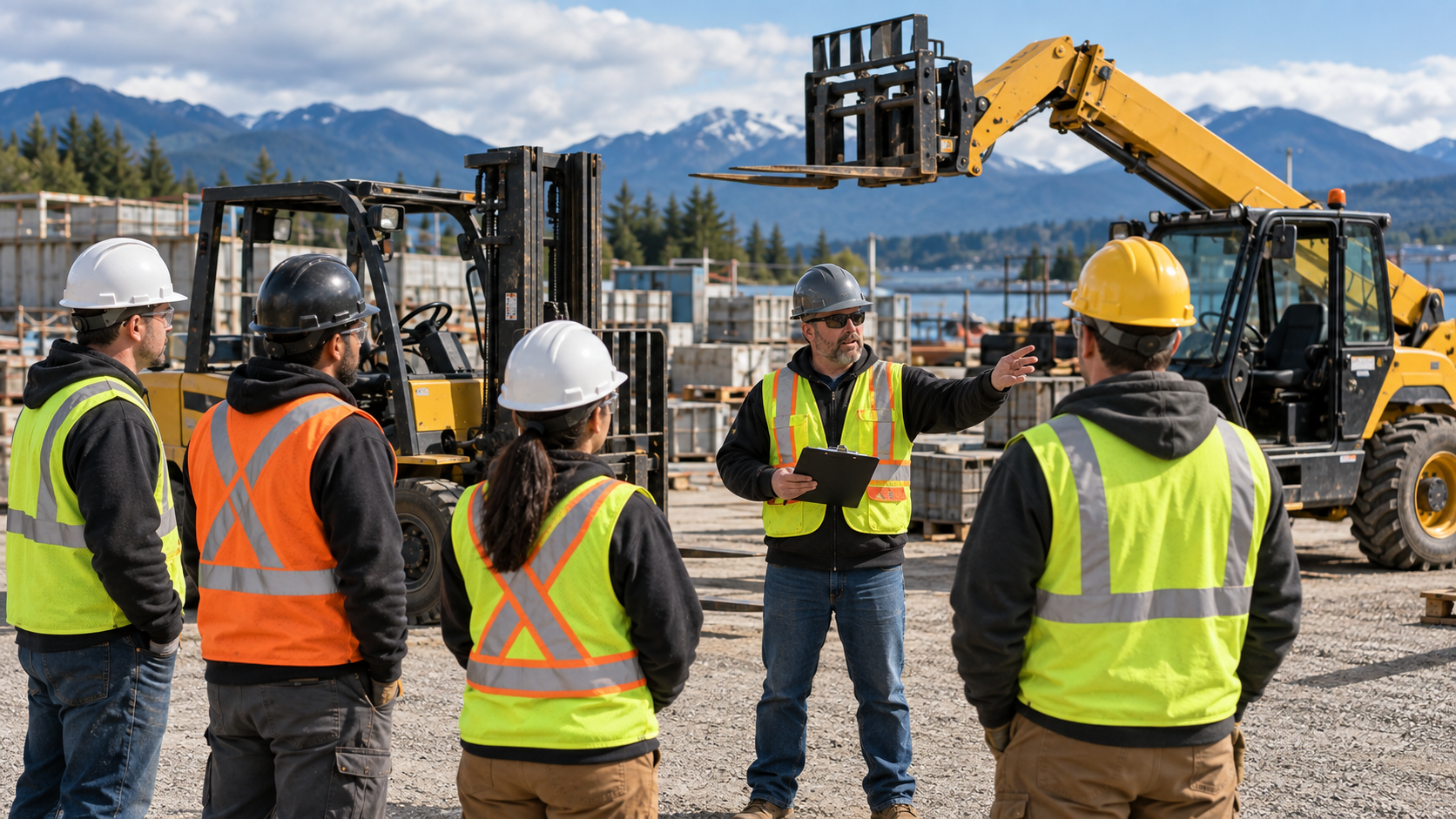
- Equipment-specific training, since a counterbalance forklift, a reach truck, and a telehandler handle differently and are not interchangeable.
- Site familiarization, so the operator understands the layout, traffic patterns, floor conditions, and loads at your particular Campbell River location.
- A written record the employer keeps on file, showing who was trained, on what equipment, and when they were evaluated.
- A plan for refresher training and re-evaluation, so the qualification stays current as people, machines, and worksites change.
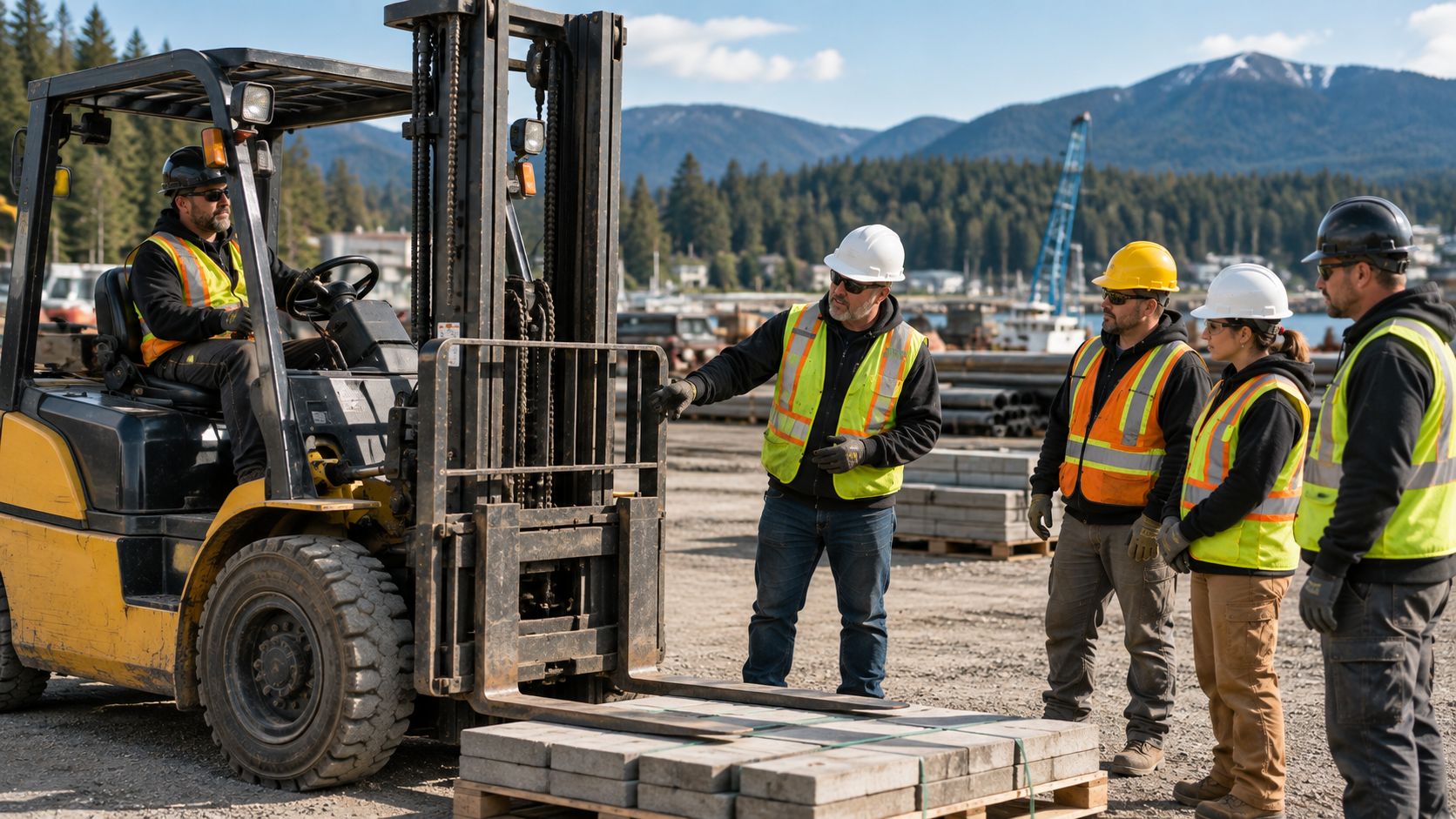
Notice that only part of that list happens in a classroom. The rest is about proving ability on a real machine and connecting the training to the place where the work happens. That is the difference between an operator who simply attended a course and one who is genuinely ready to work. It is also why employers who care about doing this properly often bring the training to their own yard, where the equipment and conditions are the real thing rather than a generic demo. Options like onsite forklift training make that straightforward, and they tend to produce operators who transfer what they learned straight back to the floor.
Who Needs Forklift Training, Not Just First-Time Operators
A common mistake is to treat operator training as something only brand new hires require. In reality, several kinds of workers need attention, and skipping any of them leaves a hole in a crew’s readiness. A first-time operator is the obvious case, but an experienced hand can just as easily fall out of qualification without anyone noticing, especially on a busy site where the paperwork rarely gets a second look.
The table below lays out the situations that show up most often on Campbell River worksites and what each one usually calls for. It is a quick way to check whether everyone running your equipment is actually accounted for rather than assumed to be fine.
| Operator situation | What it usually calls for | Why it applies |
| New or first-time operator | Full knowledge training plus a hands-on evaluation on the right machine | They have no prior record and must be qualified from the ground up |
| Experienced operator new to your site | Site familiarization and confirmation of current qualification on your equipment | Skill may transfer, but the site, loads, and machine class can differ |
| Operator due for a refresher | Refresher training and a fresh practical re-evaluation | Skills and habits drift over time, so periodic re-evaluation keeps them current |
| Operator moving to a different machine | Equipment-specific training for the new class of forklift | A ticket on one machine does not automatically cover another |
Reading it as a group rather than one worker at a time is what protects an operation. Many employers discover that their newest hires are well documented while a long serving operator has not been re-evaluated in years. Both count. A qualification that is out of date or tied to the wrong machine is a gap, and it is exactly the kind of thing a serious review of your crew will surface before an inspector or an incident does. Programs such as mobile equipment certification are built to keep that whole picture current, not just the newcomers.
Why Online-Only Forklift Certificates Fall Short
Search for a forklift license online and you will find plenty of sites promising a certificate in an afternoon for a flat fee. It is worth being clear about what those actually deliver. An online course can teach the theory portion reasonably well, the stability principles, the inspection steps, the hazard awareness. What it cannot do is put a worker on a real machine and confirm they can operate it under load, in a real space, with an instructor watching. That hands-on evaluation is the part the rules care about most, and it is the part an online-only course skips entirely.
That gap is why an online-only certificate is generally not accepted as complete operator training in British Columbia, and why a cautious employer treats it as, at best, the classroom half of the job. Relying on one can leave a business exposed if an incident happens and the operator was never properly evaluated on the equipment. The more reliable path is a course that combines solid knowledge training with a genuine practical assessment, so the card actually reflects the ability behind it. If a worker already finished a legitimate theory portion, a good provider can often build on it rather than starting from scratch, but the hands-on evaluation still has to happen before anyone is truly qualified.
How Forklift Training Services in Campbell River Cover the Requirement
Good forklift training pulls all of these threads into one clear process, so an employer is not left assembling a qualification piece by piece. A complete course walks operators through the knowledge they need, then puts them on the equipment for a supervised practical evaluation, and finishes with a record the employer can keep on file. Handled this way, it answers the regulatory expectation and produces operators who are genuinely ready, in one organized step rather than a scramble the week before a job starts.
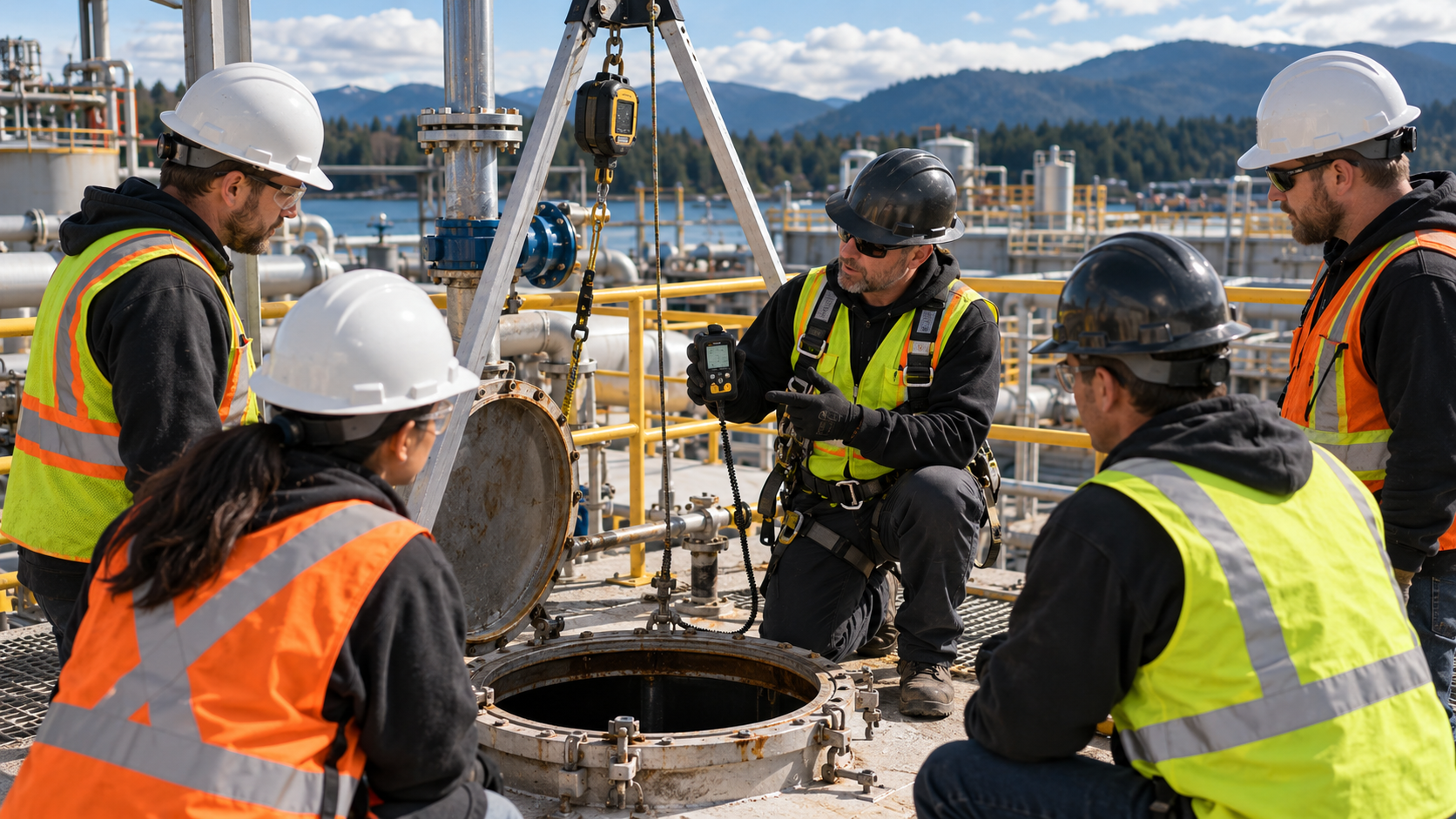
Local delivery adds real value here. A provider who trains around Campbell River and the wider Vancouver Island region understands the kinds of sites, equipment, and conditions crews actually work with, from busy warehouses to construction yards and industrial operations. Training can be scheduled to limit downtime, and it can often be delivered at your own location so operators learn on the machines and in the space they use every day. For employers running more than forklifts, coordinating operator readiness across several equipment types at once keeps a mixed crew qualified without booking a dozen separate sessions.
The result an employer should expect is straightforward. Every operator has documented knowledge training, a passed practical evaluation on the correct machine, and a clear record on file, with a plan for refreshers down the road. That is what actually meets the requirement, and it is a great deal more reliable than chasing a license that was never going to exist in the first place. It also gives you something concrete to point to if a client, a prime contractor, or a regulator ever asks how your operators are qualified.
How VIF Safety Training Gets Campbell River Operators Job-Ready
For employers who want this handled properly, VIF Safety Training focuses on exactly the gap between a piece of paper and a job-ready operator. The company was built on real time in the field, with owner and lead instructor Darrell Block bringing more than two decades of hands-on experience operating mobile equipment across Vancouver Island, along with IVES certified instructor credentials. That background matters, because the training reflects how equipment behaves on a working site, not just how it reads in a manual.
The approach is practical from start to finish. Operators complete the knowledge portion, then get evaluated on the actual equipment they will run, so the qualification reflects real ability rather than attendance. Training can be arranged to suit a working operation, with scheduling handled around production and delivery available at your own Campbell River site where it makes sense. New operators get qualified from the ground up, experienced hands get re-evaluated where their records have lapsed, and employers walk away with the documentation they need on file.
The aim throughout is simple. Give Campbell River employers a crew that is genuinely ready to run forklifts and mobile equipment, backed by training records that stand up to scrutiny. That is a far stronger position than hoping an online certificate or an old card from another job will be enough when it actually matters, whether that is during a routine review or the moment something goes sideways on the floor.
If you are trying to work out what your crew actually needs to operate forklifts legally in Campbell River, the quickest way forward is a direct conversation. Call VIF Safety Training at (250) 889-2074 or email info@vanisleforklift.ca to talk through your operators, your equipment, and your site, and get clear guidance on what qualifies your people and what does not. You can also contact VIF Safety Training to ask a question or book training that fits around your schedule. Getting the right answer early costs far less than discovering a gap after an incident, and it puts your operation on solid ground from day one.
Frequently Asked Questions
- Do you legally need a forklift license to work in Campbell River?
You do not need a government forklift license, because British Columbia does not issue one. What you do need is documented operator training, a passed practical evaluation, and an employer who confirms you are qualified on the specific equipment. That combination is what makes an operator legal to work, not a card from a licensing office.
- Is a forklift certificate from another province or another job still valid here?
It depends on how current and complete it is, and whether it matches the equipment you will run. A new employer in Campbell River will usually want proof of recent training, a practical evaluation, and site familiarization before putting you on a machine. Older or equipment-specific tickets often need a refresher or re-evaluation before they can be relied on.
- How long does forklift training usually take?
It varies by course, by the operator’s experience, and by the type of machine, so there is no single fixed answer. A focused course for a new operator is often completed in about a day, while an experienced operator needing a refresher may need less time. The best way to get an accurate estimate is to describe your crew and equipment so the training can be scoped to fit.
- Can I get forklift certified completely online?
No, an online-only certificate is not treated as complete operator training in British Columbia. Online learning can cover the knowledge portion, but it cannot provide the hands-on practical evaluation on a real machine that the rules expect. A legitimate qualification pairs the theory with a supervised practical assessment.
- Who is responsible for making sure a forklift operator is qualified?
The employer carries that responsibility under WorkSafeBC’s rules. An employer must ensure each operator is trained, evaluated, and competent on the equipment they use, and must keep records showing it. Operators share the duty of working within their training, but the obligation to confirm qualification sits with the employer.
- How often does forklift training need to be refreshed?
Qualification is not permanent, so periodic refresher training and re-evaluation are expected to keep operators current. The specific interval for your situation should be confirmed against the current regulation and your equipment maker’s guidance rather than assumed. As a practical matter, an operator who has not been re-evaluated in years should be refreshed before continuing.
- Can forklift training be done at our own worksite in Campbell River?
Yes, training can often be delivered at your own location, which lets operators learn on the machines and in the conditions they actually work with. Onsite delivery also helps limit downtime, since the crew does not have to travel offsite for the practical portion. Contact VIF Safety Training to arrange a session that suits your operation.