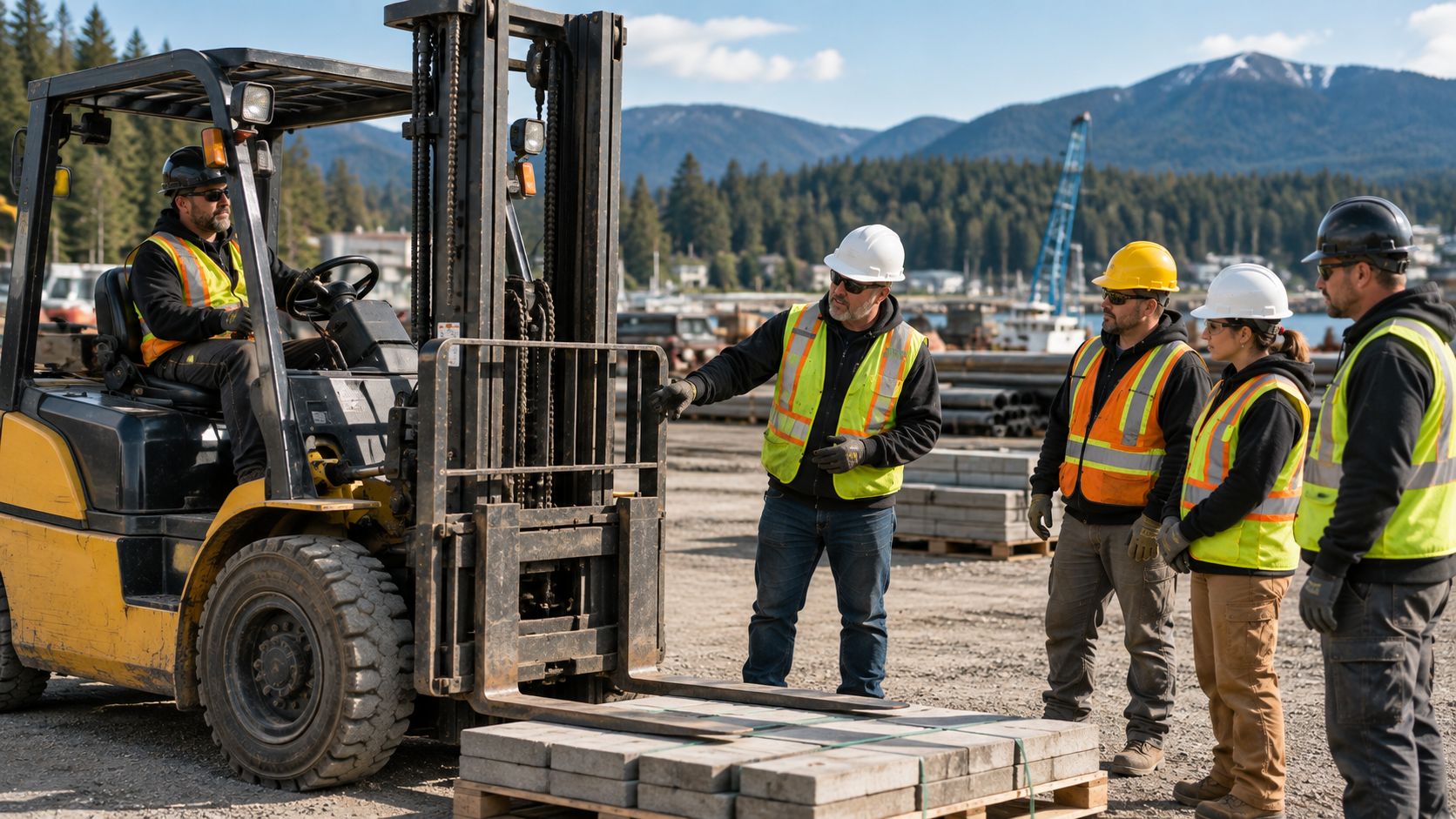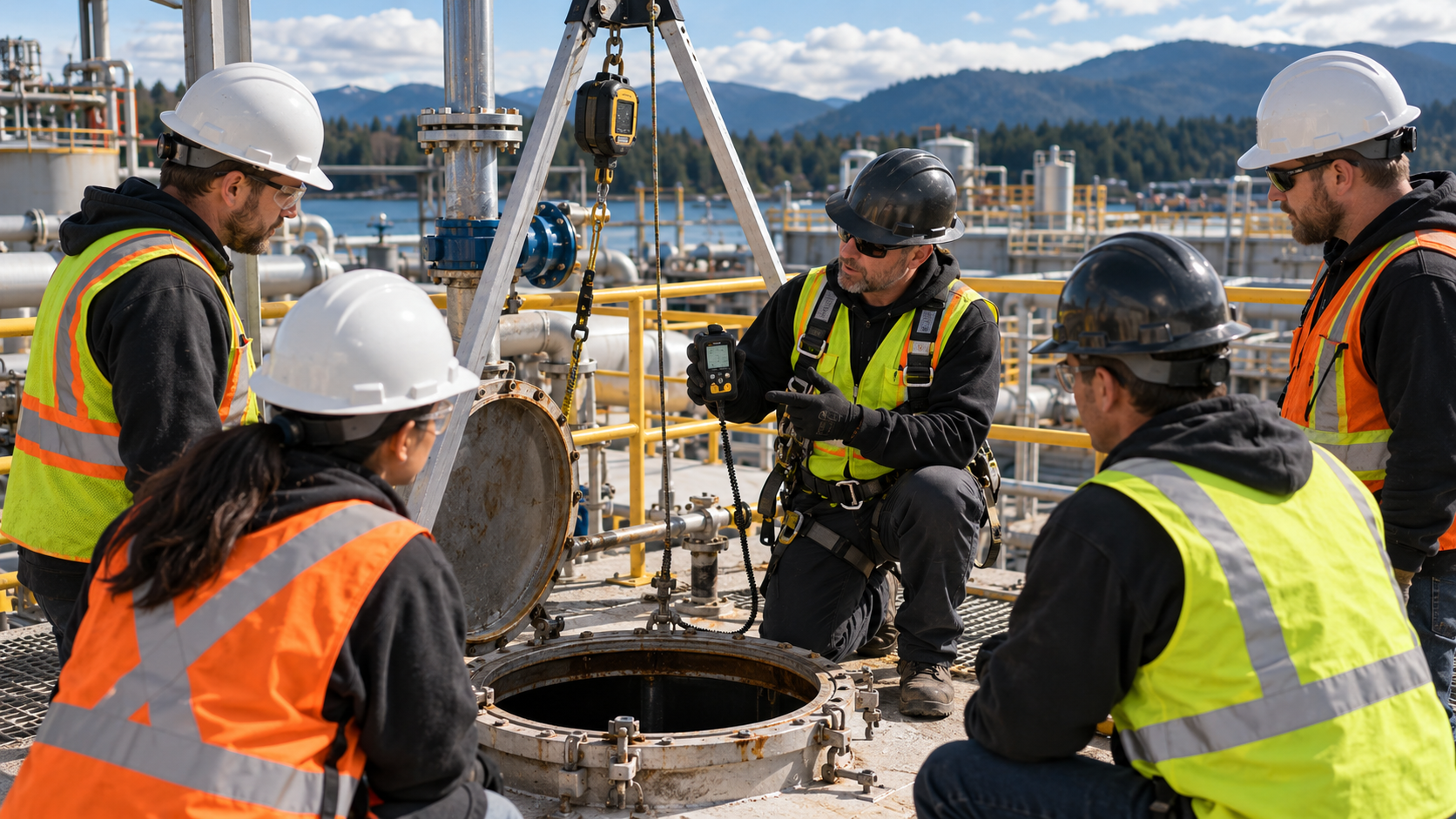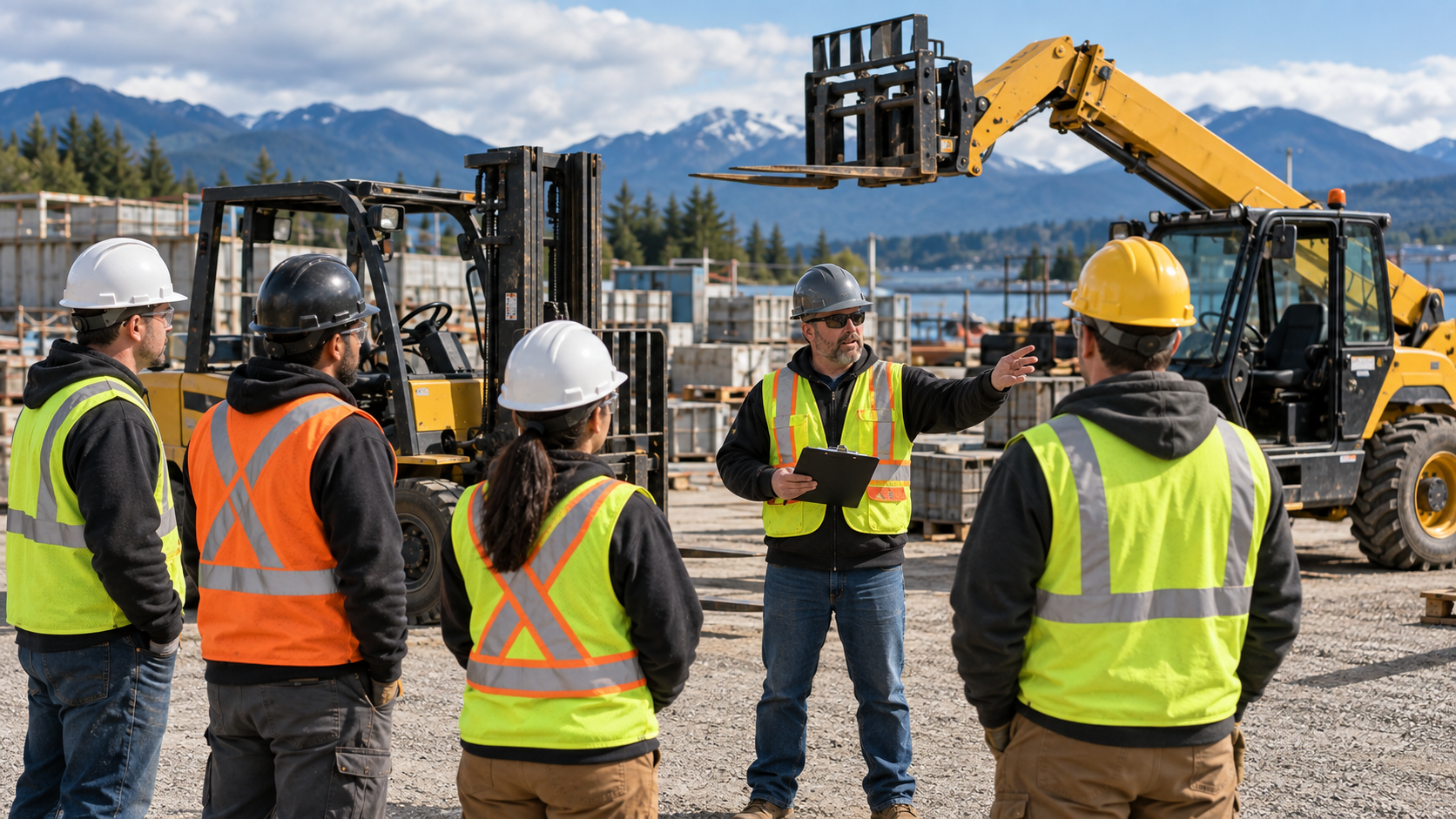
Quick answer: Confined space awareness training teaches workers to recognize a confined space, understand the atmospheric and physical hazards that make one dangerous, respond correctly in an emergency, and know why entry is never a casual decision. In Campbell River the course focuses on recognition and restraint for the wider crew rather than qualifying anyone to enter, and it can be delivered onsite so the content matches the tanks, vaults, and enclosed structures your people actually work around.
If you have booked confined space education before, you may have found it hard to tell exactly what a course includes until your crew is already in the room. That uncertainty is common, because the term “confined space” covers a wide range of hazards and the word “awareness” can mean very different things depending on who is teaching it. Confined Space Awareness Training Campbell River employers book through VIF Safety Training is built around one clear job, which is teaching workers to recognize an enclosed space, understand why it can harm them, and know the limits of what they are allowed to do.
This guide breaks down what the course actually covers, section by section, so you know what your people will walk away with before you schedule a date. You can also review the full outline on the confined space awareness training page.
Setting this out plainly matters because awareness training is often misunderstood. Some employers assume it qualifies a worker to climb into a tank, and others assume it is a quick talk that changes little. Neither is accurate. A well built awareness course sits at a specific rung of confined space education, and knowing what it does and does not cover helps a Campbell River employer buy the right level of training the first time rather than over-buying or leaving a gap.
Why Confined Space Awareness Training Focuses on Recognition
The whole course is built around a single idea, which is that most confined space incidents start long before anyone should have gone near the space. A worker who cannot recognize a confined space, or who does not understand why it is different from an ordinary tight area, is the person most at risk. Awareness training exists to close that gap. Its job is to turn a vague sense that a space looks a bit off into clear, shared knowledge the whole crew can act on.
This is why the course leads with recognition rather than procedure. Entry work, permits, and rescue belong to a higher level of training for a smaller group of people. For the majority of a workforce, the skill that actually prevents harm is knowing what a confined space is, understanding that the air inside can be deadly even when it looks fine, and having the discipline to stop and ask rather than step in. Everything the course covers flows from that priority.
For a Campbell River operation, that recognition skill matters across a genuinely mixed industrial base. Marine and aquaculture operations, forestry and mill sites, municipal water and utility infrastructure, and the yards that support them all contain enclosed structures that can meet the definition of a confined space. A course that teaches recognition first gives a crew a common language for spotting those spaces wherever they appear, rather than a checklist that only fits one kind of site.
What the Course Covers About Identifying a Confined Space
The first block of the course teaches workers how to identify a confined space using the same three-part test employers are expected to apply. A confined space is an area that is fully or partially enclosed, is not designed for someone to occupy continuously, and has a restricted or limited way in and out. The course walks through each part of that definition with real examples so a worker can apply it on their own site rather than memorizing a list.
A large part of this section is spent breaking the assumption that size is what matters. The course shows that a roomy tank entered through a small hatch is a confined space, while a cramped but open storage area with a normal door usually is not. Workers learn to look at how a space is built and entered, not how tight it feels. That distinction is where a lot of real risk hides, because the dangerous spaces are often the ones that do not look dangerous at a glance.
The course also covers how a space can change status over time. An area that was open and well ventilated during construction can become a confined space once it is sealed, fitted with equipment, or put into service, and a trench or partially assembled structure can shift into that category for the length of a single task. Teaching workers to read the conditions in front of them, rather than how a space looked last week, is a core part of this section.
What the Course Teaches About Confined Space Hazards
Once workers can recognize a confined space, the course moves to why these spaces are dangerous. This is the part that tends to change how a crew thinks, because it explains hazards that are invisible or counterintuitive. The headline hazard is the atmosphere. An enclosed, poorly ventilated space can hold too little oxygen, build up toxic gas, or fill with flammable vapour, and none of that can be judged by looking or by a quick sniff at the opening.
The course covers where those atmospheric changes come from, so the hazard is concrete rather than abstract. Decomposing organic material, cleaning chemicals, welding and cutting fumes, engine exhaust, and even the slow rusting of a steel vessel can all quietly alter the air inside a space. Workers learn that a space can pass every visual check and still be capable of overcoming someone within seconds of entry. Alongside the air, the course walks through the physical hazards that come with these spaces.
- Oxygen deficient or oxygen enriched atmospheres that a person cannot detect without testing
- Toxic gases and vapours from chemicals, decomposition, exhaust, or industrial processes
- Flammable or explosive atmospheres that can ignite from a spark or from hot work
- Engulfment in loose material such as grain, sand, sludge, or liquid
- Entrapment where the shape of the space can trap a worker or block escape
- Uncontrolled energy or the sudden release of material, whether mechanical, electrical, or hydraulic
Presenting the hazards this way helps workers understand that a confined space rarely gives a warning. The course connects each hazard back to the recognition skills from the first section, so a worker who spots an enclosed space also understands the specific reasons it demands a different response than an ordinary work area.
How the Course Covers Emergency Response and the Do Not Enter Rule
One of the most important parts of the course deals with what to do when something goes wrong, and the answer is often the opposite of a worker’s first instinct. A large share of confined space fatalities are would-be rescuers, coworkers who saw someone collapse and rushed in to help without any preparation. The course spends real time on this, because interrupting that impulse is one of the most valuable things awareness training can do.
Workers learn why a confined space can overcome a rescuer just as quickly as the first person, and why the right move is to raise the alarm and call for the proper emergency response rather than climbing in. The course covers how to spot the signs of trouble, who to contact, and how to support a planned rescue from outside the space instead of becoming a second casualty. This is framed as a firm rule, not a judgment call to be made under pressure.
The course also reinforces the boundary that awareness training draws around entry itself. Its clear message is to know a confined space, respect it, and never enter without the proper program and authorization. That restraint is the emergency plan for most of a crew, because the surest way to survive a confined space incident is to avoid becoming part of one. Workers leave understanding that stepping back and escalating is the correct, expected response, not a failure to help.
What the Course Covers About Roles, Programs, and Where Awareness Ends
The final teaching block sets awareness training in context, so workers understand where their level of training stops and a controlled entry begins. This is where the course explains that entering a confined space is never a solo decision. It happens inside a written program that includes a hazard assessment, atmospheric testing, ventilation, a permit, communication, and a trained attendant stationed outside the space. Awareness training does not qualify a worker for any of that. It qualifies them to recognize when a task has crossed into that territory and to hand it off correctly.
The course refers to WorkSafeBC requirements here in general terms, because the rules that govern this work are provincial and specific. Under WorkSafeBC OHS Regulation Part 9, an employer must prepare and implement a written confined space entry program, based on a hazard assessment carried out by a qualified person, before any worker enters. Rather than teaching workers to interpret the regulation, the awareness course teaches them to recognize that these controls exist and that entry without them is not permitted. Employers should confirm the current requirements for their own operation, since the standards are detailed and can change.
To make the boundary concrete, the course lays out the difference between the levels of confined space education so nobody confuses one for another. The table below summarizes how the course frames those levels and where awareness training fits.
| Course Element | What It Covers | Why It Matters on a Campbell River Site |
| Recognition | Identifying an enclosed space using the three-part definition | Lets any worker spot a confined space before they get near it |
| Hazard understanding | Atmospheric and physical dangers and where they come from | Explains why a space that looks fine can still be deadly |
| Emergency response | Raising the alarm and never attempting an untrained rescue | Prevents the second casualty that claims many would-be rescuers |
| Entry boundary | Where awareness ends and a written entry program begins | Stops uncontrolled entry and points the task to the right program |
Read together, these elements show what the course is really for. It is not a substitute for an entry program or rescue training, and it does not pretend to be. It is the foundation that most of a crew needs, delivered so that a smaller group can move up to entry level where their role genuinely requires it.
How Confined Space Awareness Training in Campbell River Is Delivered
Beyond what the course covers, employers usually want to know how it runs and who should be in the room. Confined Space Awareness Training Campbell River crews take through VIF Safety Training is designed to be practical and to fit a working operation rather than shutting it down for a day. The content stays focused on recognition, hazards, emergency response, and the entry boundary, and it can be tailored to the spaces and conditions a particular crew actually faces.
The course is aimed at a wide group, not just the people who might eventually enter a space. Frontline workers, supervisors and lead hands, new hires, and subcontractors all benefit, because the goal is that anyone who could come into contact with a confined space can recognize it and knows to stop. Supervisors in particular gain from the training, since they assign the work and set the tone for whether a crew follows the plan or takes a shortcut when a schedule is tight.
Delivery can be arranged onsite so the training reflects the real environment your people work in. When the course is run at your own operation, the examples and discussion can point to the actual tanks, vaults, pits, or enclosed structures on the property, which makes the recognition skills transfer straight back to the job. Onsite delivery also cuts the travel and coordination time that comes with sending a crew offsite, so the disruption to production stays contained.
It also helps to treat awareness training as something that is refreshed, not done once and forgotten. Crews change, sites change, and new equipment or new projects can introduce spaces nobody had assessed before. Folding the course into onboarding and revisiting it periodically keeps the recognition skills current across the whole operation, so the knowledge does not walk out the door when an experienced worker leaves.
How VIF Safety Training Delivers the Course in Campbell River
VIF Safety Training is based in Campbell River and works with employers across Vancouver Island, so the confined space awareness course is delivered by a provider that knows the local industrial base rather than a generic national curriculum. The starting point for any booking is a straightforward conversation about your operation, the enclosed spaces on your site, and who on your crew needs the training, so the day is scoped to what you actually require.
Training is led by Darrell Block, the owner and lead instructor, who brings 24 years of experience operating mobile equipment across Island worksites and has been an IVES certified trainer since 2018. That field background matters for a confined space course, because the questions employers need answered are operational rather than theoretical. Workers get recognition and hazard content grounded in real conditions, taught by someone who has spent decades on industrial sites rather than only in a classroom.
The aim is to leave an employer with a crew that can recognize a confined space, understand why it is dangerous, respond correctly if something goes wrong, and know exactly where their training stops. Where a site needs more than awareness, the wider picture of entry and rescue considerations can be talked through, so you finish with a clear next step rather than a longer list of questions. The course is kept practical, relevant, and scheduled with your production in mind.
If you want to know exactly what your crew will learn before you book, the fastest way forward is a direct conversation. Call VIF Safety Training at (250) 889-2074 or email info@vanisleforklift.ca to talk through your site and the enclosed spaces your people work around, and get clear guidance on the right level of training. You can also reach the VIF Safety Training team to ask a question or book a confined space awareness session in Campbell River that fits your schedule.
Frequently Asked Questions
- What does confined space awareness training actually cover?
Awareness training covers four core areas, which are recognizing a confined space using the three-part definition, understanding the atmospheric and physical hazards that make one dangerous, responding correctly in an emergency without attempting an untrained rescue, and knowing where awareness ends and a controlled entry program begins. It focuses on recognition and restraint rather than qualifying anyone to enter. The goal is a crew that can spot these spaces and knows to stop and escalate.
- Does confined space awareness training qualify a worker to enter a confined space?
No, awareness training does not qualify anyone to enter a confined space. Entry work requires a higher level of training that sits inside a written program with a hazard assessment, atmospheric testing, ventilation, a permit, and a trained attendant. Awareness training teaches workers to recognize when a task has crossed into that territory and to hand it off to the proper program rather than stepping in themselves.
- Who on a Campbell River crew should take confined space awareness training?
Awareness training is aimed at a wide group, including frontline workers, supervisors and lead hands, new hires, and subcontractors. Anyone who might come into contact with a confined space, even if entering it is not part of their normal job, benefits from being able to recognize it and knowing not to enter without a proper program. Supervisors are a priority because they assign work and set the tone for how the crew handles these spaces.
- How is confined space awareness different from confined space entry training?
Awareness training teaches recognition, hazard understanding, emergency response, and the limits of what a worker may do, but it does not authorize entry. Entry training prepares specific workers to go inside as part of a planned, controlled procedure with testing, ventilation, permits, and an attendant stationed outside. Most of a crew needs awareness, with a smaller number trained for entry where their role genuinely requires it.
- Can confined space awareness training be delivered onsite in Campbell River?
Yes, the course can often be arranged onsite so the content reflects the actual enclosed spaces and conditions your crew works around. Running the training at your own operation lets the discussion point to the real tanks, vaults, or structures on the property, which helps the recognition skills transfer directly to the job. Onsite delivery also reduces travel and coordination time so the interruption to production stays contained.
- How long does confined space awareness training take?
The length depends on the provider, the depth of content, and the makeup of your crew, though a focused awareness session is generally shorter than full entry training. The best way to get an accurate estimate is to describe your site and your goals so the course can be scoped to fit. VIF Safety Training can walk you through realistic timing once they understand your operation.
- What does WorkSafeBC require for confined space work?
WorkSafeBC requirements apply to confined space work, and under OHS Regulation Part 9 an employer must prepare and implement a written confined space entry program, based on a hazard assessment by a qualified person, before any worker enters. Awareness training does not replace that program, it helps a crew recognize these spaces and understand that entry without the proper controls is not permitted. Employers should confirm the current requirements for their own situation.