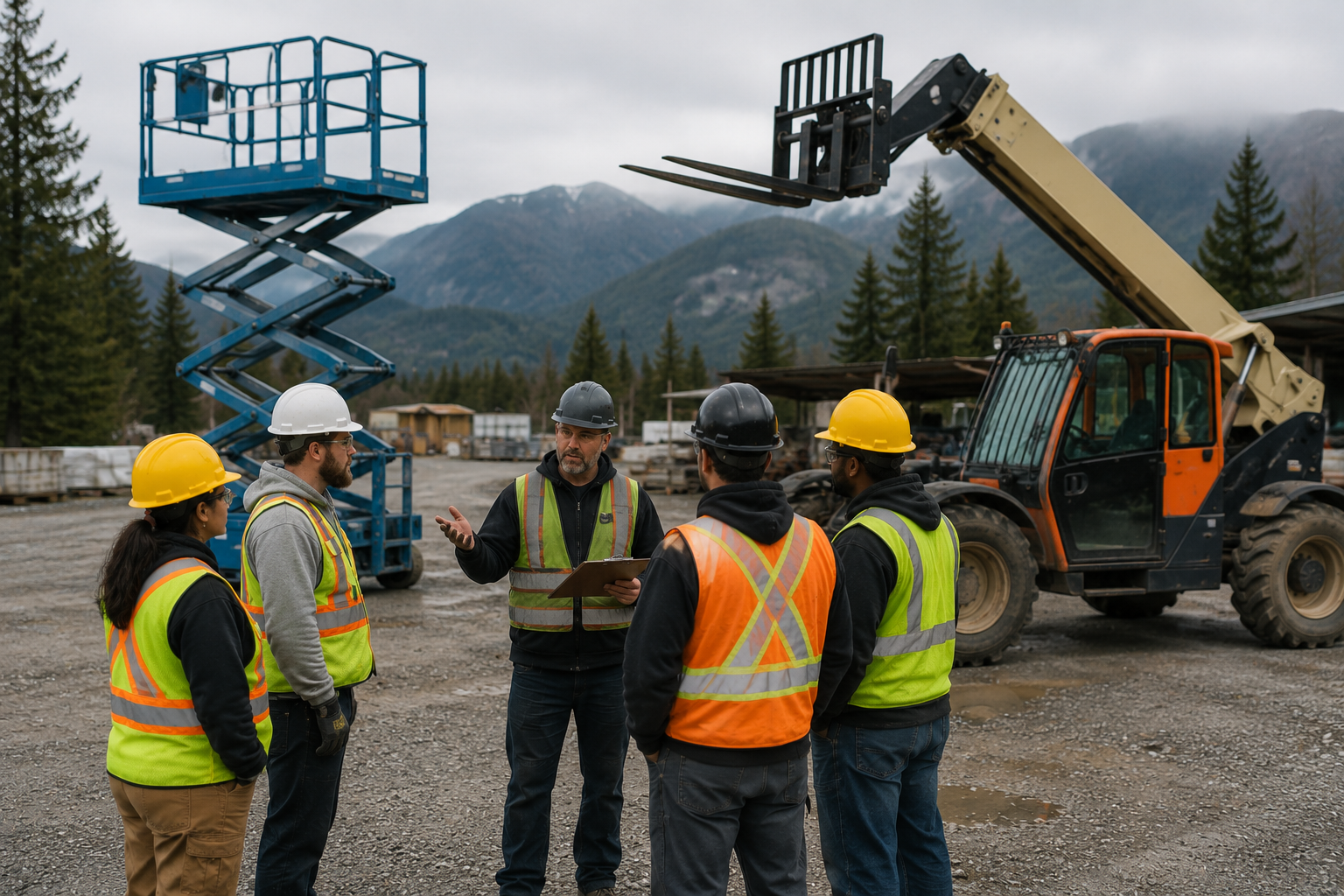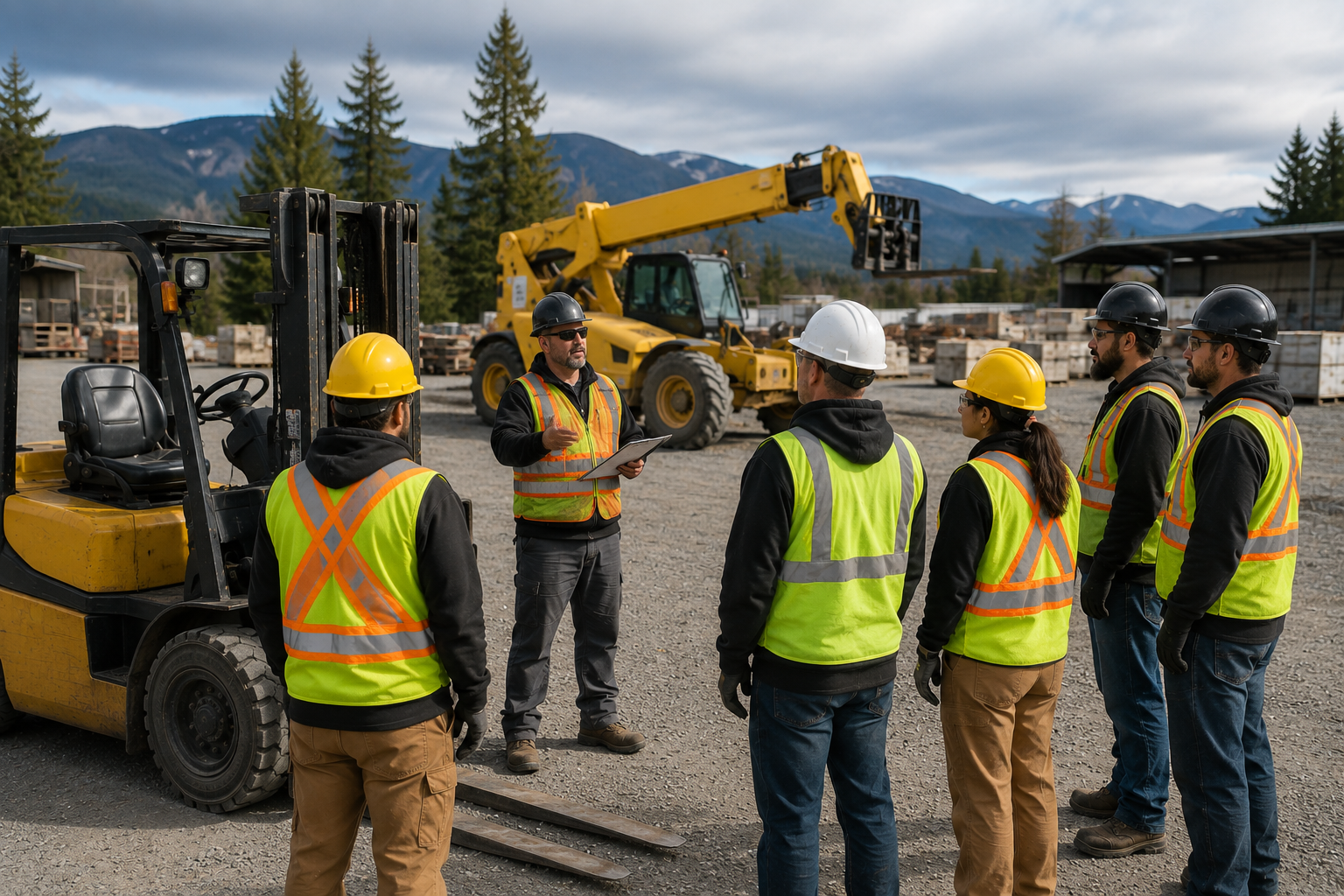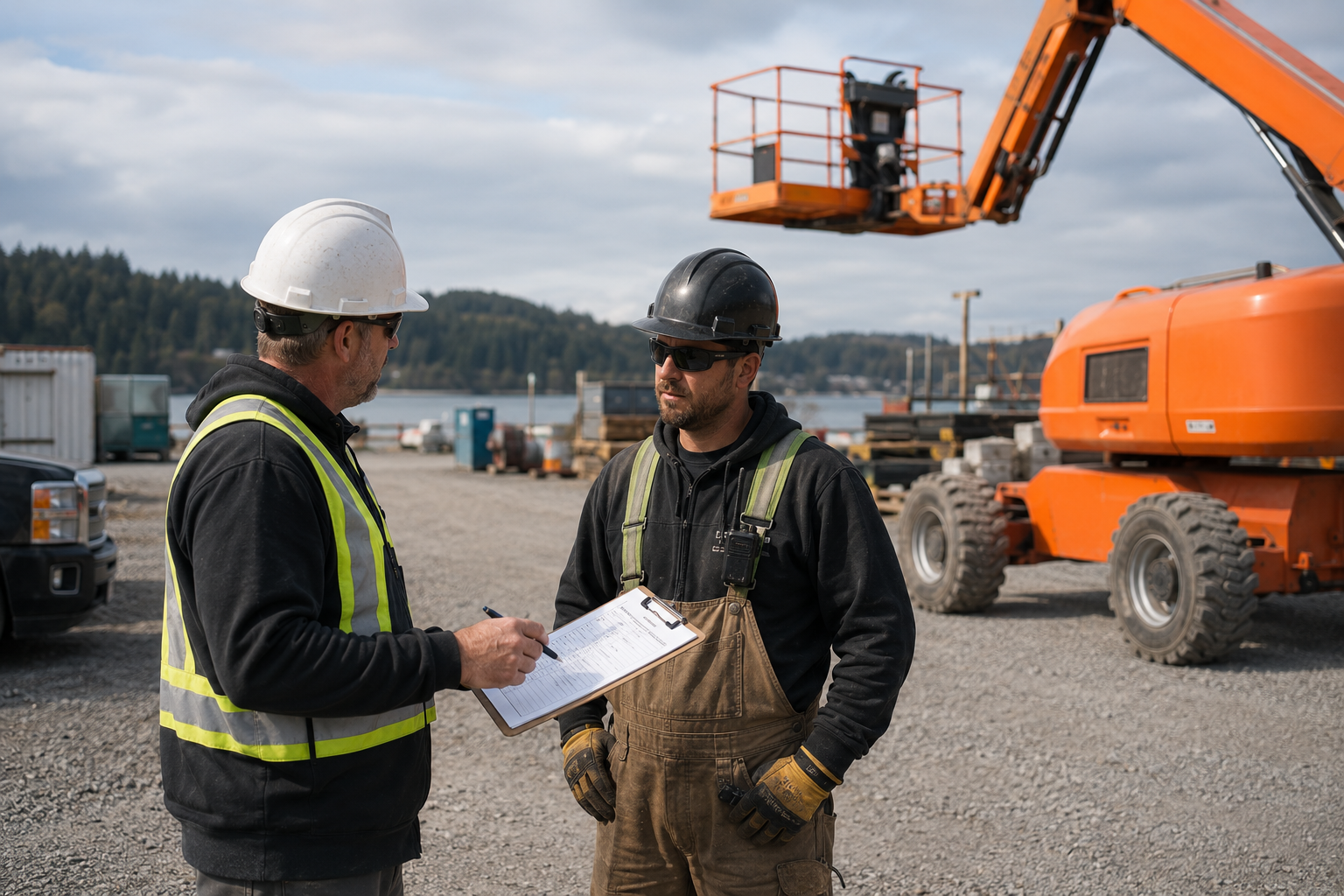
Picture this: you are looking at a mobile equipment certification provider. The course list looks right. The pricing seems reasonable. But you still have a quiet doubt. Will this training actually match the equipment my crew runs and the site they run it on? Or is it a standard course with my company name typed at the top?
That doubt is worth listening to. A certification provider can offer the right course on paper and still be a poor fit for your operation. The course title is the easy part. The fit is what decides whether the training does anything useful once the crew is back on the floor.
This blog is a practical way to evaluate that fit before you book. We will walk through what a good provider should understand about your worksite, how to judge whether the training will match your crew, the questions that separate practical training from generic delivery, and what fit looks like once the conversation is done right.
Why Certification Fit Matters More Than a Course Label
The Same Course Title Can Mean Different Levels of Relevance
Two providers can both offer mobile equipment certification, and the sessions can be very different. One builds the training around your equipment, your site, and your crew. The other runs a fixed course and issues a certificate at the end. Same label, different value.
The label tells you the category. It does not tell you the relevance. When you evaluate a provider, you are really asking how much of the training will connect to your actual operation. That connection is what makes certification useful instead of just complete.
This is true across all mobile equipment training, not just certification specifically. The course name is a category, not a promise. The fit lives in the details underneath it, and those details only come out when you ask.
A Worksite-Aware Provider Asks Better Questions
Here is a simple test. When you first talk to a provider, who is asking the questions? A worksite-aware provider wants to know about your equipment, your site conditions, your crew, your work. They are building a picture before they quote anything.
A provider who is ready to book without learning your operation is telling you how the training will go. It will be the standard course. That is not always wrong, but you should know that is what you are getting. The discovery conversation is the first real signal of fit.
Pay attention to the depth of the questions too. Asking how many people will attend is basic. Asking what those people actually do with the equipment, on what surfaces, around what traffic, is the kind of question that tells you the provider plans to build something for your operation.
What the Provider Should Understand About Your Worksite
Equipment Types and Task Frequency
A provider that fits your worksite should want a clear picture of your equipment. Not just that you run mobile equipment, but which machines, used how often, for what:
- Machine types: forklifts, lifts, telehandlers, or other equipment in your fleet.
- Frequency: which machines run daily and which run only occasionally.
- Tasks: the recurring work each machine supports.
- Attachments: anything that changes how a machine behaves or what it can do.
Surface Conditions, Traffic, and Work Areas
Equipment does not operate in a blank space. It operates on surfaces, around traffic, in defined work areas. A provider that fits your worksite should want to understand those conditions too.
Indoor or outdoor. Smooth floors or uneven yards. Shared access or isolated zones. Loading areas, pedestrian flow, the general shape of the site. These details change what the training should emphasize. A provider who asks about them is planning to build the session around your reality. A provider who does not is planning to run a generic one.
How to Judge Whether the Training Will Match Your Crew
Experience Levels and Job Roles
Your crew is not a single profile. You have new workers, experienced operators, occasional users, and supervisors who assign the work. A provider that fits your operation should want to know that mix before the session.
Why does this matter? Because the right training for a new operator looks different than the right training for a refresher candidate. And supervisors may need a different kind of involvement than operators. A provider who asks who is attending and what their roles are is planning a session that serves the actual crew.
Shift Schedules and Operational Constraints
Fit is also about logistics. A provider should ask how your operation runs. Can you release the whole crew at once, or do you need training planned around shifts? Does the operation pause easily, or does it need to keep moving?
We are not going to claim any provider can deliver training with zero disruption. That is not realistic. But a provider who asks about your constraints is planning around them. A provider who ignores them is leaving you to absorb whatever scheduling the course happens to require.
| Fit Signal | A Worksite-Aware Provider | A Generic Provider |
| Discovery questions | Asks about equipment, site, crew, and schedule first | Ready to book without learning your operation |
| Equipment understanding | Wants the specific machines and how they are used | Treats all mobile equipment as one category |
| Site conditions | Asks about surfaces, traffic, and work areas | Assumes standard conditions |
| Crew mix | Wants to know experience levels and roles | Plans one approach for everyone |
| Scheduling | Plans around your shifts and constraints | Expects you to fit the course |
| Training examples | Built from your operation | Pulled from a fixed curriculum |
Questions That Separate Practical Training From Generic Delivery
What Examples Will Be Used During Instruction
Ask the provider directly what examples the training will use. This question reveals a lot. A practical provider can talk about scenarios that connect to your kind of work. A generic one falls back on standard examples that could apply anywhere.
The examples are where training either connects or does not. When operators recognize the scenarios as their own work, the lesson lands. When the scenarios feel like they came from a manual, the lesson floats past. Asking about examples is asking whether the training will actually reach your crew.
You can also ask how the provider gathers those examples. A good answer points back to the discovery conversation. They use what you told them about your equipment and site to shape the scenarios. That loop, from your information to the training content, is what fit actually looks like in practice.
How Will Completion and Follow-Up Expectations Be Communicated
A provider that fits your operation is clear about what happens at the end and after. What documentation you receive. What the records show. What supervisors should reinforce once the crew is back at work.
This matters because certification is not the finish line. It is a step. A provider who treats it as the whole story is leaving out the part where your supervision carries the training forward. A provider who explains the follow-up honestly is giving you a more complete and more useful picture.
What Fit Looks Like After the Training Conversation
A Clearer Course Path
After a good conversation, you should come away with clarity. You should know which course or courses match your equipment and crew. You should not be guessing.
If the conversation leaves you more confused than when you started, that is a signal. A provider that fits your worksite turns the conversation into a clear path. A provider that does not leaves you to sort it out yourself.
Clarity here is practical. It means you know what to book, for whom, and in what order if more than one course applies. That is the difference between a provider who helps you plan and one who simply takes an order.
Better Preparation Before the Session
Fit also shows up in how prepared you are walking into the session. A good provider will have helped you think through the roster, the equipment availability, and the work area planning before the day arrives.
That preparation is part of what makes the training run well. When the provider has helped you get ready, the session itself is smoother and more focused. When they have not, the first part of the day gets eaten by logistics that should have been settled earlier.
How VIF Safety Training Supports Worksite Fit
Ask About Your Operation First
VIF Safety Training approaches the first conversation as a discovery conversation. The questions come before the quote. What equipment your crew runs, what your site looks like, who is attending, how your operation is scheduled.
That order is deliberate. Mobile equipment certification Campbell River employers can rely on starts with understanding the operation, because that is what makes the training fit. The session is built around your reality rather than dropped onto it.
Move Toward the Right Certification Path
Once the operation is clear, the path becomes clear. For most crews, the Mobile Equipment Certification Campbell River page is the starting point. If your operation needs a trainer-led approach across varied equipment, the Mobile Equipment Trainer In Campbell River option fits alongside it.
The point is to match the certification to the worksite, not the worksite to a fixed course. If you want a straight read on whether a provider fits your operation, visit the Mobile Equipment Certification Campbell River page for service details, or reach out to VIF Safety Training directly.
A mobile equipment certification provider can have the right course on the list and still be a poor fit for your worksite. The course label is the easy part. The fit is what decides whether the training does anything useful for your crew.
Use the discovery conversation as your test. Watch who is asking the questions. Notice whether the provider wants to understand your equipment, your site, and your crew before they quote. Then bring your operation details to VIF Safety Training and get a clear answer on fit. Call 250-889-2074 or use the contact form to start.
Frequently Asked Questions
How do I know if a mobile equipment certification provider fits my worksite?
Watch the discovery conversation. A provider that fits your worksite asks about your equipment, site conditions, crew mix, and schedule before quoting. A provider ready to book without learning your operation is offering a generic course. The questions they ask are the first real signal of fit.
What should I tell a provider before booking equipment certification?
Share your equipment types and how often each is used, your site conditions including surfaces and traffic, your crew size and experience mix, and your scheduling constraints. Also mention any recurring issues. This information lets the provider build a session that fits your operation.
Can certification training be planned around multiple equipment types?
Yes. A worksite-aware provider can plan certification around the full mix of equipment your crew runs. Share the complete equipment picture during the booking conversation so the training, or a planned set of sessions, matches what your crew actually operates.
Should a trainer ask about our worksite before the session?
Yes, and it is a good sign when they do. A provider who asks about your surfaces, traffic, equipment, and crew before the session is planning training built around your reality. A provider who does not ask is planning a generic session regardless of your operation.
What makes mobile equipment certification more practical for employers?
Practical certification is built around your equipment, site, and crew rather than a fixed curriculum. It uses examples your operators recognize, accounts for your work conditions, and comes with clear documentation and follow-up expectations. The discovery conversation is where you can tell whether a provider works this way.
How do I contact VIF Safety Training for mobile equipment certification?
Visit the Mobile Equipment Certification Campbell River page for service details, or call VIF Safety Training at 250-889-2074. The conversation starts with your operation so the certification can be matched to your actual worksite, crew, and equipment.