Quick Answer: Most fall protection courses take somewhere between a few hours for an awareness session and a full day for hands-on work with harnesses, lanyards and anchors, depending on the systems your Nanaimo site uses and the size of the group. Workers should retrain when equipment or systems change, when they move to a different site, after an incident or near miss, when a supervisor sees gaps, and on the refresher cycle the employer sets. Confirm the current WorkSafeBC requirement for your situation before you set a schedule.
Employers who book fall protection training in Nanaimo usually ask two questions first. How long will the crew be off the tools, and how often will we have to do this again? Both answers depend on your site more than on any single number. A roofing crew on a new subdivision, a maintenance team at a plant near Duke Point and a warehouse crew working on a mezzanine all face falls, but they use different systems and need different amounts of hands-on time.
This guide explains what sets the length of a course, gives a general planning range, and lists the events that should send a worker back for retraining. It stays general on purpose. Exact requirements belong to the current regulation, and the employer is responsible for making sure workers are trained and competent before they work at height. If you are still working out whether a task needs fall protection at all, our post on whether you need fall protection training in Campbell River covers that question in detail.
What Sets the Length of Fall Protection Training
The length of a fall protection course depends mostly on how much hands-on practice the workers need with the actual systems on their site. A session that explains the hazards and the site rules takes far less time than one where every worker fits a harness, inspects their own gear, connects to an anchor and talks through a rescue. Group size, the mix of new and experienced workers, and the number of different systems in use all add time on top of that. For example, four roofers who all use the same roof anchor and self-retracting lifeline can usually finish the hands-on work sooner than twelve workers using three different systems across two buildings, because every extra system means another round of practice for every person.
Awareness Training Versus Hands-On Training
Awareness training gives workers a working understanding of fall hazards, the main types of fall protection systems and the rules on their site. It suits people who work near edges but rarely wear personal fall protection themselves, such as supervisors, site visitors, or staff who need to recognize a hazard and stay out of a marked control zone. Awareness training is mostly classroom time, with discussion, photos and examples from real sites. It does not prepare a worker to wear a harness and connect to an anchor, so anyone who will use personal fall protection needs the hands-on version as well.
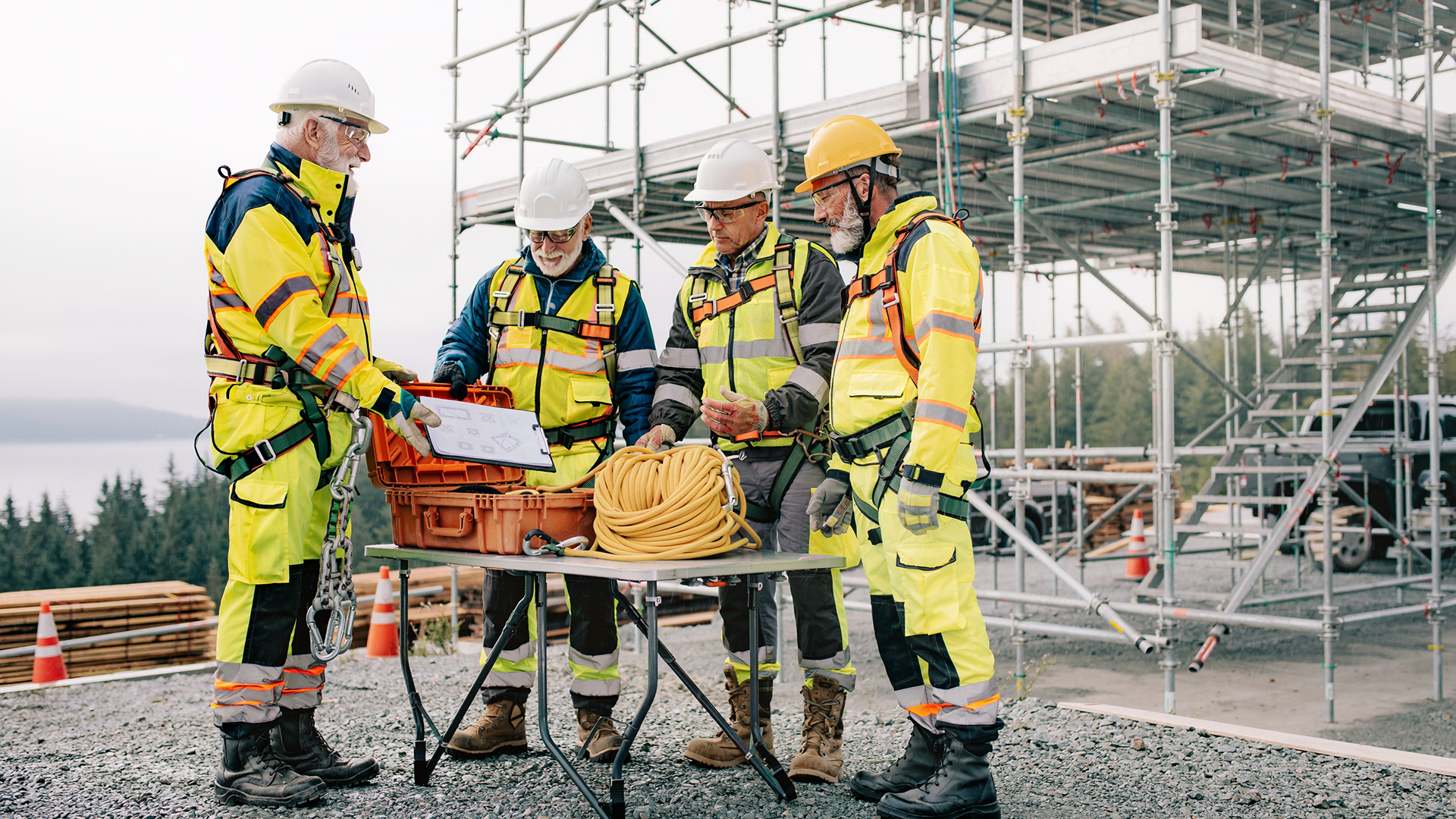
Hands-on training goes further. Each worker puts on and adjusts a full body harness, checks the harness, lanyard and connectors for damage, connects to a suitable anchor, and learns why fall clearance matters, meaning the space needed below a worker so a fall is stopped before they reach the level below. Rescue planning is part of hands-on training too, because a worker left hanging in a harness needs to be reached quickly. Every one of those steps takes practice time per person, which is why hands-on training runs longer and why group size matters more.
The Systems Used on Your Site
The specific systems on your site add their own time to a fall protection course. Guardrails need little hands-on training, while travel restraint, which keeps a worker from reaching an open edge, and fall arrest, which stops a fall already underway, each need practice with the real gear. Self-retracting lifelines, horizontal lifelines, roof anchors, beam clamps and vertical lifelines with rope grabs all work differently, and a worker should be trained on the ones they will actually use rather than a generic sample.
Anchors are where many site-specific questions come up. A roof anchor installed by a contractor, a beam clamp on structural steel and an engineered horizontal lifeline each come with the manufacturer’s instructions, and workers need to know which points on your site are approved anchors and which are not. A trainer who visits your site can walk through those points with the crew, which adds some time to the day but removes guesswork on the first real job.
Workers who wear fall protection on mobile equipment add another layer. An operator on a boom lift wears a harness connected to the platform anchor, and that use is normally covered as part of aerial lift training as well. Our sibling post on how to get aerial lift certified in Nanaimo explains that path from booking to a qualified operator. Wet winter weather on Vancouver Island also matters, since slick roofs, mossy decks and cold hands change how a plan works in practice, so trainers often spend extra time on how conditions affect each system.
A General Planning Range for Fall Protection Training in Nanaimo
For planning purposes, an awareness session often fits into a few hours, while hands-on training with harnesses, lanyards and anchors usually takes most of a day to a full day. A large group, several different systems, or a worksite with complex anchoring can stretch that further, and a refresher for workers who already use their gear correctly is often shorter than a first course. These are general ranges that vary by course, by worker and by equipment, not a promise for any particular group. Weather can also shift the plan. Practical work on a real roof or open deck may need to pause for heavy rain or strong wind, so leaving a buffer in the day is wise when training happens outdoors during a Nanaimo winter.
The table below shows how the common formats usually compare. Use it to start a conversation with your trainer, then confirm the actual length once the trainer knows your crew and your systems.
| Training Format | What It Usually Covers | General Planning Range |
| Awareness session | Fall hazards, the main types of systems, site rules and control zones | A few hours |
| Hands-on harness training | Harness fit and inspection, lanyards, connectors, anchors and fall clearance | Most of a day to a full day |
| Hands-on with site systems and rescue | Your own anchors and lifelines, rescue planning and practice at your site | A full day, sometimes longer for a large group |
| Refresher for current workers | Gear checks, system use, rescue review and any changes on site | Often shorter than the first course |
Inside a hands-on day, the time usually splits into three parts. Theory and discussion come first, covering hazards, systems and the rescue plan. Gear inspection follows, with each worker checking their own harness and connectors. The longest part is the practical work with harnesses and anchors, followed by a short written or verbal check that confirms what each worker understood. The practical portion should never be rushed to finish early, because watching each worker fit and connect their own harness is the only way a trainer can confirm that worker is ready.
How to Fit Fall Protection Training Around Production
The simplest way to fit fall protection training into a working schedule is to train onsite, in groups small enough that every worker gets real practice time. Onsite training removes travel, lets workers practise on the anchors and lifelines they will actually use, and allows the trainer to point out the hazards on your own roof, deck or mezzanine instead of a classroom example.
A large crew can be split into two smaller groups on back to back days or on half shifts, so half the crew keeps working while the other half trains. Many employers book during slower stretches, for example before the spring construction rush or between project phases, so the day does not collide with a deadline. New hires are best trained before their first work at height rather than after it. Sending the trainer a list of workers, their experience and the systems in use ahead of time means the day starts with the right content and no time is lost sorting people out on arrival. On the day, have a harness ready for each worker in the right size, the actual lanyards and self-retracting lifelines the crew uses, access to a suitable practice area at height such as a mezzanine edge or a roof with installed anchors, and a quiet room with a table for the theory portion.
Supervisors should attend at least the awareness portion, because they are the people who enforce the rules day to day and spot the gaps that call for retraining. If your crew also needs other training, such as aerial lift or forklift operation, ask whether it can be planned in the same visit, since one well organized training day often costs less production time than several separate ones.
When Should Workers Retrain on Fall Protection
Workers should retrain on fall protection whenever something changes that their original training did not cover, and on a regular refresher cycle the employer sets. The WorkSafeBC fall protection regulation expects the employer to make sure a worker is instructed in the fall protection system for the area before that worker is exposed to a fall risk. That makes retraining a question of matching training to the real work, not only of counting years. Confirm the current requirement for your situation and build your own cycle around it. Retraining does not always mean a full course. It might be a focused session on a new self-retracting lifeline, a site walk to show workers the new anchor points on a roof, or a complete fall protection refresher for a crew that has gone a long stretch without one.
Changes That Call for Retraining Right Away
Some events should trigger retraining before a worker goes back to height, no matter how recently that worker trained. The most common triggers are listed below.
- New equipment, such as a different harness model, a self-retracting lifeline or a new anchor type.
- A new fall protection system on site, for example a horizontal lifeline added to a roof.
- A move to a different site or project with different edges, heights or anchor points.
- An incident or near miss involving a fall, a slip at an edge or a failed piece of gear.
- A change in a worker’s role that adds work at height they did not do before.
In each of these cases the original training no longer matches the real work, so the worker needs instruction on the new situation before being exposed to it. Retraining for a single change can often be shorter than a full course, because it targets the new equipment, system or site rather than starting over from the basics.
Time, Observed Gaps and Employer Policy
Skills fade without regular use. A worker who wears a harness once or twice a year will not fit it as quickly or check it as carefully as someone who uses one every shift, so time since training is a reason to retrain on its own. Many employers set a refresher cycle in their health and safety program and track it the same way they track other training dates. The interval should be confirmed against the current requirement and written into your own program so it does not depend on memory.
Observed gaps matter as much as the calendar. A supervisor who sees a loose leg strap, a lanyard clipped to a pipe or rail that was never meant to be an anchor, or a harness worn with damaged webbing should treat that as a training need, not only a correction on the spot. The same goes for a worker who cannot explain the rescue plan for their area. Employer policy can also set a shorter cycle, which is common on sites where work at height happens every day.
How to Keep a Crew Current Between Courses
Keeping a crew current means treating fall protection as an ongoing routine rather than a one time event. The foundation is a simple training record for each worker that lists the date, the type of training, the systems covered and the trainer, with a reminder set well before the next refresher is due. A spreadsheet or a training app works, as long as a supervisor can check it quickly before assigning work at height.
Daily habits keep the training alive between courses. WorkSafeBC expects fall protection equipment to be inspected by a qualified person before use on each workshift, so a short check of harnesses, lanyards and connectors should already be part of the start of every shift. Brief crew talks about a recent near miss, a change in weather or a new task at height help the lessons stick. Each harness, lanyard and lifeline also comes with the manufacturer’s instructions for inspection and service life, and those instructions should be kept with the gear and followed. Damaged gear should be tagged and removed from use, and harness fit should be checked again when workers add bulky winter layers. Practising the rescue plan is the step crews skip most often. A short walk-through of who does what, where the rescue gear is kept and how the crew would reach a suspended worker quickly turns the plan from a document into something people can actually do under pressure.
New hires and transfers need attention too. Check the record of every new worker before they work at height, even when they hold training from another employer, and give them instruction on your own systems and rescue plan before their first task. Workers returning after a long absence deserve the same check, and a supervisor should watch the first few days at height closely for anyone new to the site.
How VIF Safety Training Delivers Fall Protection Training in Nanaimo
VIF Safety Training helps Nanaimo employers get crews trained for work at height without losing more production time than the job needs. Owner and lead instructor Darrell Block is an IVES certified trainer with 24 years of experience operating mobile equipment, so the training reflects how work really happens on Vancouver Island sites rather than a generic classroom script.
Training can be delivered onsite at your worksite, which lets workers practise with the harnesses, anchors and lifelines they use every day and lets the trainer see the edges, roofs and platforms your crew deals with. Sessions can be shaped around your group size and your systems, from a short refresher for experienced workers to a full hands-on day for a new crew. Crews that also run boom lifts can ask about planning aerial lift training in the same visit, so the harness habits taught in one session carry straight into the other. Because the right length depends on your people and your equipment, the best first step is a conversation about your site, so fall protection training in Nanaimo fits the real work and your production schedule.
If you need a new crew trained or a refresher planned for workers who already wear harnesses, VIF Safety Training can build it around your schedule. Call (250) 889-2074 or email info@vanisleforklift.ca to talk through your systems, your people and your timing, or contact VIF Safety Training to book fall protection training in Nanaimo at your worksite.