Quick Answer: Yes, one course or one training visit in Nanaimo can cover forklifts, telehandlers and lift equipment such as scissor lifts and boom lifts, as long as each machine gets its own hands-on evaluation. Theory, pre-use inspection habits and site rules can be shared across machines, which saves time. The practical sign-off cannot be shared, because each machine handles loads, height and stability differently, and the operator’s record should list every machine they were evaluated on.
Many Nanaimo crews run more than one machine. A warehouse operator may move pallets on a forklift in the morning and use a scissor lift to reach overhead lighting in the afternoon, while a construction crew may place material with a telehandler and work from a boom lift on the same job. Employers looking into mobile equipment certification in Nanaimo often ask whether one course can qualify a worker on all of it, or whether each machine needs a separate booking.
The short version is that one well planned training visit can cover several machines, but it cannot treat them as one machine. This guide explains what parts of the training can be shared, why each machine still needs its own practical evaluation, how to plan multi-equipment training for a crew in one visit, how to record who is qualified on what, and when a combined day makes the most sense. Timing and content vary by course, operator and equipment, so treat it as a planning guide rather than a fixed promise.
What One Course Can Share Across Forklifts, Telehandlers and Lifts
One course can share the classroom foundation across forklifts, telehandlers and lift equipment, because much of what operators need to know before they touch the controls applies to every machine. Hazard awareness, pre-use inspection habits, site rules and the reasons stability matters are common ground. Teaching that material once, then building machine-specific detail on top of it, keeps a multi-equipment day efficient without cutting corners. The shared material usually includes the following.
- Recognizing hazards such as overhead power lines, pedestrians, blind corners and soft or uneven ground.
- Pre-use inspection habits, including how to report a defect rather than work around it.
- Site rules, traffic routes and communication with spotters and other crews.
- Basic stability ideas such as load centre, centre of gravity and the effect of slopes.
- Who is responsible for what, from the employer’s duty to train through to the operator’s duty to report problems.
Sharing this material does more than save classroom time. Operators who hear the same hazard and inspection message across every machine they run tend to carry one consistent habit onto the job, instead of a slightly different routine for each piece of equipment. For a supervisor, that consistency makes it easier to spot when someone skips a step, whichever machine they are on.
British Columbia’s rules also treat these machines in different places. Lift trucks such as forklifts sit under the mobile equipment rules in Part 16 of the Occupational Health and Safety Regulation, while scissor lifts and boom lifts are elevating work platforms addressed in WorkSafeBC’s Part 13 rules for ladders, scaffolds and temporary work platforms. A combined course can teach the common ground once, but the machine-specific expectations still follow each machine. The employer remains responsible for making sure every operator is trained and competent on each machine they run, so confirm the current WorkSafeBC requirement for your situation.
Why Each Machine Still Needs Its Own Practical Evaluation
Each machine needs its own practical evaluation because a forklift, a telehandler and an aerial lift carry loads, reach height and stay stable in different ways, and an operator’s skill on one does not prove readiness on another. A practical sign-off confirms that a specific person can run a specific type of machine correctly. Shared theory cannot stand in for that, and neither can years of experience on a different machine.
How Forklifts, Telehandlers and Aerial Lifts Behave Differently
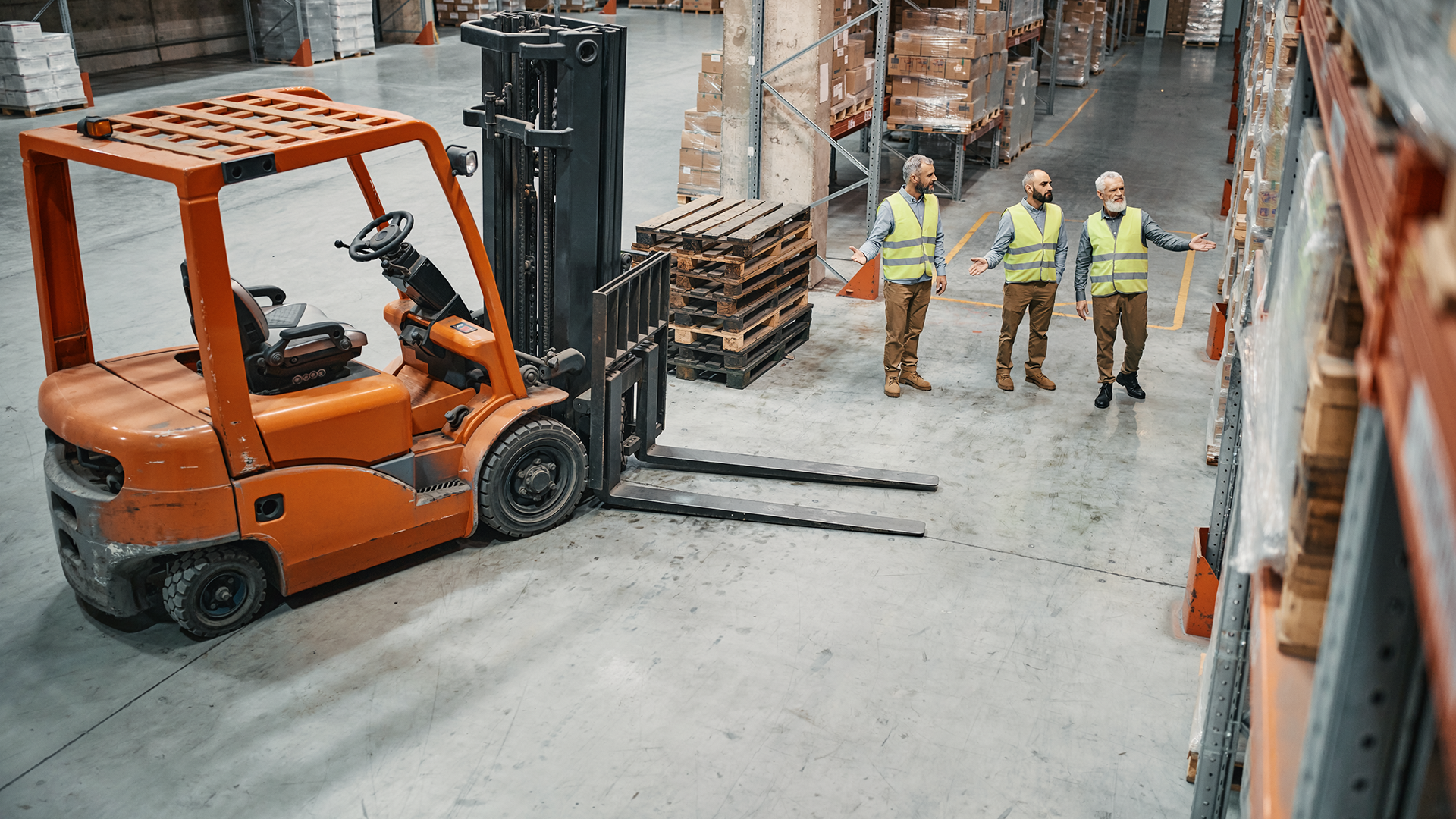
A counterbalance forklift lifts loads on a vertical mast and relies on the weight at the back of the truck to stay balanced, so load weight, load centre and mast tilt are the core of the job. A telehandler adds a telescopic boom that reaches up and out, and the load it can handle changes as the boom extends and rises, which is why telehandler operators work from a load chart rather than a single capacity figure. Attachments such as forks, buckets or a work platform change that chart again. Even within the forklift family, a reach truck in a narrow aisle and a counterbalance truck in an open yard call for different handling, so many employers treat them as separate evaluations as well.
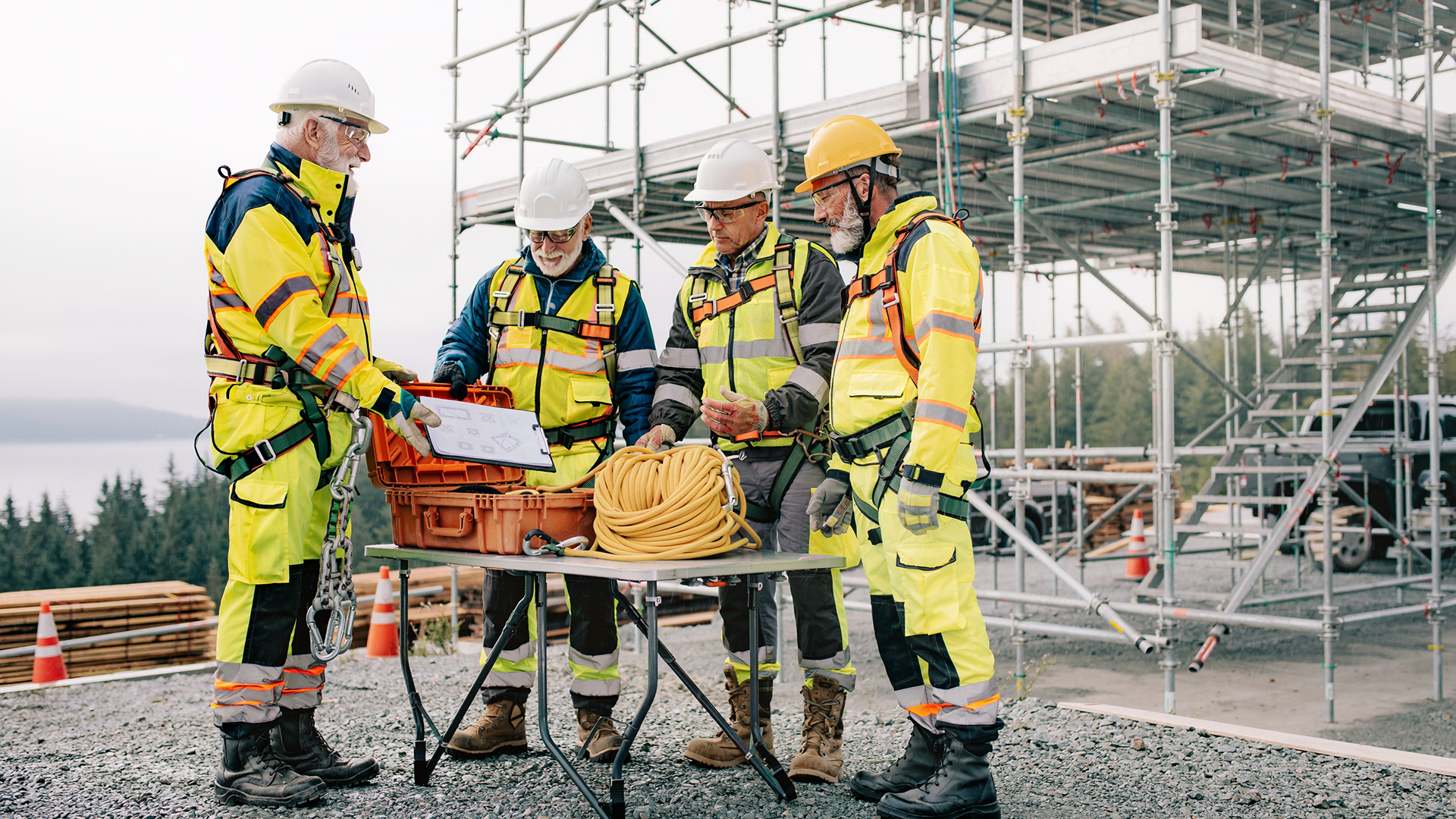
Aerial lifts are a different category again, because the platform carries people rather than pallets. A scissor lift rises straight up on a folding frame, while a boom lift, whether articulating or telescopic, reaches up and out to get the platform over obstacles. Operators on a boom lift also work with fall protection inside the platform, and both lift types call for close attention to ground conditions, overhead hazards and the platform’s rated capacity. A forklift operator with years of experience still has to learn these machines from the ground up.
What the Evaluator Watches For on Each Machine
On every machine, the evaluator watches the full routine from pre-use inspection through to parking and shutdown, but the details change by machine. On a forklift, the focus is load handling, travel with a load, stacking and unstacking at height, and awareness of pedestrians in tight aisles. On a telehandler, the evaluator looks closely at reading the load chart, setting up on suitable ground, using stabilizers where the machine has them, and placing loads at reach.
On a scissor lift or boom lift, the evaluation centres on the pre-use and function checks, positioning the machine, checking for overhead hazards, controlled movement of the platform and, on a boom lift, correct use of fall protection. Each of these checks takes real time on a real machine, and each one shows the trainer something the others cannot. That is why a credible course will not sign off a machine an operator was not evaluated on, and why a fully online course cannot complete the practical sign-off for any of them. Our earlier guide explains whether forklift and mobile equipment training can be done online in more detail.
A practical sign-off is also not the last step. After training, the employer still needs to familiarize each operator with the specific make and model they will run and the site where they will run it, including controls that differ from the training machine, local traffic routes and any attachments. A short documented walkthrough for each operator closes that gap and belongs in the same file as the training record.
The table below shows what carries over between machines and what still needs its own evaluation. Content varies by course and equipment, so treat it as a planning guide rather than a fixed list.
| Machine | What Carries Over From Shared Training | What Needs Its Own Evaluation |
| Counterbalance or reach forklift | Hazard awareness, inspection habits, site rules, basic stability | Load handling, stacking at height, travel with a load, aisle work |
| Telehandler | Hazard awareness, inspection habits, site rules, basic stability | Load chart use, boom extension and placement, ground setup, attachments |
| Scissor lift | Hazard awareness, inspection habits, site rules, ground conditions | Platform checks, positioning, controlled raising and lowering, overhead hazards |
| Boom lift | Hazard awareness, inspection habits, site rules, ground conditions | Platform checks, boom movement around obstacles, fall protection in the platform |
Planning Multi-Equipment Training for a Crew in One Visit
Multi-equipment training works best when each operator is matched to the machines they actually run, and the day is laid out so shared theory comes first and practical evaluations follow machine by machine. Good planning is what turns a combined visit into real savings rather than a long day where people stand around waiting for a turn.
Matching Each Operator to the Machines They Actually Run
Start with a simple list of who runs what. Not every operator needs every machine, and training someone on equipment they will never use adds time without adding value. A warehouse operator may need a counterbalance forklift and a scissor lift, a site labourer might only need a boom lift, and a yard lead could need a telehandler and a forklift. Mapping operators to machines before the visit shows how many practical evaluations the day really involves.
Experience changes the plan as well. A new hire learning three machines from scratch needs far more practical time than an experienced forklift operator adding a scissor lift, and an operator who only needs a refresher on one machine may fit into a shorter block. Share this information with the trainer when you book, along with the make and model of each machine and any attachments, so the plan reflects the actual crew rather than a guess.
Scheduling the Day So Machines and People Are Ready
A common layout for forklift and telehandler training with lift equipment added is shared theory first, followed by practical evaluations grouped by machine. Grouping keeps the rotation moving, because the trainer can complete every forklift evaluation in one block before moving to the telehandler or the lifts, and operators who are not being evaluated can return to work in between. Each machine has to be on site, inspected, fuelled or charged and free of known defects before the trainer arrives.
Group operators by experience where you can. Putting new operators together lets the trainer spend more time on fundamentals, while experienced operators adding a machine can move through the shared material more quickly and spend their time on the practical work. Mixing the two in one group is possible, but it usually stretches the day for everyone.
The length of a combined day depends on how many machines and operators are involved, and it is better to split a large crew across two visits than to rush the practical work. Telehandler time in particular can vary with experience and attachments, and our guide on how long telehandler operator training takes in Nanaimo explains what drives it. Plan production cover for the operators in training, and keep machines that are not being evaluated available for regular work where you can.
Space matters on a multi-equipment day too. A forklift evaluation needs aisles, racking and typical loads, a telehandler needs room to extend the boom and place material, and a lift needs clear overhead space and firm, level ground. On many Nanaimo sites those areas are in different places, so walking the trainer through each one at the start of the day saves time between evaluations.
Recording Who Is Qualified on Which Machine
Every operator’s training record should list each machine type they were evaluated on, not just a general line saying they completed mobile equipment training. A supervisor checking who can run the telehandler on a Nanaimo job site needs to see that exact machine on the record, and a client or prime contractor asking for proof will look for the same detail.
A single training matrix makes this easy to manage for a crew. List each operator down one side and each machine type across the top, then note the date of the practical evaluation, the trainer and any attachments covered. Keep the matrix with the records issued at the end of training so the two always agree. When a supervisor assigns work, the matrix shows at a glance who is qualified on which machine and who still needs an evaluation.
Records also show when someone is due for a refresher or a new evaluation. A change to a different model or type of machine, a new attachment, a move to a very different site, a near miss, or observed gaps in an operator’s habits are all reasons to reassess, whatever the date on the record says. Refresher intervals vary by equipment and employer policy, so check the interval that applies to each machine rather than relying on a number from memory.
Keep records for occasional operators as carefully as for full-time ones. The worker who uses a scissor lift twice a year is the one most likely to be missing from the matrix, and also the one whose habits fade fastest between uses. A quick review of the matrix every few months, or whenever a new project starts, keeps gaps from building up quietly.
When a Combined Training Day Makes Sense for a Nanaimo Crew
A combined training day makes the most sense when several operators run more than one machine, the machines are all available at one site, and the crew can be released in groups without stopping work. In those conditions, shared theory and a single trainer visit save travel, scheduling and repeated classroom time compared with booking each machine separately.
Typical examples include a Nanaimo construction company whose crew runs a telehandler and a boom lift on the same project, a distribution warehouse where operators move between forklifts and scissor lifts, and a facility maintenance team that uses lifts occasionally alongside regular forklift work. New hire intakes are another good fit, since several people can learn the shared material together before moving through their own machines.
Timing can make a combined day even more useful. Booking before a new project starts, ahead of a busy season, or when a new machine arrives means the whole crew is ready at once, instead of qualifying people one at a time as gaps appear. For a Nanaimo contractor heading into a build with both a telehandler and a boom lift on site, one planned visit is usually easier to schedule than several short ones.
Separate sessions are the better choice in some cases. If only one operator needs one machine, a full combined day adds little. If a machine is off site or out of service, its evaluation should wait until it is available rather than be swapped for a different model. A crew so large that the practical evaluations cannot fit in one visit is also better split, because the hands-on sign-off should never be rushed to make a combined day fit.
How VIF Safety Training Delivers Mobile Equipment Certification in Nanaimo
VIF Safety Training plans multi-equipment training around the machines a Nanaimo crew actually runs, sharing the theory where it applies and giving each machine its own practical evaluation. Owner and lead instructor Darrell Block is an IVES certified trainer with 24 years of experience operating mobile equipment, which means the coaching on forklifts, telehandlers and lifts comes from long hands-on time on the same kinds of machines your crew runs.
Training can be delivered onsite at your worksite, so operators are evaluated on their own machines, on their own ground and with their own loads. Before the visit, VIF Safety Training talks through who runs what, the machines and attachments on site, and how to schedule groups around production. Operators who meet the standard receive a record of training that documents what they were assessed on and when, which keeps your training matrix accurate. Timing varies by course, operator and equipment, so every plan is matched to the crew and the machines on site. That is how mobile equipment certification should work, built around the real work rather than a single generic course.
If your Nanaimo crew runs forklifts, telehandlers and lifts, VIF Safety Training can help you plan one visit that covers the machines each operator actually uses. Call (250) 889-2074 or email info@vanisleforklift.ca to talk through your crew and your equipment, or contact VIF Safety Training to book multi-equipment training at your site.