Quick Answer: To prepare a Nanaimo worksite for onsite forklift training, have the trucks your operators actually use inspected and ready, clear a practice area with typical loads, and set aside a quiet room for the theory portion. Send the trainer a list of operators with their experience, plus your site rules and known hazards, a few days before the session. Then plan shifts so production keeps moving while each group trains.
Booking onsite forklift training in Nanaimo saves your crew a trip, but the day only runs well if the site is ready for it. When a trainer arrives to find a flat truck battery, a practice area full of pallets, or no list of who is training, the first hour goes to sorting things out instead of training. This guide covers what to set up before the session so the theory starts on time, the practical evaluations run on your real equipment, and your operation keeps moving around the training.
The checklist is written for employers, supervisors and site managers, from distribution warehouses in north Nanaimo to industrial yards near Duke Point. Operators can use it too, since knowing what the day involves makes it easier to arrive ready. Requirements and timing vary by course, equipment and crew, so treat the steps as a planning guide and confirm the details with your trainer when you book.
What Your Worksite Needs to Provide for Onsite Training
An onsite forklift course needs five things from the host site, the forklifts operators will be evaluated on, a practice area with real loads, a room for the classroom portion, a list of the operators taking part, and a clear picture of your site rules and hazards. The trainer brings the course content, the written check and the evaluation process. Your site supplies the setting, and the setting is what makes onsite delivery worth booking in the first place.
That setting is the main benefit of forklift training at your workplace. An operator who is assessed on the same counterbalance truck they drive every shift, in the same aisles and loading area, leaves the session ready for the actual job rather than a classroom version of it. If you are still weighing whether onsite delivery suits your crew, our guide on when onsite forklift training is worth booking walks through crew size, downtime and site conditions.
The legal responsibility sits with the employer. In British Columbia, lift trucks fall under the WorkSafeBC mobile equipment rules in Part 16 of the OHS Regulation, and the employer is responsible for making sure every operator is trained and competent on the equipment they use. Preparing the site well does not change that responsibility, but it does make the training a better record of operator readiness. If you are unsure what applies to your trucks or your type of work, confirm the current WorkSafeBC requirement for your situation.
Getting Your Forklifts Ready Before the Trainer Arrives
The forklifts on hand for training day should be the same types your operators use on the job, in good working order, fuelled or charged, and free of any known defect. Truck readiness is the single biggest factor in whether a training day starts on time. Two decisions sit behind it, which trucks to put forward and what condition they need to be in.
Choose the Trucks Operators Will Be Evaluated On
Pick the forklifts each operator actually runs, not simply whichever truck is free that day. A counterbalance truck, a reach truck and a rough terrain forklift handle differently, and a practical evaluation on one does not show readiness on another. If your crew uses more than one type, tell the trainer when you book so the session allows time for each. The same applies to propane and electric trucks, which have different refuelling and charging routines that operators are expected to understand.
Attachments matter as well. Side shifters, fork positioners, clamps and rotators change how a load sits and can lower a truck’s rated capacity, so any attachment your operators use regularly should be on the truck and mentioned to the trainer in advance. Check that the capacity plate on each truck is legible and matches the current setup, since the trainer will refer to it during the theory and the practical evaluation. Keep the manufacturer’s operator manual for each truck somewhere easy to reach too.
If a truck is new to the site, rented for a short job, or due to be replaced soon, mention that as well. Operators should be evaluated on equipment that matches what they will run in the coming months, and a newer model with different controls or a different mast may need its own time in the session.
Have Each Truck Inspected, Fuelled and Charged the Day Before
Run your normal maintenance and pre-shift checks on every training truck the day before, not the morning of. Any forklift with a known fault, an overdue service or a tag on it should stay out of the session until it is repaired, and a replacement of the same type should be lined up. Finding a hydraulic leak or a worn tire at 8 a.m. on training day usually means rescheduling part of the session.
Charge electric trucks fully overnight, and make sure propane trucks have a full cylinder fitted with a spare on hand. Several operators may take turns on the same truck during the practical portion, so a truck that starts the day half charged can run short before the last evaluation. Clean the operator compartment, confirm the seatbelt, horn, lights and any backup alarm work, and clear personal items and loose tools out of the cab. These small steps keep the evaluation focused on the operator rather than on the machine. Keep your blank pre-shift inspection forms handy as well, since the trainer may use your own form during the practical portion, which lets operators practise with the paperwork they fill in every shift.
Setting Up a Practice Area With Typical Loads
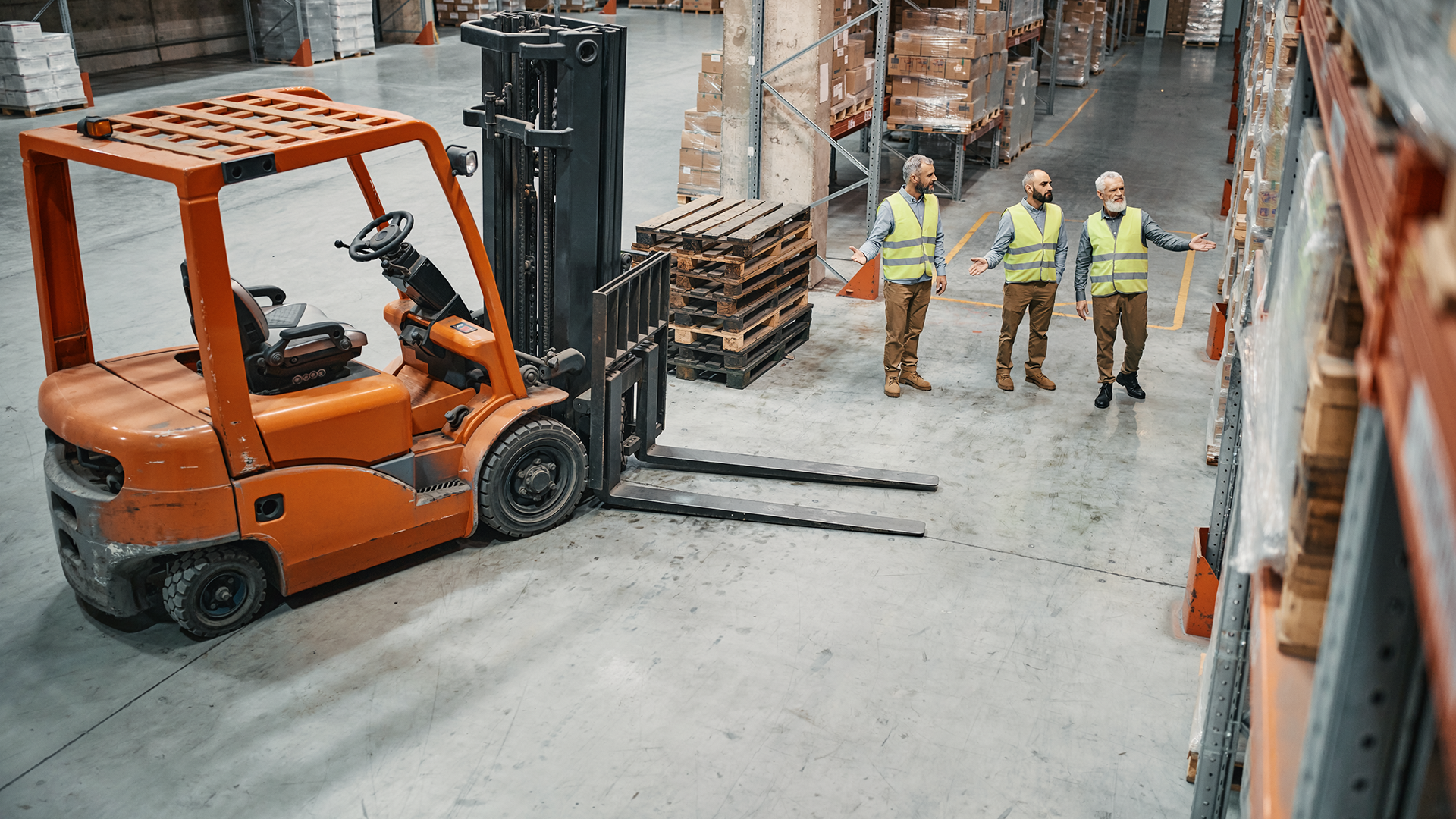
The practice area for onsite forklift training should be a clear, marked space large enough for operators to travel, turn, lift, stack and set down loads, with pedestrians kept out while evaluations run. The space does not need to be a separate building. Many Nanaimo sites use a cleared section of the warehouse floor, a quiet loading bay or a corner of the yard, as long as it can be closed off for the session.
Choose a space that reflects the real work. If operators stack product in racking, the area should include a section of racking at the heights they actually use. If they load and unload trucks, a dock or trailer can be part of the evaluation, provided it can be secured and scheduled so no live shipment depends on it. Mark the boundary with cones, barriers or floor tape, and tell other staff in advance that the area is closed so foot traffic and other equipment stay clear. Lighting matters too. A dim corner of the warehouse makes it harder for the trainer to watch fork placement and load handling, so choose a well lit area or add temporary lighting for the day.
Typical loads come next. Set out the pallets and products operators handle every day, including any awkward loads such as long material, stacked drums or tall loads with a high centre of gravity, all within the rated capacity of the trucks being used. A practice session with empty pallets tells the trainer far less than one with the real weight and shape of your product. The table below sums up how to set up the practice area and why each part helps.
| What to Prepare | What to Have Ready | Why It Helps |
| Practice space | A marked area big enough to travel, turn, lift and stack, closed to foot traffic | Gives each operator room to complete a full routine without interruption |
| Racking or stacking area | A section of racking or stacking at the heights used on the job | Lets the evaluation include the lifts operators actually make |
| Typical loads | Real pallets and products within rated capacity, including any awkward loads | Shows the trainer how operators handle the weight and shape of your product |
| Dock or trailer | A secured, scheduled dock or trailer if operators load trucks | Covers loading work without putting a live shipment at risk |
| Ground conditions | Notes on slopes, rough surfaces, ramps or wet areas | Helps the trainer plan for conditions operators face outside the training area |
Outdoor yards deserve extra thought on the coast. Nanaimo’s wet months leave gravel and paved yards slick, and sloped lots or ramps change how a loaded truck behaves. If your operators work outdoors, tell the trainer about the conditions and plan an indoor fallback space in case heavy rain makes the outdoor area unsuitable for part of the day.
Preparing the Training Room and the Operator List
The classroom portion of onsite forklift training needs a quiet room with seating for every operator, and the trainer needs an accurate list of who is training and what experience each person brings. Both pieces of preparation are easy to leave to the last minute, and both have a direct effect on how smoothly the day runs.
A Quiet Room for the Theory Portion
A lunchroom, boardroom or site office usually works well for the theory portion, as long as it can be booked for the full block of time the trainer needs. Each operator needs a seat and a table surface for the written check. Ask the trainer ahead of time whether they need a power outlet, a screen or a clear wall for presentation material, so nobody is hunting for an extension cord when the session should be starting.
Choose a room away from production noise where possible. A lunchroom beside a running conveyor or a shop door that opens every few minutes makes it hard for operators to follow the material and harder still to concentrate on the written check. If the lunchroom is the only option, schedule breaks for the rest of the crew around the classroom time. Operators who want to know what the classroom, the written check and the practical evaluation look like from their side can read what to expect in WorkSafe forklift training in Nanaimo before the day.
Who Is Training and What Experience They Bring
Send the trainer a list of operators a few days before the session, with enough detail to plan the groups and the practical rotation. A crew that mixes brand new hires with experienced operators who have never been formally evaluated needs a different plan from a group that only needs a refresher. The more the trainer knows in advance, the better the session can be matched to the people in it. A useful operator list includes the following.
- Each operator’s name and job role.
- The forklift types and attachments each person uses on the job.
- Experience level, from new to the role through to experienced operators due for a refresher.
- Any previous training records, including training from another employer or province.
- Any language, reading or accommodation needs the trainer should plan for.
Operators who trained with a previous employer or in another province should bring whatever record they have. A record from elsewhere shows past training, but the employer still needs to know the operator is competent on the trucks and conditions at this site, so those operators usually complete the practical evaluation on your equipment like everyone else.
Keep the list realistic about who can be released from work on the day. Removing a name the morning of the session is easy, but adding an operator who was not planned for can stretch the practical evaluation past the time you set aside. If the group is larger than the trucks and space can handle in one block, the trainer can suggest splitting it across sessions.
Sharing Site Rules and Planning Shifts Around Training Day
The trainer should receive your site rules and known hazards before arrival, and your shift plan should decide in advance who trains when and who covers their work. Site rules shape the practical evaluation, and the shift plan keeps orders moving while operators are away from their normal duties.
Site information worth sharing includes traffic routes and speed limits inside the building, pedestrian walkways and crossing points, blind corners, overhead doors and low clearances, ramps and dock plates, charging or refuelling areas, and any other mobile equipment working nearby. Mention any recent near misses or recurring problems as well. A trainer who knows that a particular corner causes trouble can build it into the coaching, which turns the session into practice for your actual site rather than a general course.
It also helps to have the supervisor who oversees the operators sit in on part of the session. A supervisor who hears the coaching on your trucks and your site can reinforce the same habits on the floor afterwards, and can raise site questions the trainer may not think to ask.
Shift planning is where onsite training saves the most time. Training operators in groups lets the rest of the crew cover their work, and the classroom portion can often be scheduled for a quieter part of the day. Some Nanaimo employers start the theory early and run practical evaluations through the afternoon, while others train one shift’s operators first and the next shift’s group later. Talk through the options when you book, because the right plan depends on your hours, your order volume and how many trucks can be spared at once.
A simple timeline keeps the preparation from piling up the day before. Book the session and confirm truck types and operator numbers a couple of weeks out. A few days before, send the operator list, site rules and hazard notes, and tell the rest of the crew which area will be closed. The day before, inspect, charge and fuel the trucks and set up the practice area and room.
On arrival, the trainer needs a contact person who knows the site, a quick walk through the practice area and the room, the sign-in process and directions to washrooms, and any site orientation or personal protective equipment your site requires of visitors. Have operators show up in their usual work boots and high visibility gear unless the trainer advises otherwise. Ten minutes of handover at the start saves far more time than it costs.
How VIF Safety Training Runs Onsite Forklift Training in Nanaimo
VIF Safety Training brings forklift training to Nanaimo worksites so operators are evaluated on their own trucks, in their own aisles and yards, with the site’s real loads. Owner and lead instructor Darrell Block is an IVES certified trainer with 24 years of experience operating mobile equipment, so the coaching comes from someone who has done the work, not only taught it.
Before the visit, VIF Safety Training talks through your trucks, attachments, operators and site layout, then helps you plan the groups and timing around your production. During the session, the focus stays on operator readiness, with each person working through a full practical evaluation and the instructor coaching small habits before anyone is signed off. Operators who meet the standard receive a record of training that documents what they were assessed on and when, which the employer keeps on file. Timing varies by course, by the number of operators and by the equipment involved, so every plan is built around the site rather than taken off a shelf. That is how onsite forklift training should work for a Nanaimo employer, matched to the real job and the real workplace.
Ready to book onsite forklift training for your Nanaimo crew? Call VIF Safety Training at (250) 889-2074 or email info@vanisleforklift.ca to talk through your trucks, your operators and your schedule, or contact VIF Safety Training to request a date. A short conversation now means the trainer arrives to a site that is ready to go.