Picture this: you are ready to book aerial lift training. The crew needs it, the work is coming up, and you just want it scheduled. So you call a provider and say, we need aerial lift training, when can you come? And that is where a lot of employers stop.
The problem is that the questions you do not ask before booking tend to show up later as gaps. The training happens, but it does not quite fit the lifts your crew runs, or the conditions on your jobsite, or the experience mix in the room. None of that is the trainer being careless. It is just that nobody surfaced the details up front.
This blog turns booking into a short preparation process. We will walk through what to ask about the equipment, the crew, the worksite conditions, and the related training needs. Each question comes with the reasoning behind it, so you are not just collecting answers, you are building a clear picture before the session.
Why the Questions Before Booking Matter
Aerial Lift Training Should Match the Jobsite
Aerial lift training is most useful when it reflects the actual jobsite. The lift type your crew runs, the work they do from the platform, the conditions around them. A session built without those details runs generic, and a generic session leaves operators to fill in the gaps on their own.
The questions before booking are how those details get into the training. They are not bureaucracy. They are the difference between a session that fits your jobsite and a session that fits a jobsite in general.
Preparation Helps the Trainer Understand the Crew
There is a second reason the questions matter. The answers help the trainer prepare. When a trainer knows the equipment, the crew mix, and the site conditions in advance, they can structure a session that works for the people actually attending.
When they do not know, they default to a standard approach and adjust on the fly. That can work, but it is not the same as a session planned around your operation. Good preparation gives the trainer what they need to make the training land.
Questions About the Equipment Being Used
What Lift Types Will the Crew Operate
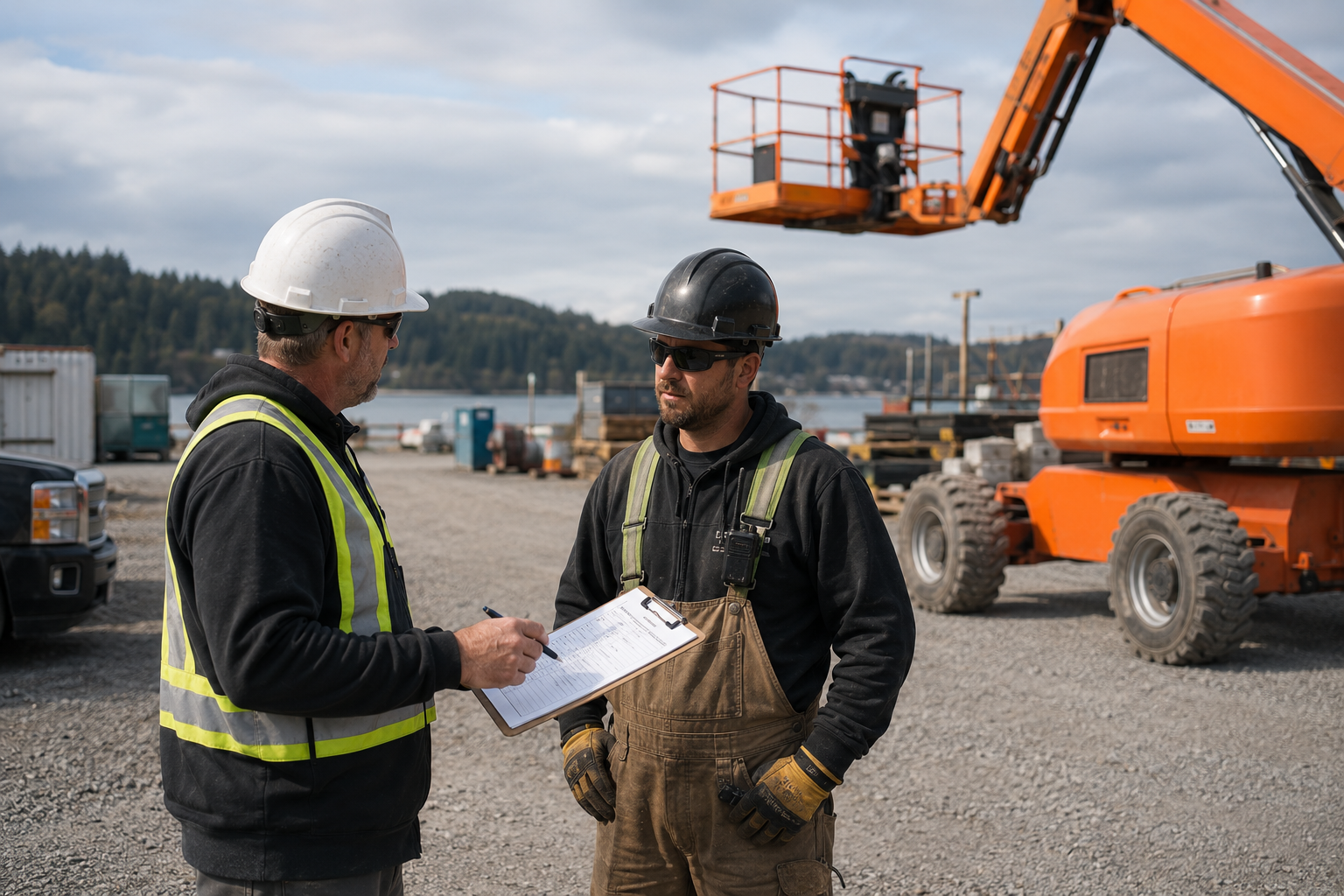
Aerial lift is a broad category. Boom lifts, articulating lifts, telescopic lifts, and self-propelled platforms all behave differently. Ask the provider whether the training will reflect the specific lifts your crew runs.
Why this matters: a session built around one lift type may only partly prepare an operator for another. The controls differ. The way the platform moves differs. The considerations during operation differ. Sharing the equipment category, and the approximate working heights, lets the trainer focus the session where it counts. If your crew runs more than one type, say so, so the session can cover the mix.
If you can, share the model names or a few photos of the equipment. It costs you almost nothing and it gives the trainer a concrete starting point instead of a general category to work from.
Where Will the Equipment Be Used Most Often
The next equipment question is really about context. Where does the lift actually operate? Indoors, outdoors, or both. On smooth surfaces or uneven ground. In open areas or tight spaces with shared access.
Why this matters: the same lift behaves differently across conditions, and operators need to understand that. A trainer who knows your typical work environment can build the discussion around it. Surfaces, ground conditions, access points, and shared work areas all change how the lift should be operated, and the training should reflect that reality.
Questions About the Crew
Who Is New, Experienced, or Returning After a Gap
Ask yourself, and then tell the trainer, what the experience mix looks like. New operators, experienced ones, and workers returning after a gap all bring different needs to the session.
Why this matters: a trainer who knows the crew is mixed can plan for it. New operators need the foundation. Experienced ones need a session that respects their time while still surfacing habit drift. Returning workers need a refresher that accounts for what may have changed. A trainer who walks in blind to this has to figure it out in the room, which costs session time.
You do not need a detailed breakdown. A rough sense of how many fall into each group is enough for the trainer to plan around. The point is just to make sure they are not surprised by the mix on the day.
Who Assigns and Supervises Elevated Work
The crew is not just the operators. Supervisors and leads assign elevated work and decide who handles what. Their role matters to the training conversation too.
Why this matters: supervisors who understand the equipment make better assignment decisions. A trainer can advise on whether supervisors should attend, get their own briefing, or simply be looped into the planning. Either way, leaving supervisors out of the conversation entirely is a missed opportunity, because they carry the work forward after the session ends.
| Question Area | What to Ask | Why It Matters |
| Equipment type | Which lift types will the crew operate | Lift types behave differently, and the session should match |
| Work environment | Indoor, outdoor, surfaces, and access | Conditions change how the lift should be operated |
| Crew experience | Who is new, experienced, or returning | Lets the trainer plan for the actual mix in the room |
| Supervision | Who assigns and oversees elevated work | Supervisors carry the training forward after the session |
| Site conditions | Traffic, weather, overhead, other crews | Real constraints should shape the training discussion |
| Related training | Is fall protection or scissor lift also relevant | Surfaces gaps before they show up on the job |
Questions About the Worksite Conditions
What Hazards or Constraints Should Be Discussed
Every jobsite has its own constraints. Traffic moving through the area. Weather, which on Vancouver Island is a real factor for outdoor work. Overhead obstructions. Uneven surfaces. Other crews working nearby. Ask the provider to build these into the training discussion.
Why this matters: operators who train without the real conditions in mind learn to run the lift in ideal circumstances. Then real conditions show up and they improvise. A trainer who knows your hazards and constraints can prepare operators for the jobsite as it actually is, not as a textbook describes it.
Think about the conditions your crew runs into most often. The wind that picks up in the afternoon. The corner where visibility drops. The area where other trades are always working. Those are the details worth raising before the session.
Can Training Be Scheduled Around Active Operations
The practical question. Can the training happen without stopping everything? Ask the provider how they handle scheduling around an active jobsite.
Why this matters: most operations cannot simply pause. A provider who asks about your shifts, your timing windows, and your operational constraints is planning training that fits. We are not going to claim training comes with zero disruption, because that is not realistic. But thoughtful scheduling keeps the disruption manageable, and that starts with the question being asked.
Questions About Related Training Needs
Is Fall Protection Training Also Relevant
Do not assume aerial lift training covers every fall protection need. Ask. If your crew does work at height beyond the lift platform, or in conditions the lift course does not fully address, fall protection training Campbell River employers can book may be a relevant addition.
Why this matters: assuming one course covers everything is how gaps form. The aerial lift course focuses on operating the lift. Fall protection training is broader. Asking the question instead of assuming gives you a clear answer on whether you need both.
Do Scissor Lift or Other Mobile Equipment Courses Also Apply
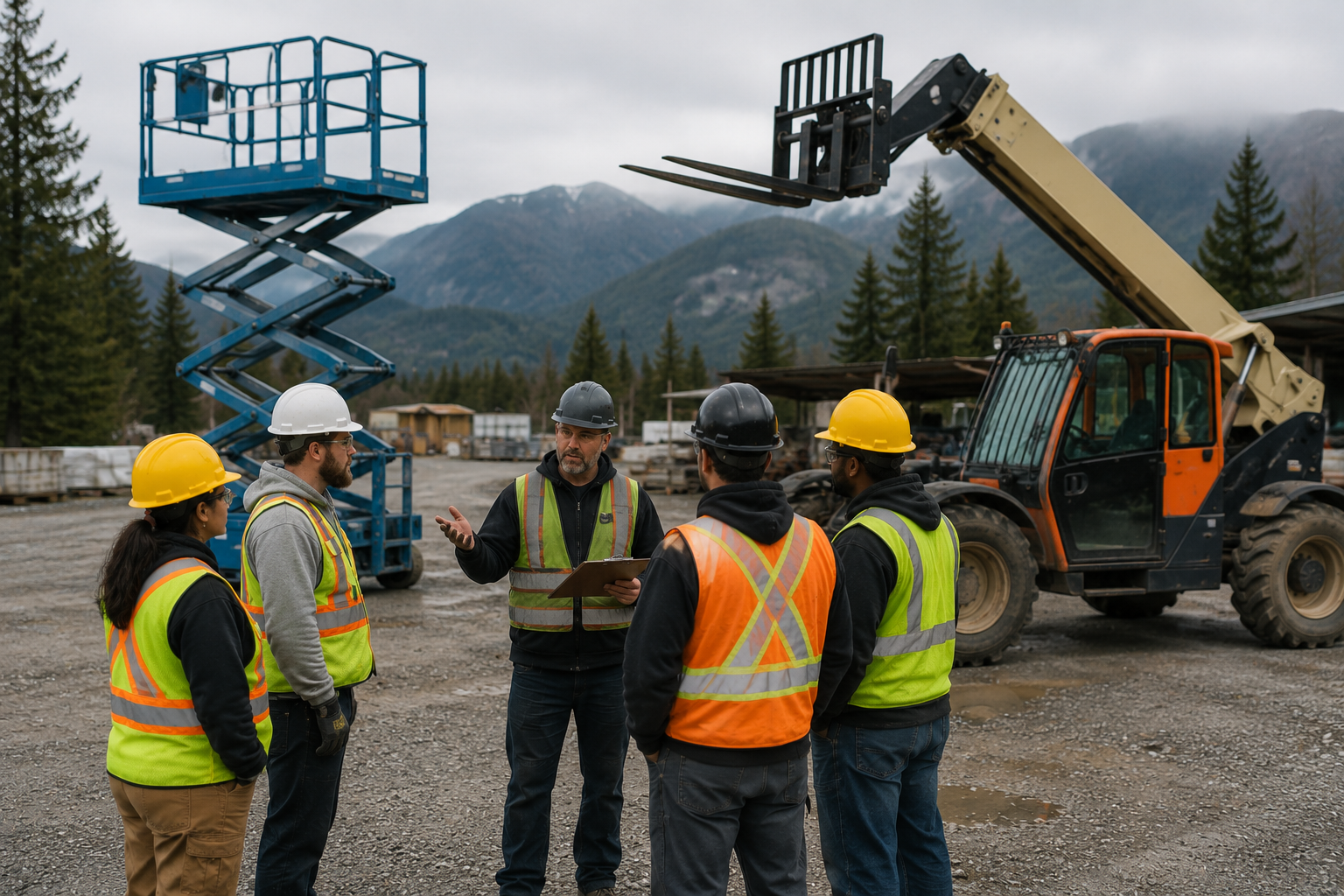
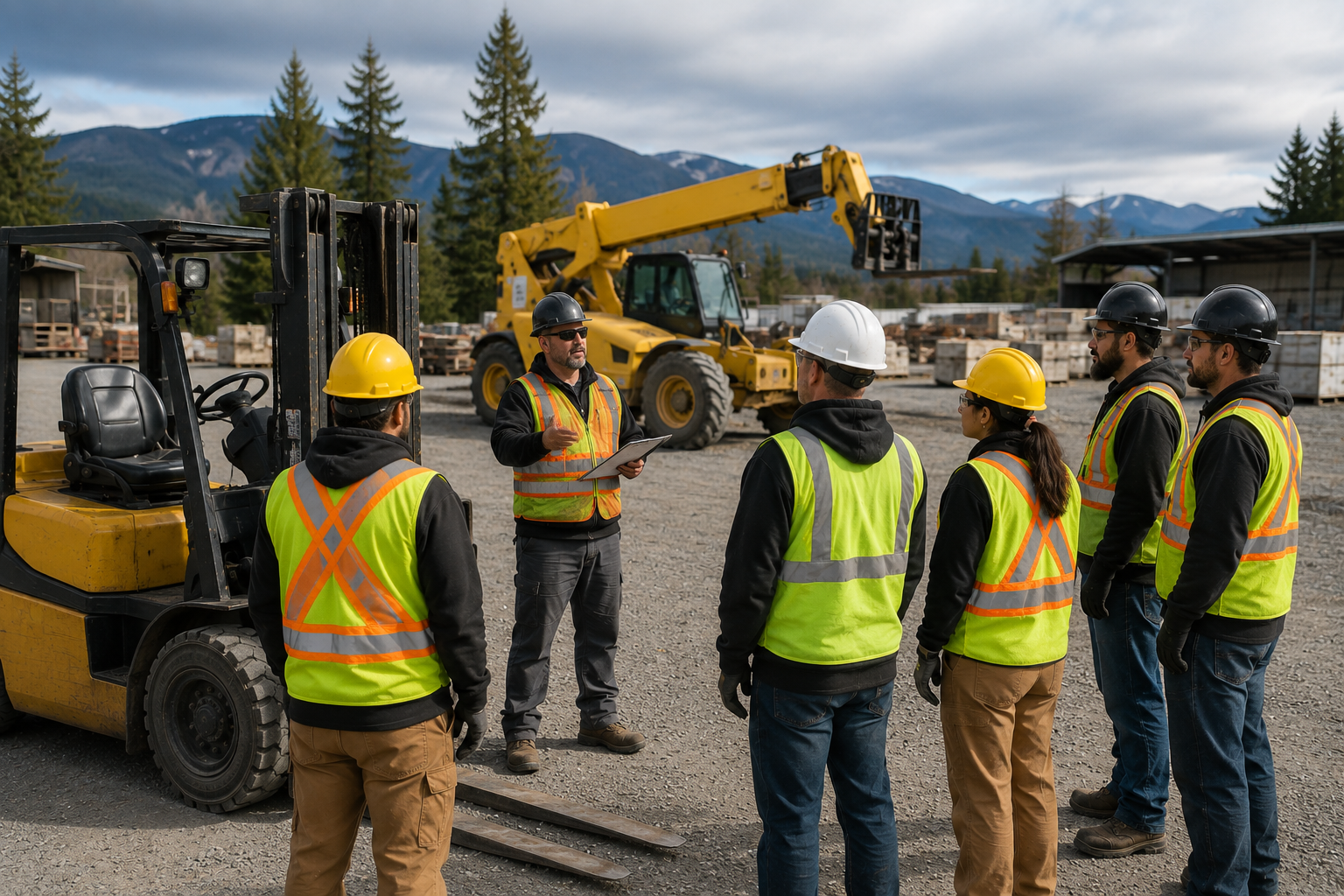
If your crew runs more than aerial lifts, the conversation can cover that too. Scissor lifts, telehandlers, forklifts, or other mobile equipment training Campbell River operations may need can be part of the planning.
Why this matters: a crew that operates several types of equipment is better served by a coordinated plan than a series of disconnected bookings. You do not have to sort all of this out at once. But raising it during the aerial lift booking conversation lets the provider help you see the bigger picture.
How VIF Safety Training Can Answer the Right Questions
Use the Booking Conversation to Clarify Fit
The booking conversation with VIF Safety Training is built for exactly these questions. Bring the details you have gathered. The equipment, the crew mix, the site conditions, the related training you are weighing.
From there, the conversation sorts out what the session should cover and how it should run. The aerial lift training Campbell River employers book through VIF Safety Training is planned around the answers to these questions, not around a fixed template.
Move to the Aerial Lift Service Page
Once you have worked through the questions, the path forward is clear. The Aerial Lift Operator Training Campbell River page is the starting point for the booking. If the conversation surfaces a need for fall protection or scissor lift training, those connect naturally as related courses.
Visit the Aerial Lift Operator Training Campbell River page for service details, or reach out to VIF Safety Training directly with the details you have gathered. The preparation makes the booking conversation fast and the session a better fit.
Booking aerial lift training is not just picking a date. The questions you ask first, about the equipment, the crew, the site conditions, and the related training, are what turn a generic session into one that fits your jobsite.
Work through the questions, gather the details, and bring them to VIF Safety Training. The booking conversation will be faster and the training will land better. Call 250-889-2074 or use the contact form to get started.
Frequently Asked Questions
What should I ask before booking aerial lift training?
Ask about the equipment the training will reflect, the crew experience mix, the worksite conditions and constraints, and whether related training like fall protection applies. Each question helps the trainer build a session that fits your jobsite rather than running a generic course.
What equipment details matter before aerial lift training?
Share the specific lift types your crew operates, since boom lifts, articulating lifts, and self-propelled platforms behave differently. Also share approximate working heights and where the equipment is used most, including indoor or outdoor use and surface conditions.
Can aerial lift training be planned around a jobsite schedule?
Yes. A good provider asks about your shifts, timing windows, and operational constraints so the training fits the jobsite. Training cannot happen with zero disruption, but thoughtful scheduling keeps it manageable. Raise your scheduling constraints during the booking conversation.
Should supervisors help prepare for aerial lift training?
Yes. Supervisors who assign and oversee elevated work usually know the crew mix, the site conditions, and the recurring issues. Including them in the preparation helps the trainer plan a better session, and it sets up stronger reinforcement after the training.
Should fall protection training be booked at the same time?
It depends on the work. Aerial lift training focuses on operating the lift. If your crew does work at height beyond the platform, fall protection training may be a relevant addition. Ask during the booking conversation rather than assuming one course covers everything.
How do I book aerial lift operator training in Campbell River?
Visit the Aerial Lift Operator Training Campbell River page for service details, or call VIF Safety Training at 250-889-2074. Bring your equipment, crew, and site details so the booking conversation can confirm the right session for your jobsite.