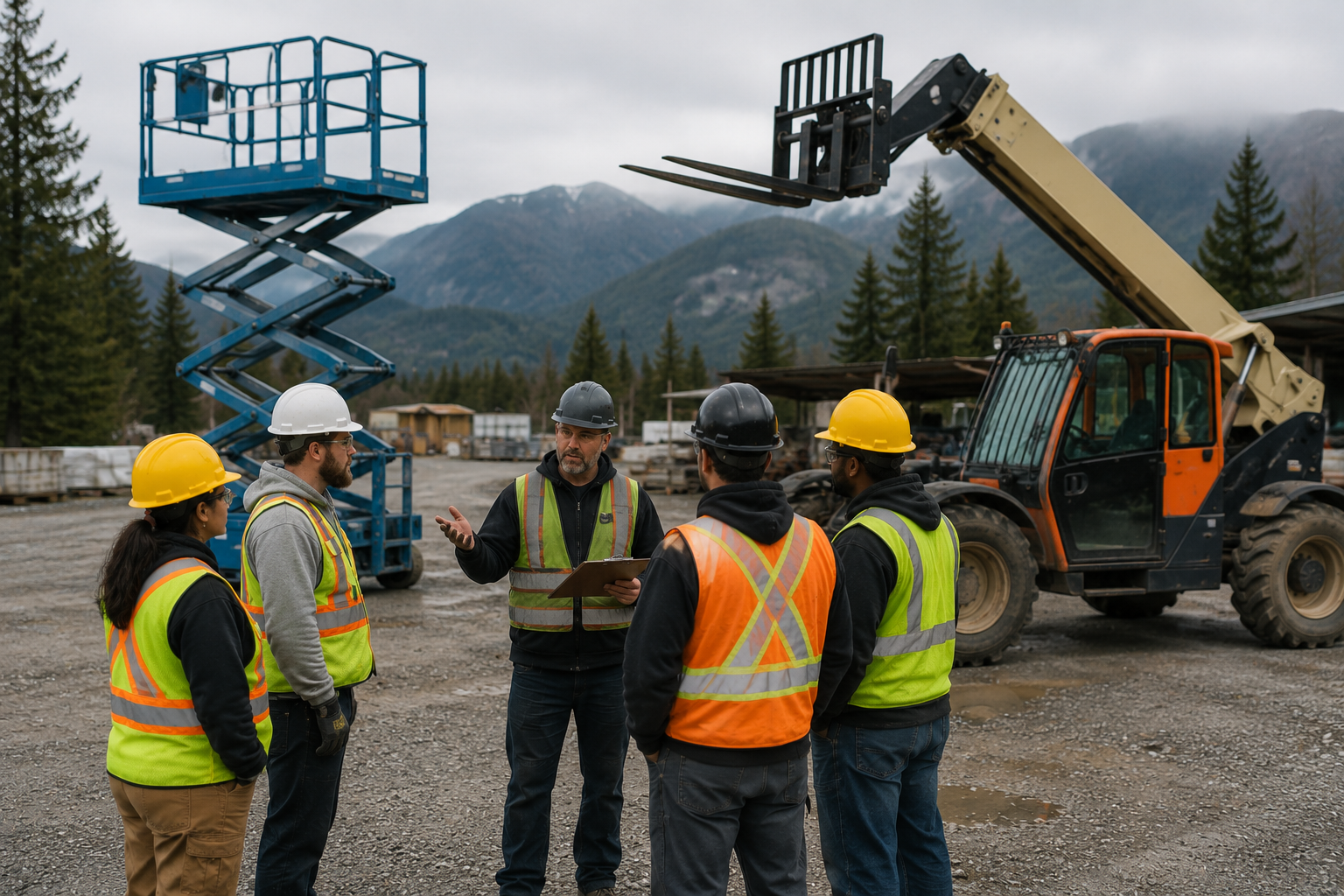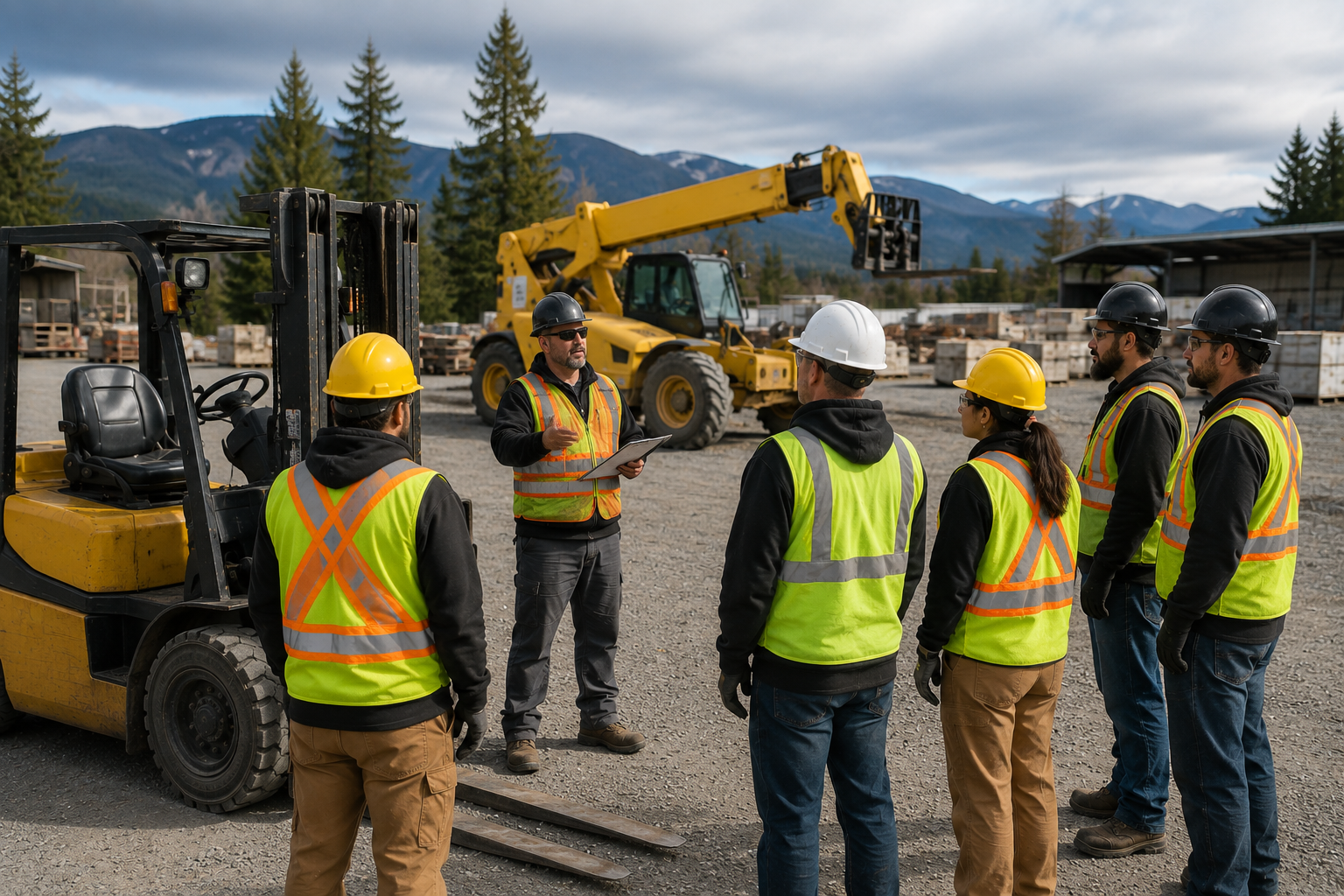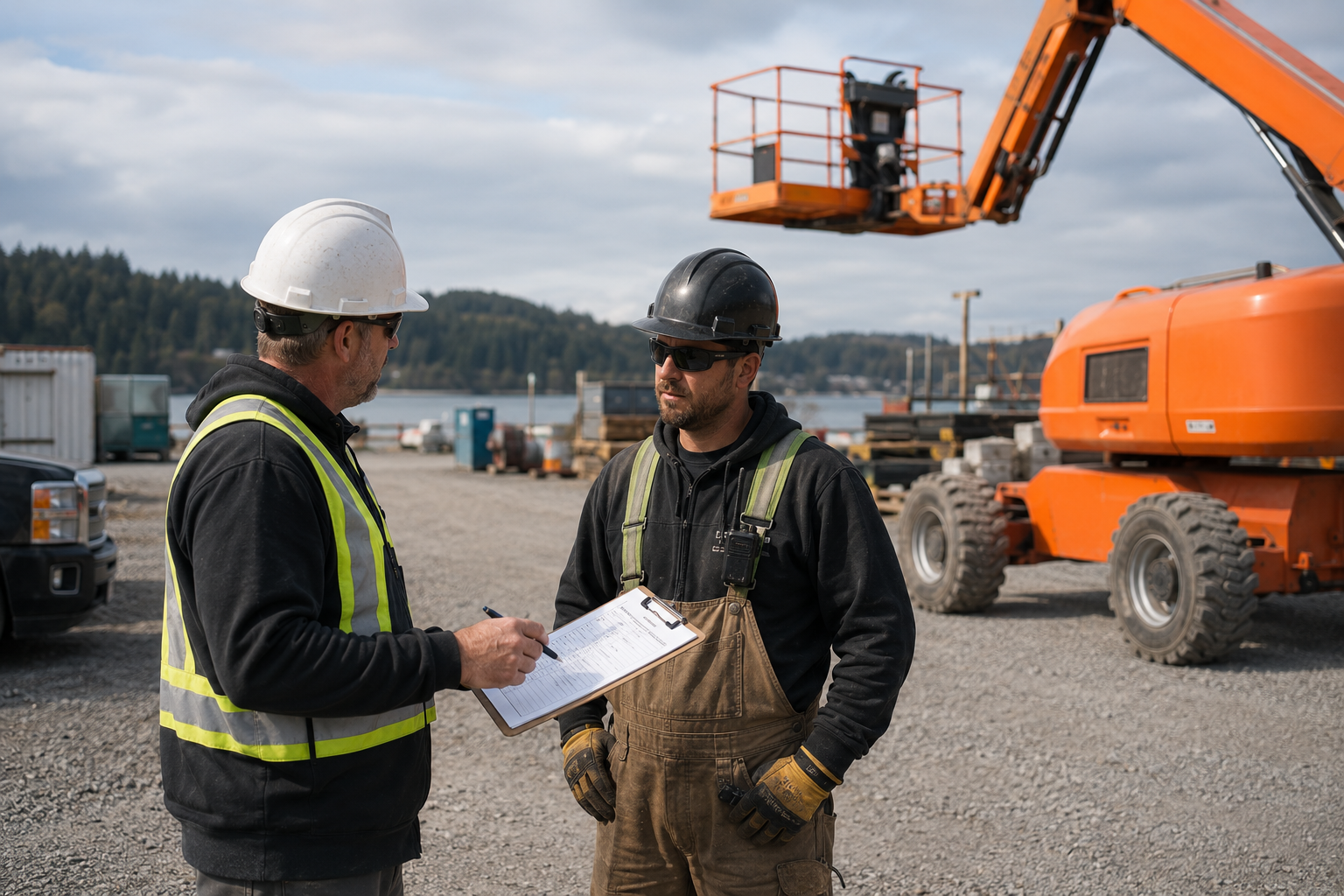
Picture this: you have a crew that runs forklifts, a couple of lifts, and a telehandler when the work calls for it. You know they need training. So you start calling around, and every provider sounds about the same. They all say they are experienced. They all say they are flexible. They all say they can come to your site. But you are not really comparing trainers at that point. You are comparing phone manners.
That is the gap this blog is here to close. Choosing a mobile equipment trainer is a real decision, and it deserves more than picking whoever has an open date. The right trainer makes the training feel relevant to your crew and your machines. The wrong one runs a generic session that checks a box and changes very little on the floor.
Below, we walk through what actually matters when you evaluate a trainer for an equipment-heavy Campbell River operation. What to ask. What to share. What weak trainer selection tends to miss. And how to get to a clear, confident booking decision instead of a guess.
Why Trainer Fit Matters Before the Session Begins
The Trainer Shapes How Relevant the Training Feels
Here is the thing about equipment training. The course outline is only part of the story. The trainer is the other part. A good trainer connects every point back to the machines your crew runs and the work they actually do. A weaker one runs through slides and hopes it lands.
Your crew can tell the difference within the first hour. When the examples match their forklift, their yard, their daily tasks, they lean in. When the examples feel generic, they tune out. That is why trainer fit is not a small detail. It is most of what decides whether the session was worth the downtime.
It also affects what happens after. A session that felt relevant tends to stick. Operators remember it because it mapped onto real work. A session that felt generic fades fast, and you are left wondering why the training did not change much on the floor.
Campbell River Operations Are Not All the Same
A trainer worth booking understands that operations vary, even within one town. Campbell River has construction sites, industrial yards, facility crews, marine-adjacent work, and seasonal operations that ramp up and slow down through the year. Each one puts different demands on equipment and operators.
A forklift in a tight indoor warehouse is a different daily reality than a forklift working an outdoor yard with uneven ground. Worksite equipment training that ignores this ends up generic. The trainer you want is the one who asks about your environment before they ever quote a session.
So when you talk to an equipment trainer Campbell River employers can rely on, listen for how much they want to know about your setup. The good ones treat that as the starting point, not an afterthought.
What an Employer Should Ask Before Booking
What Equipment and Tasks Will the Trainer Discuss
Start simple. Ask the trainer what equipment the session will actually cover. If your crew runs counterbalance forklifts, a telehandler, and the occasional scissor lift, the training conversation should reflect that mix. A trainer who just says “we cover forklifts” without asking which ones, or how they are used, is not preparing for your operation.
Good follow-up questions sound like this:
- Which machines will be the focus, and can the session cover more than one type?
- What tasks will the training examples be built around, such as loading, yard movement, or material handling?
- What about attachments the crew uses, since attachments change how a machine behaves?
- How is the hands-on portion structured around the equipment the crew runs daily?
How the Trainer Handles Mixed Experience Levels
Most crews are not uniform. You have experienced operators, newer hires, and people who run the equipment only sometimes. One-size instruction tends to fail both ends. It bores the veterans and overwhelms the new workers.
Ask the trainer directly how they handle a mixed group. A strong answer shows they have done it before. They might talk about using experienced operators as a resource during discussion, or adjusting the hands-on time so newer workers get more practice. A weak answer treats everyone the same and hopes for the best.
How Practical Experience Shows Up in Training
Realistic Examples and Site-Aware Questions
You can usually spot a practical trainer by the questions they ask you. They want to know about your surfaces, your traffic patterns, your shift structure, your recurring headaches. They are building a picture of your operation before they step on site.
VIF Safety Training is led by Darrell Block, who has driven mobile equipment for 24 years and has been an IVES Certified trainer since 2018. That kind of background shows up in the training itself. The examples come from real work, not a manual. The questions are site-aware because the trainer has actually been on sites like yours.
This matters more than it sounds. When a trainer has run the equipment, they know which mistakes are common, which habits drift over time, and which conditions trip operators up. That experience turns a standard course into something your crew can actually use.
Clear Expectations for Operators and Supervisors
A good trainer does not just show up and teach. They tell you what they need from you first. What equipment should be available. What space works for the hands-on portion. Who should attend. What the crew should expect.
They are also clear about what happens after the session. Documentation, completion records, and what supervisors should reinforce once the crew is back on the job. This clarity is a sign of a trainer who treats the session as part of your operation, not a drop-in visit.
What Weak Trainer Selection Can Miss
The Actual Operating Environment
This is the biggest miss. A generic trainer teaches equipment operation as if every site were the same. But your crew does not operate in a vacuum. They work around surfaces, traffic, site flow, weather, and other crews.
When the training ignores all of that, operators learn to run the machine in ideal conditions and then improvise the moment real conditions show up. Strong worksite equipment training builds the environment into the lesson. That is the part weak trainer selection tends to skip.
Campbell River adds its own conditions on top of this. Outdoor work deals with coastal weather. Yards can have uneven ground and shifting layouts. Seasonal operations change the pace and the crew mix through the year. A trainer who understands this builds it into the discussion instead of leaving operators to work it out alone.
The Employer Responsibility After Training
Training is phase one, not the finish line. A trainer who never mentions what happens after the session is leaving out something important. The crew comes back to the floor, and supervisors carry the work forward through reinforcement and task assignment.
A trainer who talks about this honestly is more useful than one who implies the certificate solves everything. The session builds the foundation. Your supervision keeps it standing.
Signs You Are Looking at Generic Delivery
Sometimes the warning signs are small. They show up in how a provider talks before you have even booked anything. A few patterns worth noticing:
- No questions about your fleet. They are ready to quote without knowing what you run.
- A fixed agenda. The session looks identical no matter who the client is.
- Vague answers on mixed experience. They have no real plan for veterans and new hires in one room.
- No mention of after the session. Documentation and reinforcement never come up.
- Speed over fit. The pitch is mostly about how fast they can get you scheduled.
How to Prepare Information for the Trainer
Crew, Equipment, and Schedule Details
Before you call a provider, gather a short list. It makes the whole conversation faster and the training better. Here is what to have ready:
- Equipment list: the machines your crew runs, including types and any attachments.
- Crew roster: how many operators, and a rough sense of experience levels.
- Work environment: indoor, outdoor, yard, mixed, plus surfaces and traffic.
- Schedule windows: when the crew can realistically be available without stopping everything.
- Training location: whether you want the session onsite or somewhere else.
Known Issues or Recurring Questions
This one gets overlooked, and it should not. If your supervisors have noticed the same mistake coming up, or the same question that never quite gets answered, share it. A good trainer takes that information and builds the session around it.
You are not exposing weakness by sharing this. You are giving the trainer the material that makes the session actually useful. The provider handles the delivery with the right tone. Your job is just to be honest about where the crew could use attention.
Think about the last few months on your site. Was there a near miss that made everyone pause? A new attachment the crew figured out on their own? A spot in the yard where operators always slow down because something feels off? Those are exactly the details a strong trainer wants to hear before the session.
| What to Evaluate | A Strong Trainer | A Weak Fit |
| Discovery questions | Asks about equipment, site, crew, and tasks before quoting | Quotes a session without learning your operation |
| Equipment relevance | Builds the session around the machines you actually run | Uses generic equipment examples regardless of your fleet |
| Mixed experience | Has a clear approach for veterans and new hires together | Treats every attendee the same way |
| Worksite awareness | Connects training to surfaces, traffic, and site flow | Teaches operation in ideal conditions only |
| After the session | Explains documentation and supervisor reinforcement | Implies the certificate is the whole solution |
| Practical background | Brings real field experience into examples | Relies on manual-style delivery |
How VIF Safety Training Can Support the Decision
Discuss the Operation Before Booking
The first conversation with VIF Safety Training is about your operation, not a calendar slot. Share the equipment, the crew, the work environment, and the schedule constraints. From there, the discussion moves to what the session should cover and how it should run.
If you are looking for a Mobile Equipment Trainer In Campbell River who plans the session around your actual work, that planning conversation is the starting point. It is also where you can ask anything you are still unsure about before committing.
Build a Course Path Around the Crew
Some crews need one focused session. Others need a small set of courses planned together. If your operation falls into the second group, the conversation can cover how mobile equipment certification Campbell River fits alongside the trainer-led sessions.
The point is to match the training to the crew, not to sell a stack of courses. Visit the Mobile Equipment Trainer In Campbell River page for service details, or reach out directly to start the planning conversation.
Choosing a mobile equipment trainer is not about who answers the phone first. It is about who understands your equipment, your crew, and your worksite well enough to make the training stick. Ask the discovery questions. Share the real details. Watch for the trainer who wants to know your operation before they quote a session.
If you are ready to have that conversation, reach out to VIF Safety Training. Bring your equipment list, crew details, and schedule, and you will get a clear answer on what training fits your Campbell River operation. Call 250-889-2074 or use the contact form to get started.
Frequently Asked Questions
What should I look for in a mobile equipment trainer?
Look for a trainer who asks about your equipment, worksite, and crew before quoting a session. The right trainer builds the training around the machines you actually run and the conditions your operators work in. A weak fit quotes a generic session without learning your operation first.
Can a trainer adapt equipment training to our worksite?
Yes, a good trainer can. Share your surfaces, traffic patterns, equipment, and daily tasks during the booking conversation, and the session can be built around that reality. VIF Safety Training plans the training around your operation rather than running a fixed course.
What should I tell a trainer before booking a session?
Share your equipment list, crew roster with rough experience levels, work environment, schedule windows, and preferred training location. Also mention any recurring mistakes or questions your supervisors have noticed. This information makes the session more relevant and the booking conversation faster.
Should supervisors be part of the training planning conversation?
Yes. Supervisors usually know the recurring issues, the crew mix, and the schedule realities better than anyone. Including them in the planning conversation helps the trainer build a session that fits, and it sets up better reinforcement after the training ends.
Can VIF Safety Training support mixed equipment crews?
Yes. VIF Safety Training works with crews that run forklifts, lifts, telehandlers, and other mobile equipment. The booking conversation covers the full equipment mix so the session, or a planned set of sessions, matches what your crew actually operates.
How do I request a mobile equipment trainer in Campbell River?
Visit the Mobile Equipment Trainer In Campbell River page for service details, or call VIF Safety Training at 250-889-2074. Bring your equipment list, crew details, and schedule so the conversation can move quickly to what training fits your operation.