Picture this: you need your forklift crew trained, and you are weighing two options. Send them off to a group session somewhere else, or bring a trainer to your site. On paper, the group session looks simpler. One date, one location, done. But then you start thinking about your actual operation, and it gets more complicated.
Your crew runs specific machines. Your yard has its own layout. Your schedule does not pause easily. A standard group session treats all of that as background noise. For some crews, that is fine. For others, it leaves a real gap between what the training covered and what the job actually looks like.
This blog is about telling which group your crew falls into. We are not saying onsite is always better. We are saying it fits some operations far better than a standard session, and the deciding factors are worth understanding before you book.
Why Onsite Training Is Not Just About Convenience
The Work Environment Shapes the Learning
It is easy to think of onsite training as a convenience choice. The trainer comes to you, nobody commutes, less hassle. That is part of it. But the bigger point is that the work environment itself becomes part of the lesson.
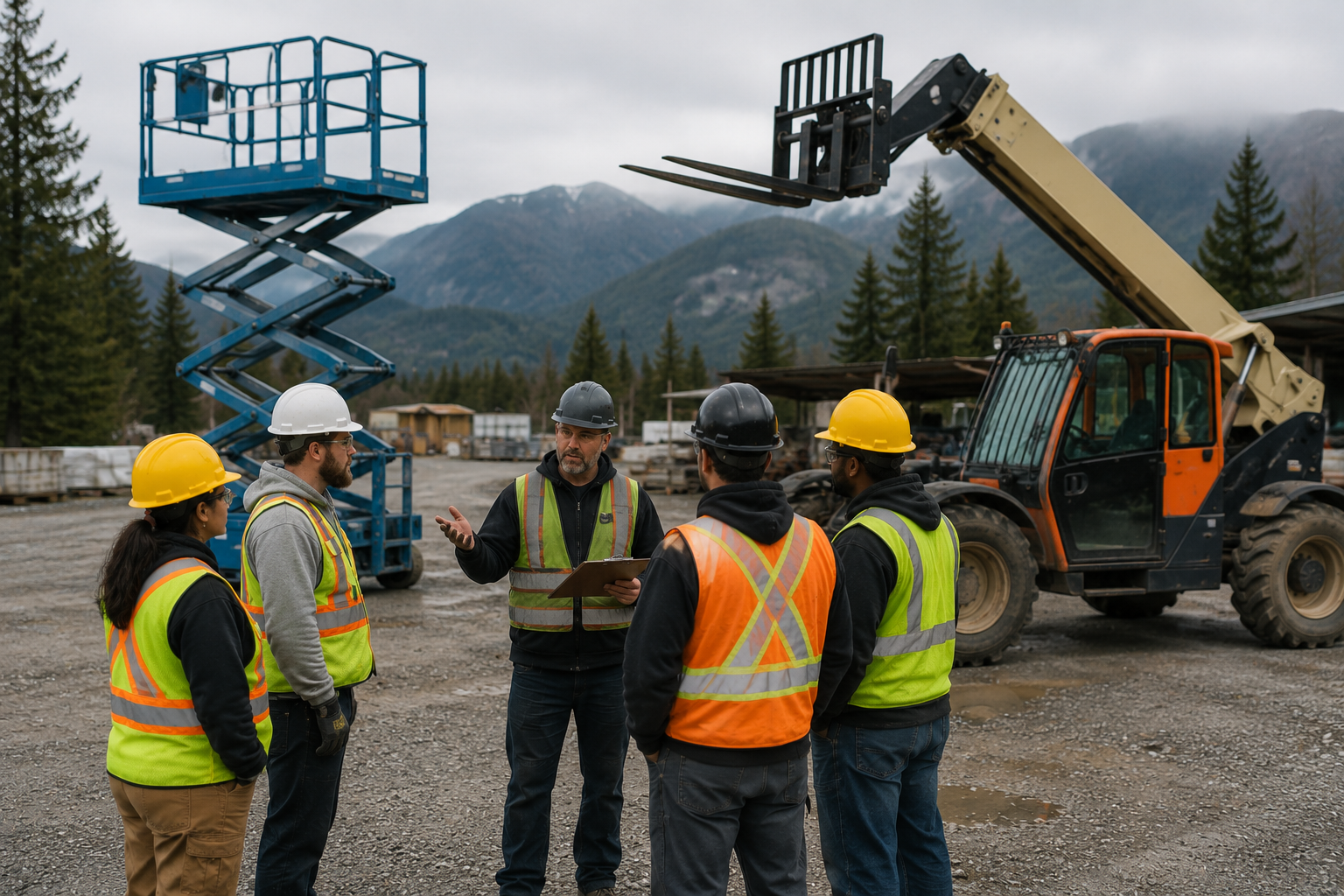
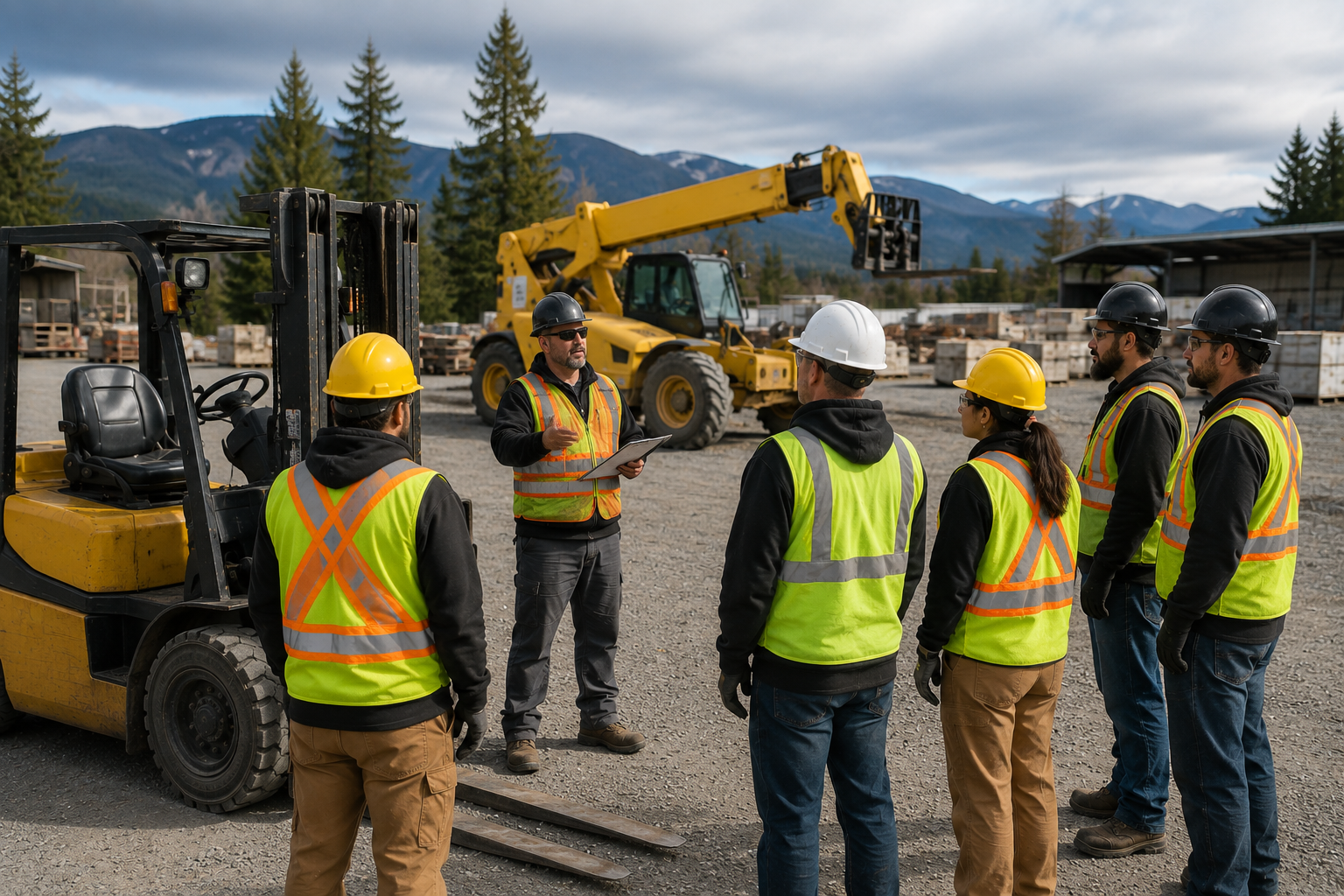
When training happens in your space, the aisles your operators navigate are right there. The loading areas they use every day are right there. The traffic patterns, the surfaces, the equipment condition. All of it is available as teaching material instead of being described in the abstract. That is a different kind of training than a generic room can offer.
Think about how much of forklift safety is situational. It is not just knowing how to operate the machine. It is reading the space, anticipating the traffic, adjusting to the surface. A training room can describe those skills. Your actual site can demonstrate them.
Crews Often Learn Better When Examples Feel Familiar
There is something that happens when a trainer can point at the actual forklift your operator runs and say, here is what to watch on this machine. The lesson stops being theoretical. It maps directly onto the work.
We are not going to claim onsite training guarantees better retention for everyone. That depends on the crew and the trainer. But familiar examples do tend to hold attention better, and attention is most of what makes training stick. When the examples feel like the job, operators stay engaged.
Experienced operators notice this too. They are quick to disengage when training feels generic, because they have sat through generic before. When the session uses their equipment and their site, even the veterans tend to stay tuned in.
When a Standard Group Session May Not Fit the Crew
Unique Equipment or Site Layout
Some operations are a poor match for generic group training, and it usually comes down to how specific their setup is. Here are the signs that a standard session might leave gaps:
- Specific forklift types that a group session may not have on hand.
- Attachments the crew uses regularly, which change how the machine behaves.
- Tight spaces or unusual aisle layouts that need site-specific practice.
- Rougher surfaces or outdoor yards that differ from a training facility floor.
- Recurring material movement patterns that are easier to teach in context.
Shift Constraints and Active Operations
The other common reason is scheduling. Some employers simply cannot pull several workers out at once and send them across town. The operation has to keep running.
Onsite forklift training gives those employers a way to train without a full shutdown. The crew stays on the property. Work can continue around the training with some adjustment instead of stopping entirely. For operations that run lean, that flexibility is not a small thing. It is often the difference between training that gets booked and training that keeps getting pushed back.
It also helps with crews spread across shifts. Instead of forcing everyone onto one offsite date, onsite training can be planned around the operation. The schedule conversation happens up front, and the session fits the work instead of the other way around.
What Onsite Forklift Training Can Clarify
Pre-Use Inspection in Context
Pre-use inspection is one of those things that sounds simple until you watch it get skipped. Training operators on inspection using a generic machine teaches the idea. Training them on the actual forklift they run every shift teaches the habit.
When the inspection lesson happens on your equipment, operators learn what to look for on that specific machine. Where the wear shows up. What normal looks like, so they can spot what is not normal. That connection between the lesson and the machine is hard to replicate away from the worksite.
It also makes the inspection feel like part of the job rather than a separate exercise. When operators practice it on the same forklift they will use the next morning, the habit carries over more naturally.
Travel Paths, Loading Areas, and Pedestrian Flow
A lot of forklift risk lives in the space around the machine, not just the machine itself. Travel paths, loading zones, where people on foot tend to cross. These are hard to teach well in a classroom because the classroom is not your site.
Onsite forklift training can walk operators through the actual routes they use, the actual blind spots, the actual points where pedestrian traffic and equipment traffic meet. That is site-awareness training grounded in the real layout instead of a generic diagram.
Supervisors often find this part valuable too. When the trainer points out a blind corner or a busy crossing, it gives everyone a shared reference point that carries into daily operations long after the session ends.
What Employers Should Prepare Before the Trainer Arrives
Equipment Availability and Training Space
Onsite training works best when a few things are sorted in advance. The right equipment needs to be available for the session, not out on a job. And there needs to be a space where the hands-on portion can happen safely, away from active operations.
This does not need to be elaborate. A trainer can work with most setups. But a quick conversation before the session about what equipment and what area will be used saves time and makes the day run smoother.
Crew Roster and Experience Level
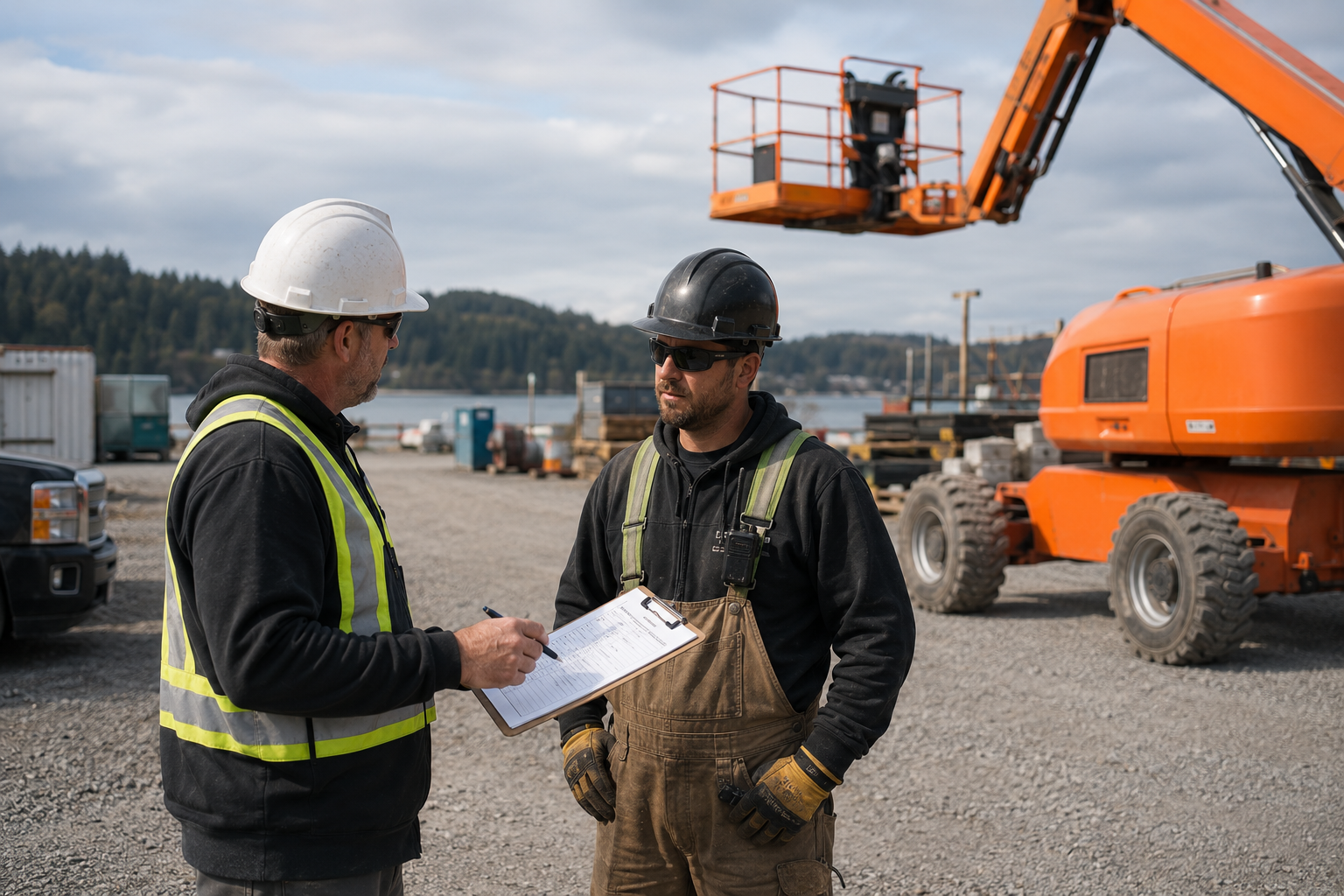
The trainer should know who is attending before they arrive. Not just headcount, but a rough sense of experience. Who is new, who is seasoned, who runs the forklift only occasionally.
This shapes how the session is structured. A roster with a wide experience range needs a different approach than a group of all-new operators. Sharing this in advance lets the trainer plan a session that works for the people actually in the room.
It also helps the trainer decide where to spend time. If most of the crew is experienced and just needs a refresher with site-specific focus, that is one session. If half the group is new, that is another. The roster tells the trainer which one they are walking into.
| Operation Factor | Standard Group Session | Onsite Forklift Training |
| Equipment match | Trains on whatever the facility has | Trains on the machines your crew runs daily |
| Site layout | Generic facility floor | Your actual aisles, yards, and traffic patterns |
| Scheduling | Crew travels on a fixed date | Trainer comes to you, work continues around it |
| Crew availability | Hard to release several workers at once | Crew stays on the property |
| Site-awareness training | Described in the abstract | Walked through on the real layout |
| Best fit | Crews with standard equipment and flexible scheduling | Crews with specific gear, layouts, or shift constraints |
Where Onsite Training Still Needs Structure
It Should Not Become an Informal Walkthrough
Here is a fair concern with onsite training. Because it happens in a familiar space, it can drift into a casual site walk if the provider is not careful. That is not training. That is a conversation.
Onsite forklift training through VIF Safety Training is structured. It has a curriculum, it has a hands-on component, and it has assessment. The location is your site, but the rigor is the same as any proper session. The familiar setting is an advantage, not an excuse to go informal.
When you talk to a provider about onsite training, it is fair to ask how the session is structured. A clear answer about the curriculum, the hands-on portion, and the assessment tells you the training will hold up. A vague answer is worth a second look.
Documentation and Assessment Still Matter
Onsite does not mean undocumented. The session still produces records, still includes assessment, still has clear completion expectations. Those are part of what makes the training useful to you afterward, for task assignment and for your own recordkeeping.
If a provider offers onsite training but is vague about documentation and assessment, that is worth questioning. The convenience of the location should never come at the cost of the structure that makes training credible.
Good documentation also helps you down the line. When you are planning future training, onboarding a new hire, or reviewing who is qualified for what, those records become a practical tool rather than a file you never open.
How to Decide if Onsite Forklift Training Is the Right Next Step
Use the Operation as the Deciding Factor
The decision comes down to your operation, not a general rule. Run through a few questions:
- Crew size: can you easily release everyone for an offsite session, or not?
- Equipment: does your crew run specific machines or attachments worth training on directly?
- Schedule: can the operation pause, or does it need to keep running?
- Work environment: is your site layout a meaningful part of the daily risk picture?
Talk It Through With VIF Safety Training
If the answers point toward onsite, the next step is a conversation. Share your crew size, equipment, schedule, and work environment with VIF Safety Training, and you will get a clear read on whether onsite forklift training fits your operation.
You can also ask how it compares to other formats. Sometimes onsite is the answer, and sometimes the broader forklift training services in Campbell River or Worksafe Forklift Training Campbell River options fit better. The point is to match the format to the crew. Visit the Onsite Forklift Training Campbell River page for service details, or reach out directly to discuss fit.
Onsite forklift training is not automatically the right choice, and it is not just a convenience play. For crews with specific equipment, particular site layouts, or schedules that cannot easily pause, it tends to fit better than a standard group session because the training connects directly to the real work.
Run your operation through the deciding factors. Then bring the details to VIF Safety Training and get a straight answer on what fits. Call 250-889-2074 or use the contact form to start the conversation.
Frequently Asked Questions
When is onsite forklift training better than a standard group session?
Onsite forklift training tends to fit better when your crew runs specific equipment or attachments, when your site layout is a real part of the daily risk picture, or when your schedule cannot easily pause for an offsite session. Standard group sessions work well for crews with common equipment and flexible scheduling.
Can onsite forklift training be planned around active operations?
Yes. One of the main reasons employers choose onsite forklift training is that the crew stays on the property and work can continue around the session with some adjustment. The booking conversation with VIF Safety Training can cover scheduling that fits your operation.
What does an employer need to prepare for onsite forklift training?
Make sure the right equipment is available for the session rather than out on a job, and identify a space where the hands-on portion can happen safely. Also have a crew roster ready with rough experience levels. A short planning conversation before the session covers the rest.
Should training use the forklifts our crew operates daily?
When possible, yes. Training on the actual machines your crew runs makes the lesson concrete. Operators learn what to watch on that specific equipment, which is harder to replicate on a generic machine at a training facility. This is one of the advantages of onsite delivery.
Can onsite forklift training support mixed experience crews?
Yes. Share the crew roster and experience mix with VIF Safety Training before the session, and the training can be structured to work for veterans and newer operators together. The familiar onsite setting also helps keep both groups engaged.
How do I book onsite forklift training with VIF Safety Training?
Visit the Onsite Forklift Training Campbell River page for service details, or call VIF Safety Training at 250-889-2074. Share your crew size, equipment, schedule, and work environment so the conversation can confirm whether onsite is the right fit.