When it comes to working at heights, there’s zero room for error. Whether you’re operating a scissor lift on a commercial job site or using a boom lift for facility maintenance, proper aerial lift training is more than a checkbox — it’s a legal, safety, and business-critical requirement. But with multiple providers and training options out there, how do you know which aerial lift training program in Campbell River is right for you or your crew?
This guide will walk you through exactly what to look for, what to avoid, and how to make a confident, informed decision — whether you’re an employer, safety manager, or individual operator.
1. Understand What “Aerial Lift Training” Actually Means
Before comparing training providers, it’s important to know what aerial lift training should include.
Under WorkSafeBC OHS Regulation Section 13 and CSA Standards B354.2 and B354.4, aerial lift training must cover:
- Safe operation of scissor lifts, boom lifts, and man lifts
- Pre-operation inspections
- Emergency lowering procedures
- Hazard identification (e.g., overhead obstructions, tip hazards, electrical risks)
- Fall protection and platform safety
- Proper positioning and stabilization
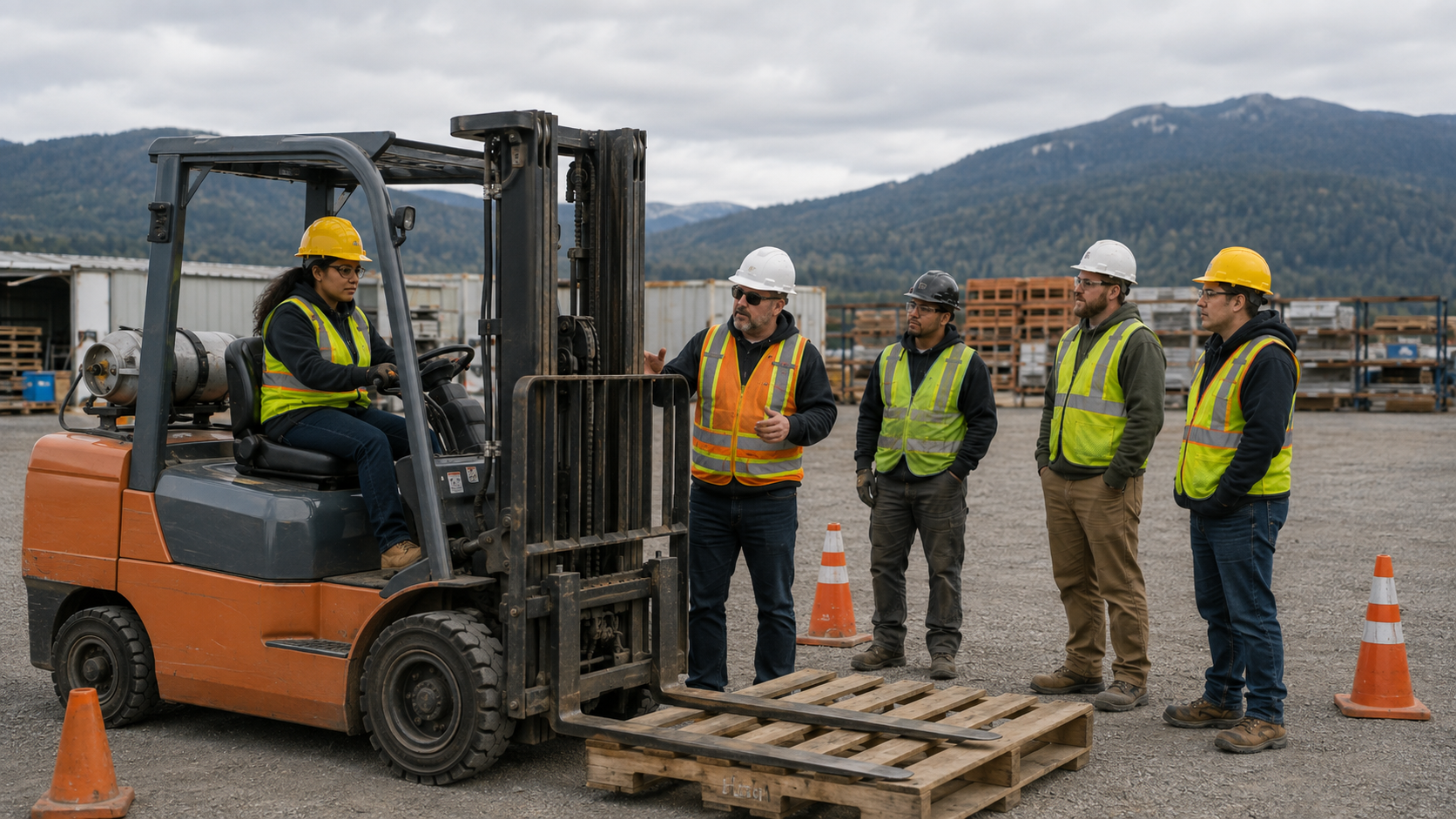
A strong program blends classroom instruction, hands-on practical training, and operator evaluation.
If a provider skips any of that or doesn’t reference CSA compliance, walk away.
2. Choose a Locally Recognized and Reputable Provider
National chains might have name recognition, but local knowledge matters. In Campbell River, VIF Safety Training understands the unique needs of:
- Forestry operations
- Construction contractors
- Warehousing and logistics
- Municipal and utility workers
Working in high-risk environments like Vancouver Island’s terrain and weather demands instructors who know the local industry, conditions, and challenges.
Look for providers who:
- Operate locally in Campbell River
- Have worked with Island-based crews or companies
- Offer on-site training customized to your workplace
3. Ask About the Instructor’s Experience
Not all trainers are created equal. Some are career instructors. Others, like Darrell Block, Owner of VIF Safety Training, have real-world field experience. Darrell brings:
- 18+ years of mobile equipment operation
- Ives Certification
- A background as a Red Seal Industrial Electrician
- 8 years of Canadian Forces service
When choosing a training program, ask:
- “Who will be leading the training?”
- “Have they worked in the field themselves?”
- “Can they adapt examples to my industry or job site?”
Trainers who’ve “been there” bring a different level of insight — and respect — to the session.
4. Verify Certification Standards (CSA & WorkSafeBC)
Any aerial lift training provider in BC must align with:
- CSA Standard B354.2 (Scissor Lifts)
- CSA Standard B354.4 (Boom Lifts)
- WorkSafeBC OHS Regulation Section 13
And as of September 1, 2021, these standards are not optional. Operators must be trained to these specific benchmarks, and employers are responsible for ensuring that.
Before booking, ask the provider:
- “Do your certifications comply with CSA B354.2 and B354.4?”
- “Do you provide documentation we can present for WorkSafeBC audits?”
- “Is refresher training offered or recommended?”
If they hesitate to answer or offer vague assurances — that’s your red flag.
5. Look for Hands-On, Equipment-Specific Training
Theory alone doesn’t cut it. A quality aerial lift training course should include:
- Direct practice with your actual equipment (if on-site)
- Real scenarios: navigating tight spaces, lifting loads, identifying hazards
- Supervised evaluation under load and stress conditions
This practical portion ensures operators don’t just “pass a test” — they build muscle memory and confidence that sticks.
Providers like VIF Safety Training specialize in on-site training in Campbell River, meaning your team learns on your machines, not generic simulators.
6. Flexible Scheduling and Group Options
In busy worksites, training often has to fit around real production deadlines. Good providers will:
- Offer flexible scheduling, including weekends or after-hours
- Provide group discounts or consolidated team sessions
- Adapt to tight windows with efficient, no-fluff delivery
Training shouldn’t disrupt your operations — it should support them.
7. Bonus Topics: Fall Protection, Lockout, and More
A great aerial lift training program doesn’t stop at platform controls. Look for bundled or extended modules such as:
- Fall Protection Training
- Confined Space Awareness
- Lockout/Tagout Safety
These are critical on most aerial lift job sites, and employers can save time (and liability) by certifying their teams in more than one requirement in a single visit.
8. Transparent Pricing — No Hidden Costs
Make sure the training provider clearly explains:
- What’s included (certificates, wallet cards, manuals)
- How long the certification lasts (usually 3 years)
- Whether re-certification reminders or tracking are available
At VIF Safety Training, we keep pricing straightforward — no upsells, no surprise fees. Just real training that keeps your team legal and safe.
9. What Campbell River Employers Say
Don’t just take a provider’s word for it — check their local reputation.
Ask:
- Do they have Google reviews or testimonials?
- Have they worked with businesses like yours?
- Can they share references or case studies?
Local trust matters — especially when you’re responsible for workplace safety and legal compliance.
Final Thoughts: Don’t Settle for Basic
Choosing the right aerial lift training program in Campbell River isn’t about finding the cheapest or quickest option. It’s about choosing a program that:
- Meets WorkSafeBC and CSA standards
- Is led by a qualified, experienced instructor
- Is tailored to your actual worksite and equipment
- Gives your crew the skills they need to operate safely and confidently
We deliver practical, certified, and engaging aerial lift training programs right here in Campbell River — with a focus on real-world safety, not check-the-box paperwork.
Ready to Train?
If you’re looking to certify your team or yourself in aerial lift operation, fall protection, or related safety programs, we’re ready to help.
Call us today at 250-889-2074 or contact us online to book a training session.
Let’s make your worksite safer — one lift at a time.