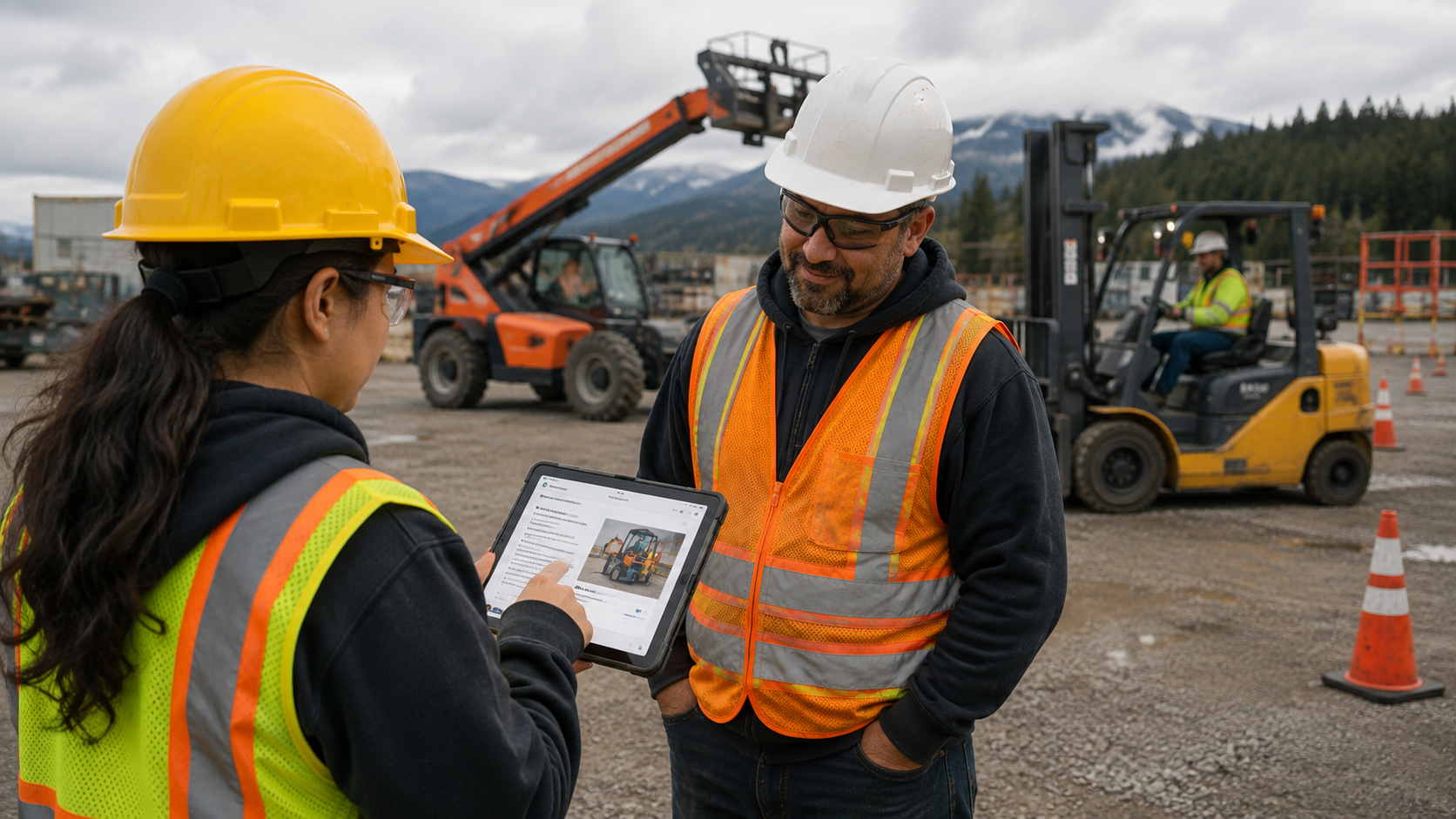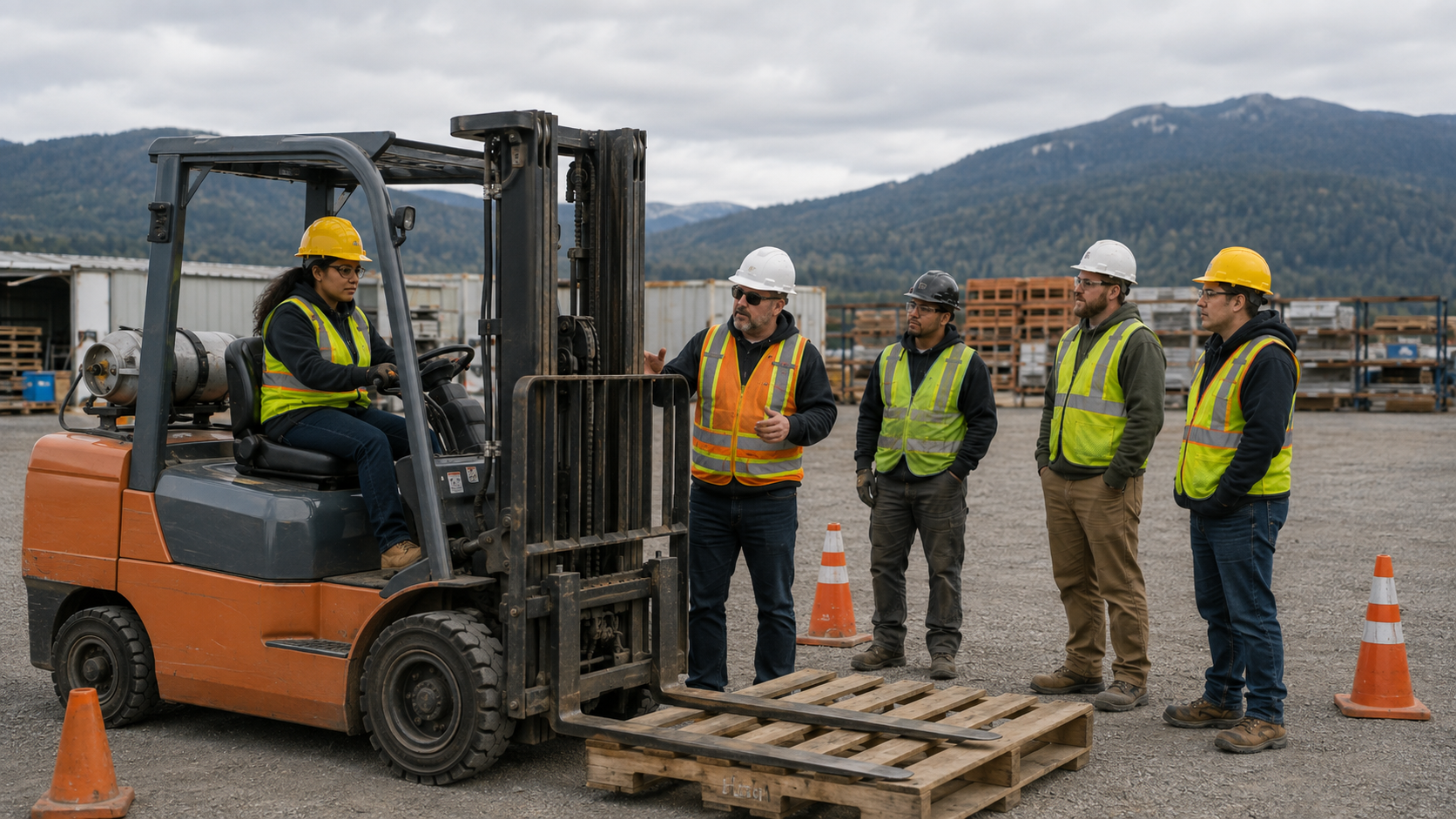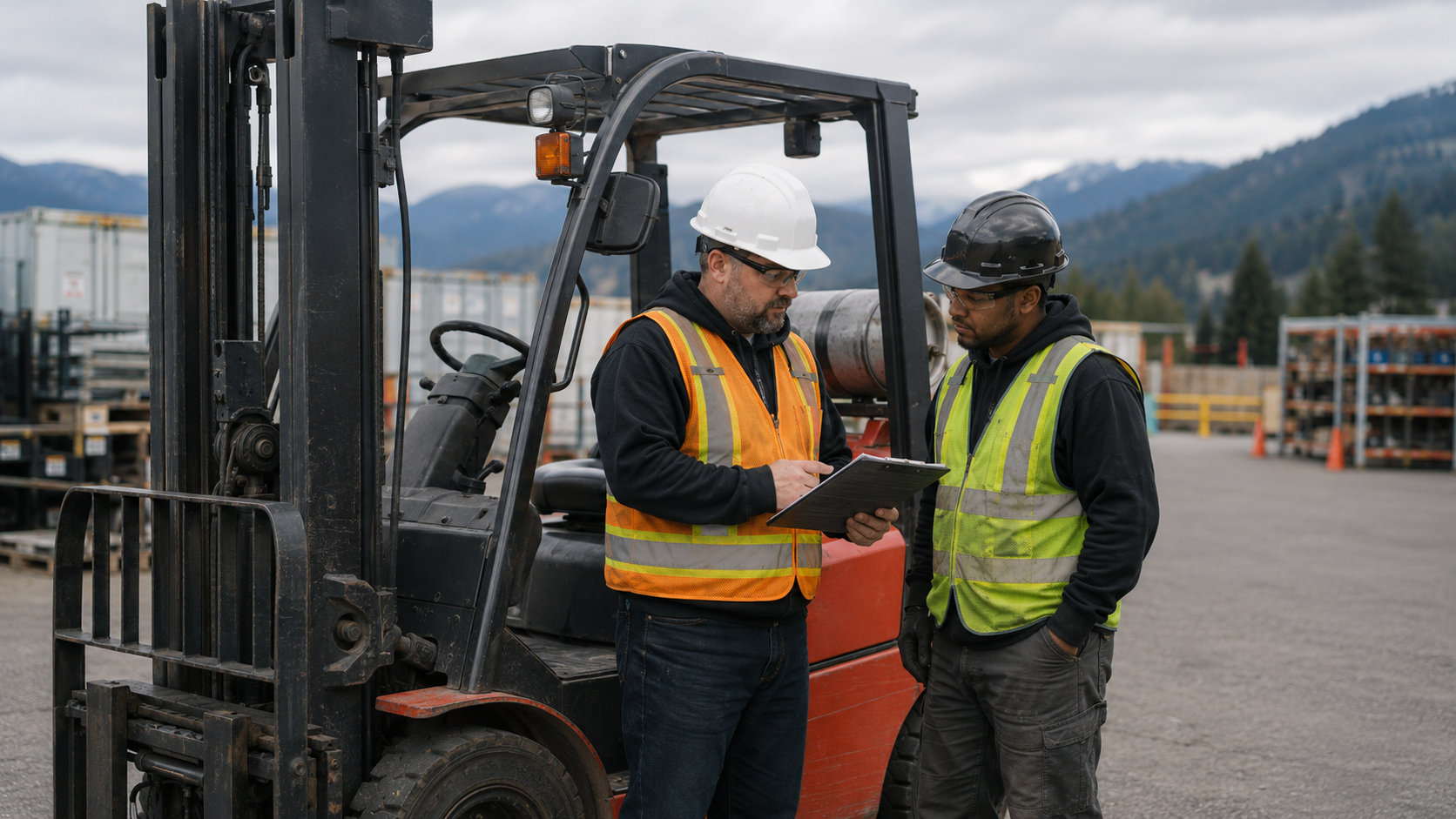
If you operate in construction, warehousing, forestry, or heavy industry, chances are your team depends on mobile equipment every single day. Forklifts, aerial lifts, telehandlers, pallet jacks, and excavators keep worksites moving — but in untrained hands, they can also cause serious harm. That’s why Mobile Equipment Certification in Campbell River is more than just a box to tick. It’s a safeguard for your workers, your reputation, and your bottom line.
But when it comes to getting certified, there’s an important question employers and operators often ask:
Is on-site training better, or should workers go to a classroom?
The truth is, both methods have unique strengths. Let’s break them down so you can make the best choice for your crew.
Why Mobile Equipment Training Matters
Before diving into training formats, let’s remember why this certification is so critical.
- Safety first: Every year in Canada, preventable accidents involving forklifts, aerial lifts, or cranes lead to injuries, fatalities, and massive financial loss. Training drastically reduces those risks.
- Legal compliance: In BC, WorkSafeBC regulations require operators to receive adequate training on mobile equipment. Since 2021, the training must also comply with CSA standards.
- Employer responsibility: Employers are legally obligated to ensure their workers are trained and supervised to a set standard. Failing to do so can lead to heavy penalties and liability.
- Confidence and productivity: Trained operators not only stay safe, they also work faster, reduce downtime, and protect expensive equipment.
So certification isn’t optional — it’s essential. The real question is how to deliver it in the most effective way.
The Case for Classroom Training
Classroom-based training has been the traditional route for decades. Workers gather in a training center, guided by a qualified instructor. Here’s why it still holds value:
1. Structured Learning Environment
A classroom eliminates distractions. Operators can focus entirely on learning without the background noise of an active jobsite.
2. Strong Theory Foundation
Much of mobile equipment safety depends on knowledge:
- How to interpret load charts
- Understanding stability triangles
- Recognizing hazards like powerlines or uneven terrain
- The legal responsibilities of operators
A classroom setting ensures that these fundamentals are taught in a clear, distraction-free way.
3. Peer-to-Peer Learning
Training alongside others means operators can share experiences and insights. Sometimes, hearing a story from a peer hits harder than a regulation in a textbook.
4. Controlled Environment for Testing
Classrooms make it easier to administer written tests, track performance, and confirm that knowledge was absorbed before moving to practical skills.
Bottom line: Classroom training is strong for theory, concentration, and standardized delivery.
The Case for On-Site Training
On-site training flips the script. Instead of sending workers to a training center, the instructor comes to you. The machines, jobsite, and hazards are the real ones your crew faces every day.
1. Hands-On Relevance
Workers learn on the exact machines they’ll be using — forklifts, telehandlers, scissor lifts, or excavators specific to your site. There’s no gap between training equipment and real-world equipment.
2. Contextual Hazard Awareness
Every jobsite is different. A warehouse in Campbell River has very different risks than a forestry site or a construction project. On-site training incorporates real hazards, showing operators how to stay safe in their exact environment.
3. Less Downtime
Instead of taking workers offsite for a full day, training can often be integrated into the workday. This reduces travel costs and keeps operations moving.
4. Customization
An on-site instructor can tailor the course to your needs:
- Focusing on specific machines you own
- Addressing challenges your crew has faced
- Covering site-specific safety protocols
5. Employer Engagement
On-site training allows supervisors and managers to directly observe and reinforce the standards. It becomes a shared responsibility rather than an outsourced task.
Bottom line: On-site training is unbeatable for practical relevance, customization, and efficiency.
On-Site vs Classroom: Key Comparisons
| Factor | Classroom Training | On-Site Training |
| Theory Learning | Strong focus on knowledge, fewer distractions | Covered, but sometimes rushed due to site demands |
| Practical Skills | General machines, controlled setting | Real equipment, real hazards, site-specific |
| Convenience | Workers travel to training center | Trainer comes to you |
| Customization | Standard curriculum | Tailored to your site and machines |
| Cost Efficiency | Travel + downtime costs can add up | Lower downtime, more flexible |
| Team Engagement | Good peer interaction | Stronger integration with supervisors and site safety culture |
Which is Better for Campbell River Employers?
For many employers in Campbell River, the best solution often depends on your goals, your equipment, and your workforce.
- If you’re certifying new operators who need a strong foundation, classroom training can be a solid first step.
- If you’re refreshing skills, training experienced workers, or addressing site-specific hazards, on-site training usually delivers more value.
- For many companies, the ideal approach is a hybrid model: classroom time for theory, followed by on-site instruction for hands-on learning. This ensures operators know the rules and can apply them in their real-world environment.
Why Employers Choose VIF Safety Training
At VIF Safety Training, we provide both classroom and on-site mobile equipment training across Vancouver Island — including Campbell River. Here’s why employers choose us:
- Certified Instructors: Our trainers meet WorkSafeBC and CSA requirements, ensuring compliance and peace of mind.
- Flexible Delivery: Whether you want classroom instruction, on-site training, or a blend of both, we adapt to your needs.
- Real-World Relevance: On-site sessions focus on your actual machines and hazards, not generic scenarios.
- Lowest Price Guarantee: We believe in making safety training accessible, without compromising quality.
- Comprehensive Course List: From forklifts and scissor lifts to excavators, cranes, and confined space, we cover the full spectrum of workplace safety training.
Final Thoughts
So, is on-site training better than classroom training for mobile equipment? The answer is: it depends on your team.
- If you need a distraction-free focus on theory: classroom works best.
- If you want maximum relevance, efficiency, and customization: on-site is the way to go.
- For many, the winning formula is a hybrid approach — start in the classroom, finish on the jobsite.
No matter which you choose, the key is making sure your operators are trained, competent, and compliant with WorkSafeBC and CSA standards. That’s where VIF Safety Training comes in.
If you’re looking for Mobile Equipment Certification in Campbell River, trust VIF Safety Training to deliver high-quality, flexible programs that keep your crew safe and compliant.
Call us today at 250-889-2074 or visit our contact page to book your training.
Protect your people. Protect your business. Choose training that works for you.