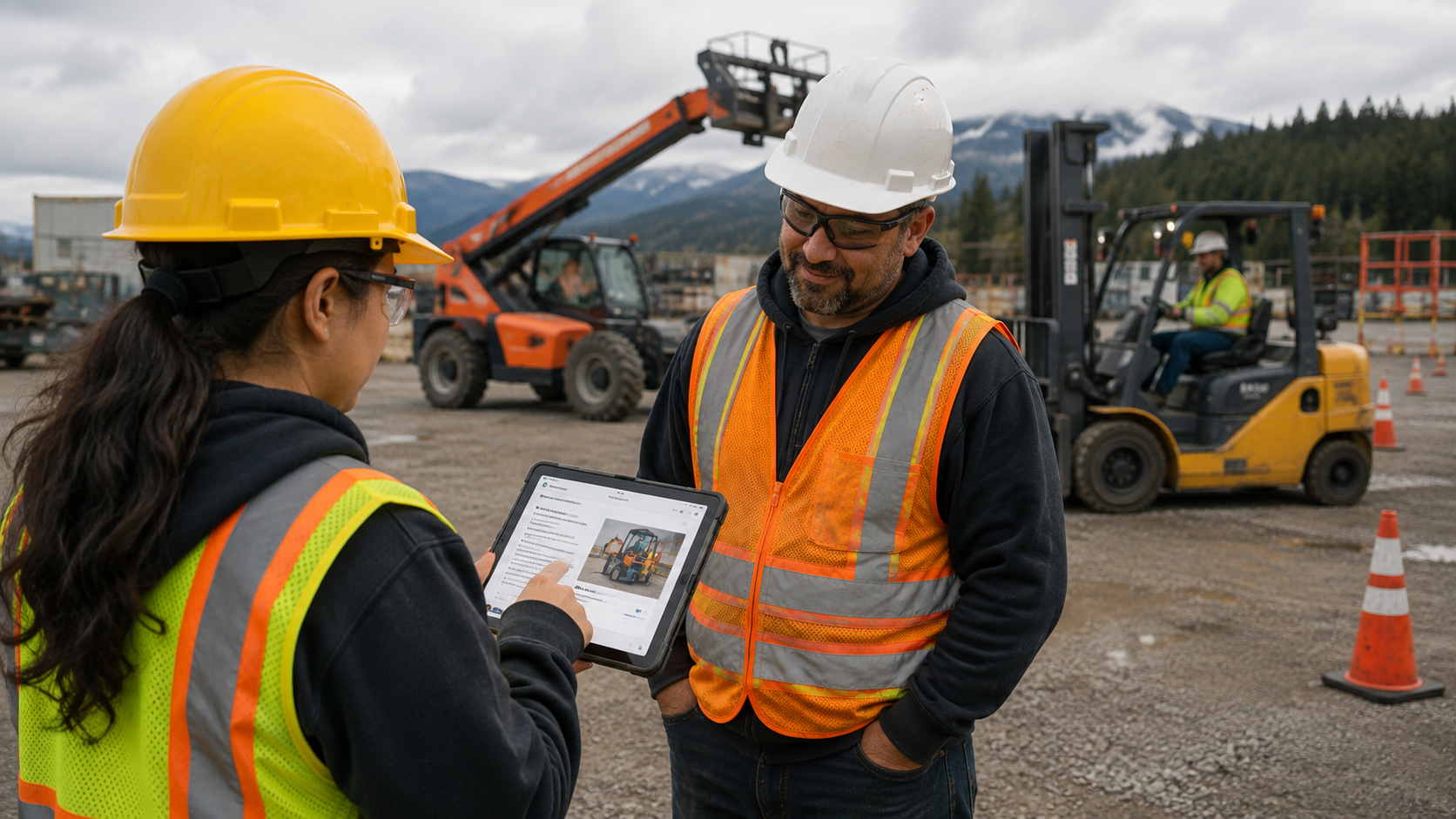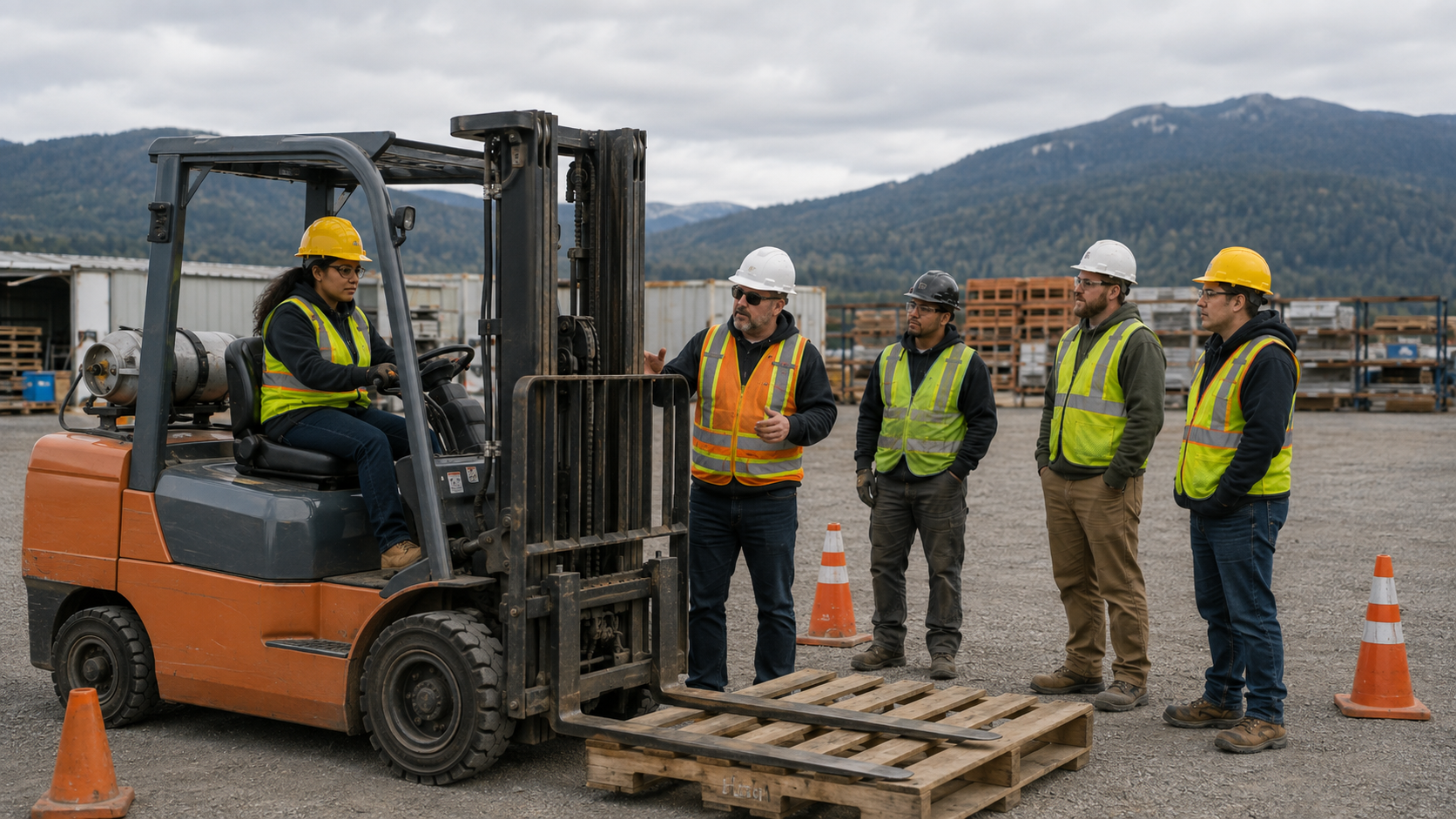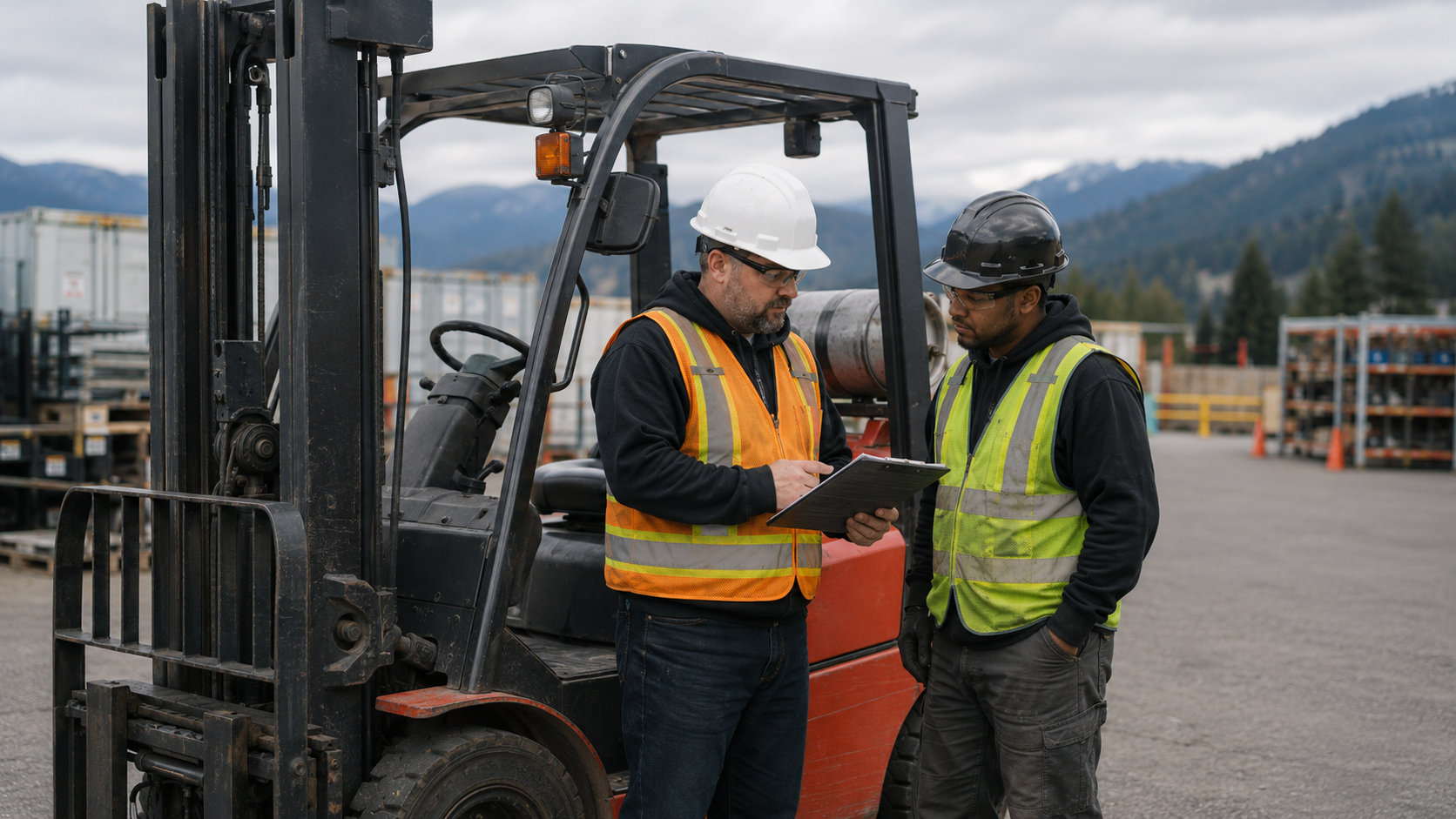
Telehandlers occupy a specific place in the equipment mix on Victoria worksites. They are not forklifts, even though they handle pallets and materials in similar ways. They are not aerial lifts, even though some configurations can raise workers in approved platforms. They are versatile reach-based material handling machines that operate across construction sites, yards, agricultural operations, and industrial settings where the work requires both lift capacity and the ability to extend a load beyond the equipment footprint. The training that prepares an operator to use a telehandler well needs to address that combination of material handling skill and reach awareness, and it needs to address them in ways that fit the work the crew actually performs.
For a supervisor or operations manager preparing workers to use telehandlers on site, the question is not whether the operators need training. The question is what the training should cover, what the trainer should know before arriving, and what good preparation looks like so the session connects to the work rather than running as a generic course that leaves the same operators with the same questions afterward. Telehandler operations vary substantially depending on the equipment, the attachments, the load types, the site layout, and the surrounding conditions. Training that ignores this variability tends to produce operators who pass the session and then improvise on the job.
This blog walks through what telehandler training should include before operators use the equipment on site. It covers why the training conversation should be task-aware, what employers should identify before booking, the areas a practical course should reinforce, why worksite layout shapes the discussion, how supervisors can support better outcomes, and how VIF Safety Training approaches the booking conversation so the session reflects the actual work. The content is written for the employer side of the conversation, since the booking and preparation decisions sit there rather than with the operators themselves.
Why telehandler training should be task-aware
Telehandlers are not just larger forklifts
Telehandlers share the pallet handling function with forklifts, and that surface similarity sometimes leads to assumptions that training one machine prepares an operator for the other. In practice, the differences are substantial enough to require their own training discussion. The reach boom changes how load weight affects stability, how the operator positions the machine relative to the load, and how the equipment behaves when the boom extends. The variable terrain capability changes how the operator reads the ground compared to a forklift on a level warehouse floor. The attachment options expand what the machine can do and add their own considerations for each attachment in use. A skilled forklift operator stepping onto a telehandler for the first time needs the training, not just an orientation.
Treating telehandler training as a forklift refresher tends to leave operators with gaps in exactly the areas where telehandler operation differs most from forklift operation. The boom mechanics, the load chart reading, the attachment swaps, the rough terrain handling, and the reach positioning all deserve dedicated coverage. Quality telehandler operator training built around the actual machine and the actual work produces operators who understand what they are doing rather than operators who are extrapolating from related experience.
Material movement creates risk before the lift happens
The risk picture for telehandler work begins before the load leaves the ground. Travel paths through the site need to be clear and stable enough for the machine and the load to move safely. Ground conditions affect both the equipment stability and the operator’s ability to read what the machine is doing under the load. Communication with nearby workers, other equipment operators, and supervisors becomes part of the operation, particularly on active worksites where the telehandler is one of several machines moving through shared space. Load placement at the destination matters for stability and for the safety of workers in that area. Each of these steps deserves attention during training rather than being treated as obvious context that operators will figure out.
Among the Telehandler Operator Training Victoria sessions delivered through VIF Safety Training, the most useful sessions tend to cover this broader movement picture rather than focusing only on the lift itself. Operators leave with awareness of the full task, from positioning the machine to setting the load down, and that awareness translates into smoother operations once the crew is back on the work.
What employers should identify before training
Load types and daily tasks
The loads the telehandler will handle shape what the training conversation needs to cover. A site that uses the equipment primarily for pallets of materials needs a different emphasis than a site that handles bundles of long products, bagged materials, or specialized items with non-standard load characteristics. Frequency of use matters too. Operators who run the telehandler several times daily face different practical challenges than operators who use it occasionally for specific tasks. Outdoor yard movement, construction site material delivery, agricultural support work, and industrial facility tasks all bring their own conditions. Sharing the typical work picture with the trainer before booking gives the session the inputs it needs to be useful.
Employers do not need to provide engineering specifications. A practical description of the daily work, the materials being moved, the typical destinations on site, and the conditions where the equipment operates is enough to shape a productive training session. The trainer takes that information and uses it to bring relevant examples into the discussion, adjust the emphasis on different aspects of operation, and target the hands-on portion to scenarios that reflect the actual work.
Attachments and equipment setup
Telehandlers gain much of their versatility from attachment options. Pallet forks, bucket attachments, lifting hooks, and other attachment configurations each change how the machine operates and what considerations apply during use. The training discussion should address the attachments the crew actually uses rather than treating attachment changes as an afterthought. Load charts for each attachment, manufacturer instructions, and the operator’s responsibility to confirm setup before lifting all deserve attention during the session.
Among employers booking telehandler operator training in Victoria, the ones who share their attachment inventory upfront tend to receive sessions that match their operation. The trainer arrives prepared to address the specific attachments the operators will use. The discussion covers attachment swap procedures, setup verification, and the operating differences between attachments. The session avoids the generic coverage that leaves operators uncertain about how their specific equipment configuration affects the work.
Core areas a practical course should reinforce
Inspection and operational controls
Pre-use inspection sits at the foundation of safe telehandler operation. The operator who checks the machine before starting each shift, who knows what to look for, and who reports concerns rather than working around them is the operator who avoids the situations that produce incidents. Quality training builds this inspection habit into routine practice. The session covers what the operator should look at on the machine, what conditions warrant pulling the equipment out of service, and what the reporting process looks like. None of this needs to be turned into a memorized checklist exercise. The goal is operators who internalize the inspection mindset rather than checking boxes mechanically.
Operational controls deserve their own dedicated coverage during the session. The boom controls, the stabilizer setup if applicable, the attachment locks, the load chart reference, and the basic operating sequences all need to be familiar before the operator handles real work. Hands-on time with the machine reinforces this familiarity in ways that classroom-only discussion cannot match. A practical session balances the discussion with enough machine time so operators leave with their hands and eyes calibrated to the equipment they will use.
Load handling and travel awareness
Load handling on a telehandler involves more than picking up and setting down. Center of gravity shifts as the boom extends. Visibility changes depending on load size, position, and direction of travel. Turning radius and machine footprint behave differently with a load than without. Slopes affect stability in ways that require operator awareness before the lift begins. A useful training session covers these considerations at a level the operators can apply rather than at a level only an engineer would appreciate. The goal is operator judgment, not technical mastery of the underlying physics.
Travel awareness covers the period between picking up a load and reaching the destination. The operator should know the route, anticipate obstacles, communicate with workers along the path, and adjust speed and approach to the conditions. The training discussion reinforces the habit of looking ahead during travel rather than focusing only on the load. Among material handling training contexts where telehandler operators perform well over time, this travel awareness is consistently part of what differentiates the operators who handle the work smoothly from those who struggle in mixed conditions.
Why worksite layout matters
Yards construction areas and shared access routes
The same telehandler performs differently across different worksite layouts. A spacious yard with clear access routes allows the operator to maneuver with margin and visibility. A construction site with stacked materials, multiple trades working in adjacent areas, and shifting work zones requires more deliberate planning before every movement. A mixed traffic area with vehicles, pedestrians, and other equipment in shared space demands constant situational awareness. A practical training session addresses how the operator should adjust their approach based on the layout rather than running a single playbook that ignores the conditions.
Sharing a description of the worksite layout with the trainer before booking helps the session reflect the conditions the operators will face. Photos of the site, a brief overview of the typical work zones, and notes about the surrounding traffic patterns give the trainer enough context to bring relevant examples into the discussion. The session becomes more directly applicable rather than running through generic scenarios that may or may not match the operation.
Pedestrian and vehicle movement
Telehandlers on active sites share space with workers on foot, other equipment, delivery vehicles, and the general traffic of the operation. The operator’s awareness of this surrounding movement is part of what keeps the work safe and the operation flowing. Training reinforces the habits that support this awareness, including the discipline of pausing to confirm a path is clear, communicating with surrounding workers, using horn signals where appropriate, and recognizing when conditions require help from a spotter or supervisor.
These habits matter more in dense work environments than the underlying equipment skills do. An operator who can run the machine but is unaware of surrounding workers creates risk that the training is supposed to prevent. A session that addresses both the equipment skills and the surrounding awareness produces operators who can step into the work environment confidently rather than treating every shift as a series of close calls.
How supervisors can support better training outcomes
Assign operators based on readiness
Training produces operators who are ready for the work the training covered. It does not automatically produce operators who are ready for every work scenario across every project. Supervisors who assign telehandler tasks based on the operator’s actual readiness, including the attachments and conditions the operator has trained on, support the broader operational safety picture in ways that training alone cannot. A new operator handling a familiar attachment in a familiar environment is a different assignment than the same operator handling an unfamiliar attachment in mixed conditions. The supervisor’s awareness of these differences shapes how the work runs.
Among the operations where Telehandler Operator Training Victoria has produced durable results, the supervisor side of the equation is usually part of why. Supervisors who understand what the training covered and what it did not cover make assignment calls that reflect that understanding. The training and the supervision reinforce each other rather than operating as separate concerns.
Keep records and reinforce site expectations
Training records support clearer operations even when no audit or inspection is on the horizon. Knowing who has trained on which equipment, when, and on what attachments helps with task assignment, with onboarding new workers, and with making decisions when operators change roles or projects. Quality training providers, including VIF Safety Training, provide documentation that supports this kind of record keeping. The employer’s responsibility is to maintain those records and use them as a planning tool rather than letting them sit in a file.
Site expectations reinforce the training in the weeks and months after the session. Supervisors who walk through the work with attention to the practices the training covered help operators apply what they learned. Operators who see those practices reflected in how the supervisor approaches the work tend to internalize the practices more durably than operators who experience training as a one-time event that does not affect ongoing supervision.
| Training Area | What the Session Should Cover | Why It Matters for Employers |
| Pre-use inspection | What to check, what warrants pulling equipment from service | Operators who catch issues before lifting prevent avoidable incidents |
| Controls and operating sequences | Boom controls, stabilizers, attachment locks, basic operations | Familiarity with the controls supports smoother daily operation |
| Load chart and capacity awareness | How to read load charts for each attachment in use | Operators who reference the chart avoid overload situations |
| Center of gravity and reach behavior | How stability changes with boom extension and load position | Awareness of these dynamics improves operator judgment |
| Travel and visibility | Route planning, communication during travel, visibility limits | Travel-aware operators move more safely through active sites |
| Ground and surface conditions | Slopes, soft ground, uneven surfaces, drainage areas | Surface awareness affects every aspect of telehandler stability |
| Attachment-specific operation | Differences between forks, buckets, hooks, and other attachments | Attachment-aware training matches the operation’s actual setup |
| Communication and coordination | Working with spotters, supervisors, and surrounding workers | Active sites require coordination, not isolated operation |
How VIF Safety Training fits the next step
Training discussion based on equipment and task use
The first conversation about telehandler training with VIF Safety Training covers the equipment the crew uses, the attachments in service, the typical loads, the worksite conditions, and the crew composition. Sharing these inputs upfront produces a session structured around the actual work rather than a default course. The trainer adapts examples, emphasizes the right operating considerations, and brings the discussion to the specific situations operators face in their daily tasks. The session becomes more useful in less time because the planning happened before booking.
VIF Safety Training delivers telehandler operator training across Victoria and the broader Vancouver Island service area, with an approach that reflects the IVES Certified instruction background and the practical mobile equipment experience that informs how the sessions are structured. The mobile equipment certification Victoria employers commission alongside or as part of telehandler training often fits into a broader plan that covers the crew’s full equipment use across the operation.
Service-page CTA
If telehandler training is on your planning list for a Victoria crew, the practical next step is to share the equipment, attachment, load, and worksite context with VIF Safety Training and begin the booking conversation from there. Visit the Telehandler Operator Training Victoria service page for service details, or reach out directly to start the discussion. The session that follows reflects the operation rather than a template applied without context.
Telehandler training that actually prepares operators for the work happens when the conversation before booking covers the equipment, the attachments, the loads, the worksite layout, and the crew composition. The session that follows reflects those inputs and produces operators who can step onto the machine with the judgment the work requires. If you are planning telehandler training for a Victoria crew and want a session that fits the operation rather than running through a default course, reach out to VIF Safety Training with the equipment details, attachment inventory, and worksite context. The training that follows lands where it should.
Frequently Asked Questions
What should telehandler training include before operators use equipment on site?
A practical session covers pre-use inspection, operating controls, load chart awareness for each attachment, center of gravity and reach behavior, travel and visibility considerations, surface and ground conditions, attachment-specific operation, and communication with surrounding workers. The combination depends on the operation, which the booking conversation with VIF Safety Training surfaces based on the equipment and work the crew handles.
Is telehandler training different from forklift training?
Yes. While both machines handle pallets and materials, telehandlers add reach boom mechanics, variable terrain capability, attachment options, and load chart considerations that forklift training does not cover in the same way. Skilled forklift operators stepping onto telehandlers still need dedicated training rather than treating it as a forklift refresher.
What information should an employer share before booking telehandler training?
Share the telehandler model or category, the attachments the crew uses, the typical loads being handled, the worksite layout including indoor or outdoor use, the surface conditions, the crew size and experience range, and the schedule windows that work for the operation. With this context, the trainer can shape the session around the actual work.
Can telehandler training address load handling and worksite layout?
Yes. A practical telehandler operator training session addresses load handling, travel awareness, and worksite layout considerations together rather than treating them as separate topics. Operators leave with awareness of the full task from machine setup through load placement, which translates into smoother operations on active sites.
Should supervisors be involved in planning telehandler training?
Supervisor involvement supports better outcomes. Supervisors who help share the work picture during booking, who understand what the training covered after the session, and who make assignment calls reflecting that understanding reinforce the training over time. The training and the supervision work together rather than as separate concerns.
How do I book telehandler operator training?
Visit the Telehandler Operator Training Victoria service page for service details, or contact VIF Safety Training directly with the equipment, attachment, load, and worksite information. The booking conversation moves quickly when this context is shared upfront, and the session that follows reflects the actual operation.