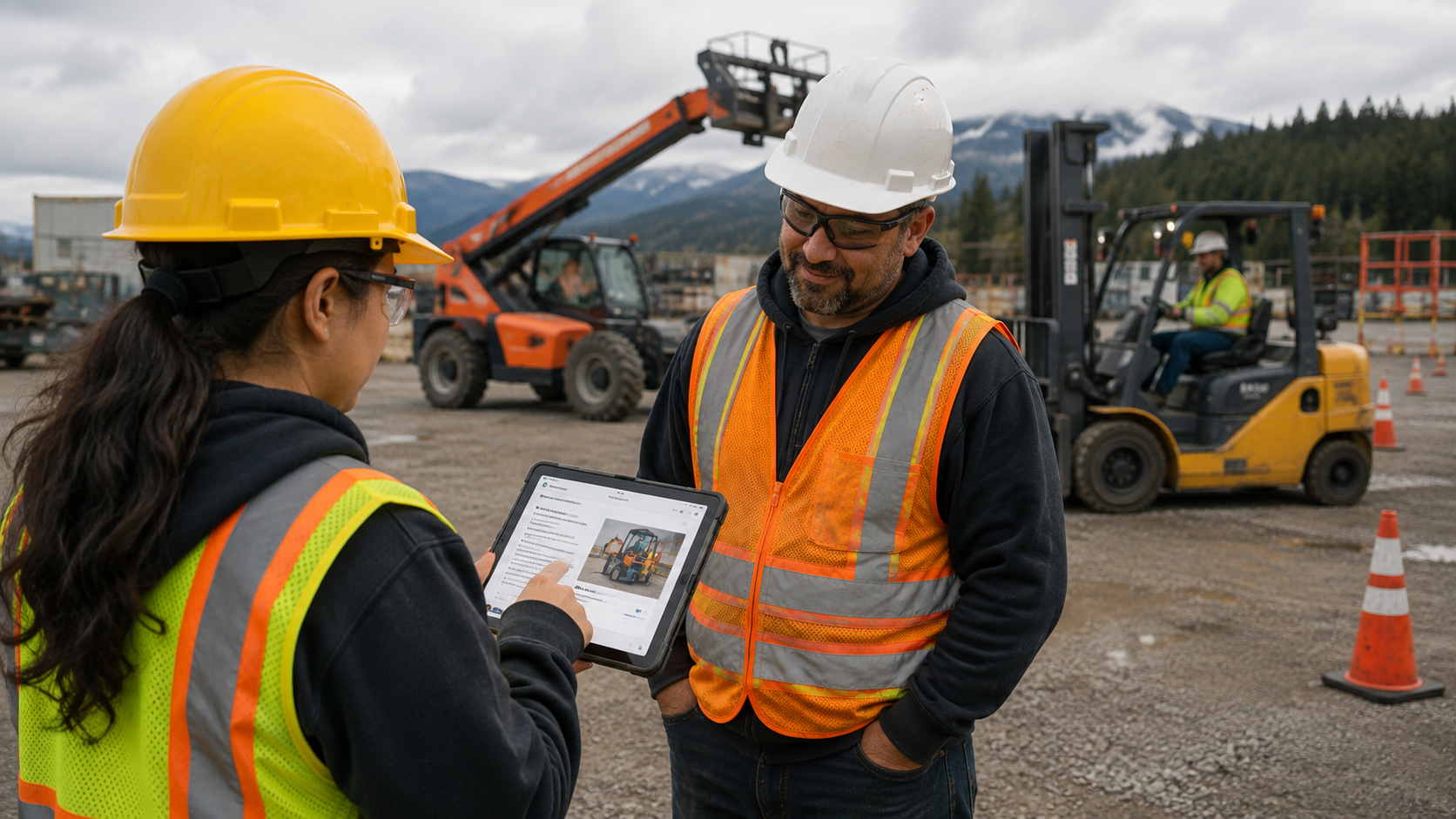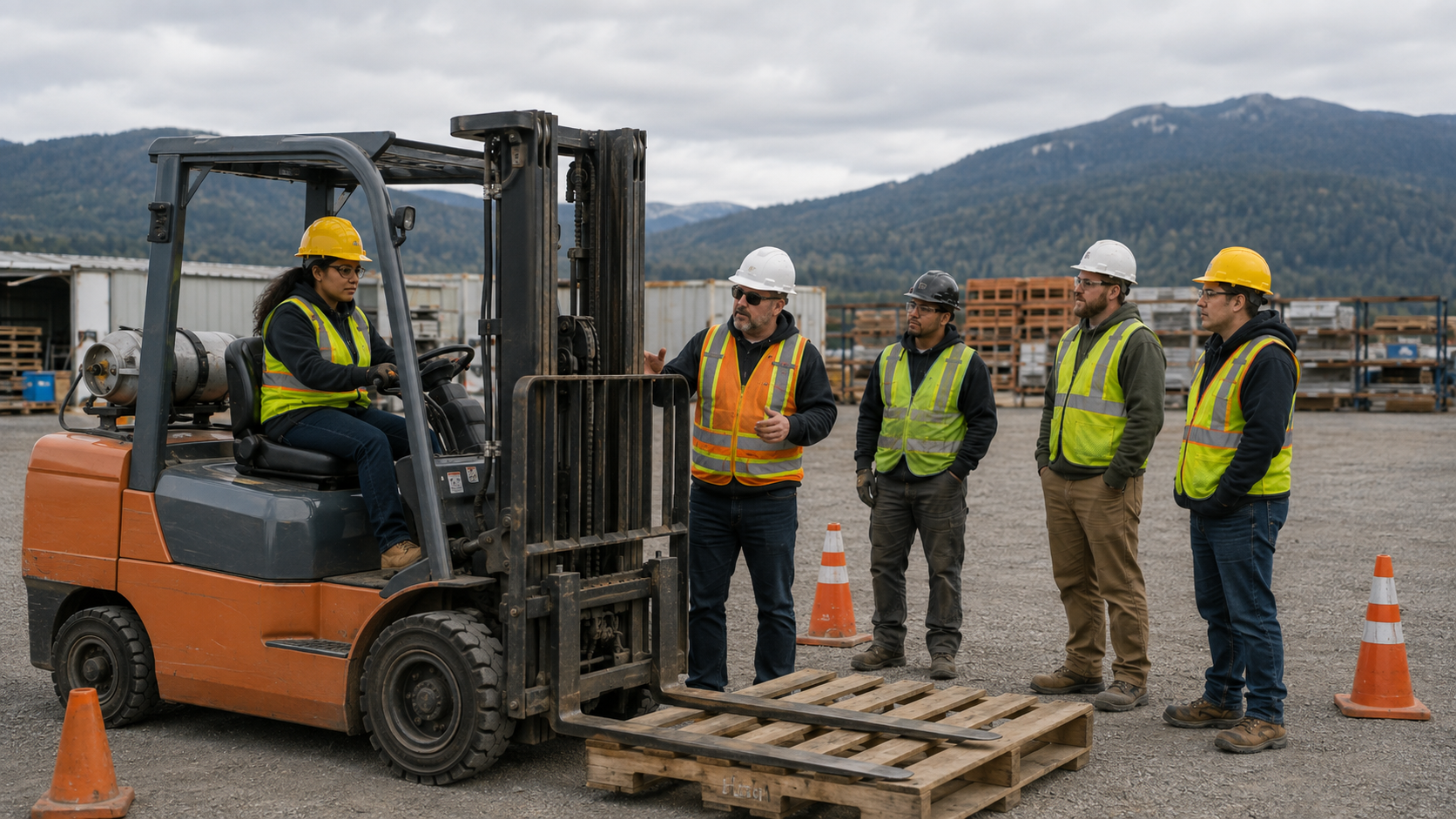
Picture this: your crew sits through forklift training in a room that looks nothing like where they actually work. The information is fine. The trainer is fine. But the whole time, the crew is mentally translating, taking what they hear and trying to map it onto a worksite that is not in front of them. Some of it sticks. Some of it gets lost in translation.
Now picture the same training happening on your site, with your equipment, in the space the crew works every day. The translating stops. The examples are not hypothetical because the crew is standing in them. That shift, from translating to recognizing, is what changes the learning experience.
This blog is about that difference. Not the logistics of onsite training, but what it does to how a crew actually learns. We will look at why the environment shapes the experience, what onsite training makes more visible, how real crews benefit, and what onsite training still needs to work well.
Why the Training Environment Changes the Learning Experience
Real Surroundings Make Examples Easier to Understand
When training happens on your site, the trainer is not describing a worksite. They are pointing at one. The aisles, the ramps, the loading zones, the yard surfaces, the traffic patterns are all right there as teaching material.
That changes how examples land. A trainer can say, look at this corner, this is the kind of spot where visibility drops, and the crew is looking at the actual corner. There is no gap between the lesson and the place. The example is easier to understand because it is not an example at all. It is the worksite.
It also keeps the crew engaged. It is harder to tune out when the trainer is talking about the exact spot you drive through every shift. The familiarity pulls attention in rather than letting it drift.
Operators Can Connect Training to Daily Decisions
Forklift operation is a series of small decisions made throughout a shift. Where to slow down, how to approach a load, when to wait for a pedestrian to clear. Onsite training lets the crew connect what they are learning to those exact decisions, in the exact places they make them.
We are not going to promise this guarantees improved performance, because no training format does that on its own. But connecting the lesson to the daily decision, in the place the decision happens, gives the training a better chance of carrying over. The crew is learning in context, not in the abstract.
What Onsite Training Can Make More Visible
Equipment Condition and Inspection Habits
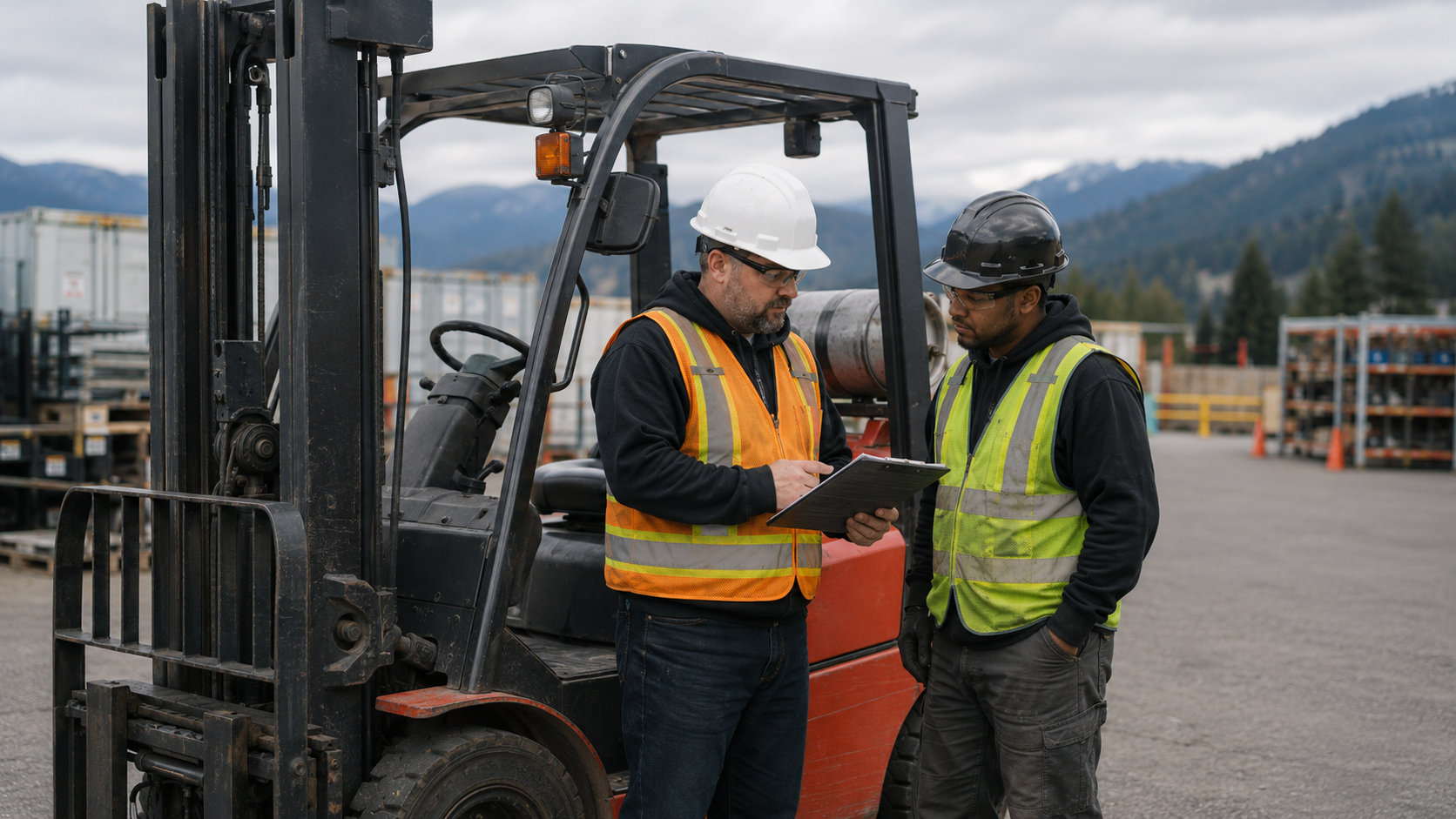
Inspection is one of those topics that can feel routine until it is taught on the actual machine. When the training happens on your forklift, in your work setting, the inspection lesson stops being a checklist and becomes a habit tied to a specific piece of equipment.
Operators learn what to look at on the machine they actually run. Where the wear tends to show. What normal looks like on that forklift, so they can notice what is not normal. The actual equipment and the actual work setting shape the discussion in a way a generic machine in a generic room cannot.
Travel Paths and Site-Specific Movement
A lot of forklift work is about movement through space, and that space is specific to your site. Onsite training makes that movement visible in a way a classroom cannot.
The training can walk through the actual travel paths, the pedestrian areas, the material staging zones, the loading points, the spots where visibility is limited. The crew sees the real routes and the real pinch points. That is site-specific movement taught on the site, not described from a diagram.
How Real Crews Benefit From Worksite Context
New Workers See Expectations in the Actual Environment
For a new worker, onsite training doubles as a kind of structured onboarding. They are not just learning forklift operation in general. They are learning it in the environment they are about to work in.
That means the expectations are set in context from the start. The new worker sees where things happen, how the site flows, what the work actually looks like. When they start their first real shift, the environment is already familiar because the training happened in it. That is a smoother start than learning the equipment in one place and the site in another.
It can also shorten the awkward early period where a new operator is technically trained but still figuring out the site. Onsite training folds those two learning curves into one, so the new worker is not starting from scratch on the layout.
Experienced Workers Can Connect the Course to Familiar Habits
Experienced operators bring real habits to the training, built over years of running the equipment. Onsite training gives those habits something to connect to. The course content meets the operator where they actually work.
This is not about blaming experienced operators for anything. It is about practical reinforcement. When the training happens in the familiar environment, an experienced operator can connect the course content to what they already do, notice where a habit may have drifted, and pick up the reinforcement without the session feeling like it is talking down to them.
| Learning Factor | Offsite Generic Setting | Onsite Forklift Training |
| Examples | Described, then mentally translated by the crew | Pointed at directly, no translation needed |
| Inspection lesson | Taught on a generic machine | Taught on the forklift the crew actually runs |
| Site movement | Explained from a diagram | Walked through on the real travel paths |
| New workers | Learn equipment and site separately | Learn both together in the real environment |
| Experienced workers | Course content stays abstract | Connects to familiar habits and real spaces |
| Carry-over | Crew bridges the gap on their own | Lesson is already tied to the worksite |
What Onsite Training Still Needs to Be Effective
A Prepared Training Area
Onsite training works best when the site is ready for it. That means a suitable area where the hands-on portion can happen safely, and the right equipment available for the session rather than out on a job.
This does not need to be elaborate. A trainer can work with most setups. But a quick conversation in advance about what area and what equipment will be used keeps the session focused. The learning experience is better when the first part of the day is not spent sorting out logistics that should have been settled earlier.
A Focused Crew and Clear Attendance Plan
The other thing onsite training needs is a crew that can actually focus on it. Because the training happens on the worksite, there can be a pull back toward regular work. A clear attendance plan helps protect the session.
Decide who is attending, make sure they can step away from regular duties for the training, and set the expectation that the session is the priority for that window. The onsite setting is an advantage, but only if the crew is present for the training rather than half in it and half back on the job.
How Supervisors Should Support the Session
Share Recurring Issues Before Training Starts
Supervisors usually know things the trainer would benefit from hearing. The recurring mistake that keeps coming up. The question that never quite gets answered. The spot on the site where operators always hesitate.
Sharing those details before the training lets the trainer build the session around them. You are not exposing a weakness by mentioning these things. You are giving the trainer the practical material that makes the session land harder. The more real the input, the more useful the training.
Think back over the last few months on the site. The near miss that made everyone pause. The new attachment the crew worked out on their own. Those are the details that turn a standard session into one built for your crew.
Reinforce Expectations Afterward
The session is the start, not the finish. What supervisors do afterward is what carries the training into daily work. Reinforcement, attention, and task assignment all keep the learning alive.
This does not need to be heavy. Brief mentions of what the training covered. Visible attention to the practices the session focused on. Connecting task assignment to what the crew is now trained for. Onsite forklift training gives the crew a strong shared starting point, and consistent supervisor reinforcement is what turns that start into a lasting habit.
How VIF Safety Training Can Help Plan Onsite Forklift Training
Discuss Worksite Details Before Booking
The conversation with VIF Safety Training starts with your worksite. Share the equipment, the work environment, the crew, and the recurring issues your supervisors have noticed. From there, the discussion can shape a session built around your operation.
That worksite-first approach is what makes the learning experience different. The onsite forklift training Nanaimo employers book through VIF Safety Training is planned around the real environment, so the crew learns in context rather than in the abstract.
Use the Onsite Page as the Primary Next Step
Once the worksite details are clear, the path forward is clear. The Onsite Forklift Training Nanaimo page is the starting point for the booking. If the conversation points toward other formats, forklift training services Nanaimo and Worksafe Forklift Training Nanaimo are the connected options to discuss.
Visit the Onsite Forklift Training Nanaimo page for service details, or reach out to VIF Safety Training directly. Bring your worksite details, and the conversation can move quickly to a session that fits your crew and your site.
Onsite forklift training changes the learning experience by closing the gap between the lesson and the worksite. The crew stops translating and starts recognizing, because the examples are the actual aisles, the actual equipment, the actual routes they work every day.
Share your worksite details with VIF Safety Training and get a session planned around your real environment. The crew learns in context, and the training has a better chance of carrying over. Call 250-889-2074 or use the contact form to start.
Frequently Asked Questions
How does onsite forklift training change the learning experience?
Onsite forklift training closes the gap between the lesson and the worksite. Instead of describing a work environment, the trainer points at the actual aisles, equipment, and travel paths. The crew stops mentally translating generic examples and starts learning in the real context where they work.
Can onsite forklift training use our actual equipment?
Yes, and that is one of the main advantages. When the inspection lesson and the hands-on portion happen on the forklift your crew actually runs, operators learn what to look at on that specific machine. Share your equipment details during the booking conversation so the session is built around it.
What should employers prepare before onsite forklift training?
Prepare a suitable area where the hands-on portion can happen safely, make sure the right equipment is available rather than out on a job, and set a clear attendance plan so the crew can focus on the session. A short planning conversation with VIF Safety Training covers the rest.
Is onsite forklift training useful for experienced operators?
Yes. Onsite training gives experienced operators practical reinforcement in their familiar environment. The course content connects to habits they already have, helps surface where a habit may have drifted, and does so without the session feeling like it is talking down to them.
Can onsite training reduce the need to send crews offsite?
Onsite forklift training brings the session to your worksite, so the crew stays on the property rather than traveling to a separate location. Whether onsite is the right fit depends on your equipment, crew, and site, which the booking conversation with VIF Safety Training can confirm.
How do I book onsite forklift training in Nanaimo?
Visit the Onsite Forklift Training Nanaimo page for service details, or call VIF Safety Training at 250-889-2074. Share your worksite details, equipment, and crew so the conversation can shape a session built around your real environment.