In workplaces across British Columbia, forklifts are the workhorses of construction, warehousing, manufacturing, and shipping operations. They lift thousands of pounds, move heavy materials, and keep productivity humming. But in the wrong hands? They become one of the most dangerous pieces of equipment on any site.
Skipping forklift training isn’t just a bad idea — it’s a serious risk that can cost lives, damage property, and land your business in deep legal trouble.
Let’s break it down: what really happens when companies cut corners on forklift training?
1. People Get Hurt — Or Worse
The most obvious and devastating risk: injury or death.
Every year in Canada, dozens of workers are seriously injured or killed in forklift-related accidents. Many of these incidents involve:
- Tipping forklifts
- Collisions with pedestrians
- Falls from elevated forks
- Loads dropping or shifting
- Entrapments between the forklift and structures
And the common factor in most of these cases? Lack of proper training.
Operators who aren’t trained often:
- Misjudge load capacities
- Don’t understand the center of gravity
- Fail to conduct safety checks
- Ignore speed limits or blind spots
It only takes one mistake for someone to end up in the hospital—or not come home at all.
2. You Could Be Breaking the Law
In British Columbia, it’s not a suggestion — it’s a legal requirement.
What the Law Says
Under WorkSafeBC Regulation OHS Section 16 (Mobile Equipment), no person may operate a forklift unless they’ve had “adequate instruction in the safe use of the equipment.”
And since September 1, 2021, training must meet CSA Standard B335-15, which sets specific benchmarks for:
- Theory instruction
- Practical training
- Assessment
- Refresher cycles (every 3 years minimum)
Failing to comply doesn’t just risk fines — it sets your business up for serious legal exposure if an accident occurs.
3. Your Company Can Be Sued or Prosecuted
Let’s say an untrained operator crashes into a support beam, causing structural damage — or worse, injures a co-worker. Here’s what happens next:
- WorkSafeBC investigation
- Possible stop-work orders
- Fines up to hundreds of thousands of dollars
- Personal liability for supervisors
- Civil lawsuits from injured parties
- Criminal negligence charges if gross misconduct is found
No insurance company will cover you if they find out the operator wasn’t properly trained.
In legal terms, this falls under “failure to exercise due diligence.” That’s not just a policy issue — it’s a breach of your legal duty of care.
4. You Lose Productivity and Profit
Untrained forklift operators often:
- Take longer to complete tasks
- Mishandle materials
- Damage racks, pallets, or product
- Causes unplanned downtime from accidents
Lost time is lost money.
Even without a catastrophic event, poor forklift operation chips away at your margins — from slower load-outs to warehouse delays and repair costs.
Proper training helps your workers do the job safer, faster, and more efficiently. That translates directly into profit.
5. Equipment Gets Damaged
Forklifts aren’t cheap, and neither is the infrastructure around them.
Untrained operators often:
- Slam into racking systems
- Puncture walls or roll-up doors
- Knock over inventory
- Damage the lift itself through poor handling
Even small dings or misuse can lead to thousands in repairs and downtime. And again, insurance claims may be denied if the operator was unqualified.
6. Your Safety Culture Erodes
Let’s be blunt: if one person is allowed to operate a forklift without certification, everyone notices. It sends a message that safety doesn’t really matter — or worse, that following the rules is optional.
Over time, that erodes your entire safety culture. Workers stop speaking up. People start cutting corners. Accidents increase.
On the other hand, investing in proper training shows your team that you take their safety seriously. That builds trust, boosts morale, and helps retain skilled employees.
7. Refresher Training Isn’t Optional Either
A one-and-done approach doesn’t cut it. Regulations require refresher training every 3 years, or sooner if:
- A near miss or incident occurs
- A new forklift model is introduced
- The operator is observed performing poorly
Skipping this step carries all the same risks — and WorkSafeBC audits are increasingly checking for ongoing compliance, not just initial certification.
Real-World Case Study: A $90,000 Lesson
A BC-based distribution company allowed a warehouse worker to operate a forklift despite no formal training. In 2023, that operator tipped the lift while turning too sharply with an elevated load. The result:
- $15,000 in damaged product
- A severely injured employee
- A $90,000 fine after a WorkSafeBC investigation
- Loss of a major contract with a safety-conscious client
The kicker? The company thought “hands-on experience” was enough. It wasn’t.
The Simple Fix: Get Certified
The good news is, avoiding all of this is simple and affordable.
At VIF Safety Training, we provide:
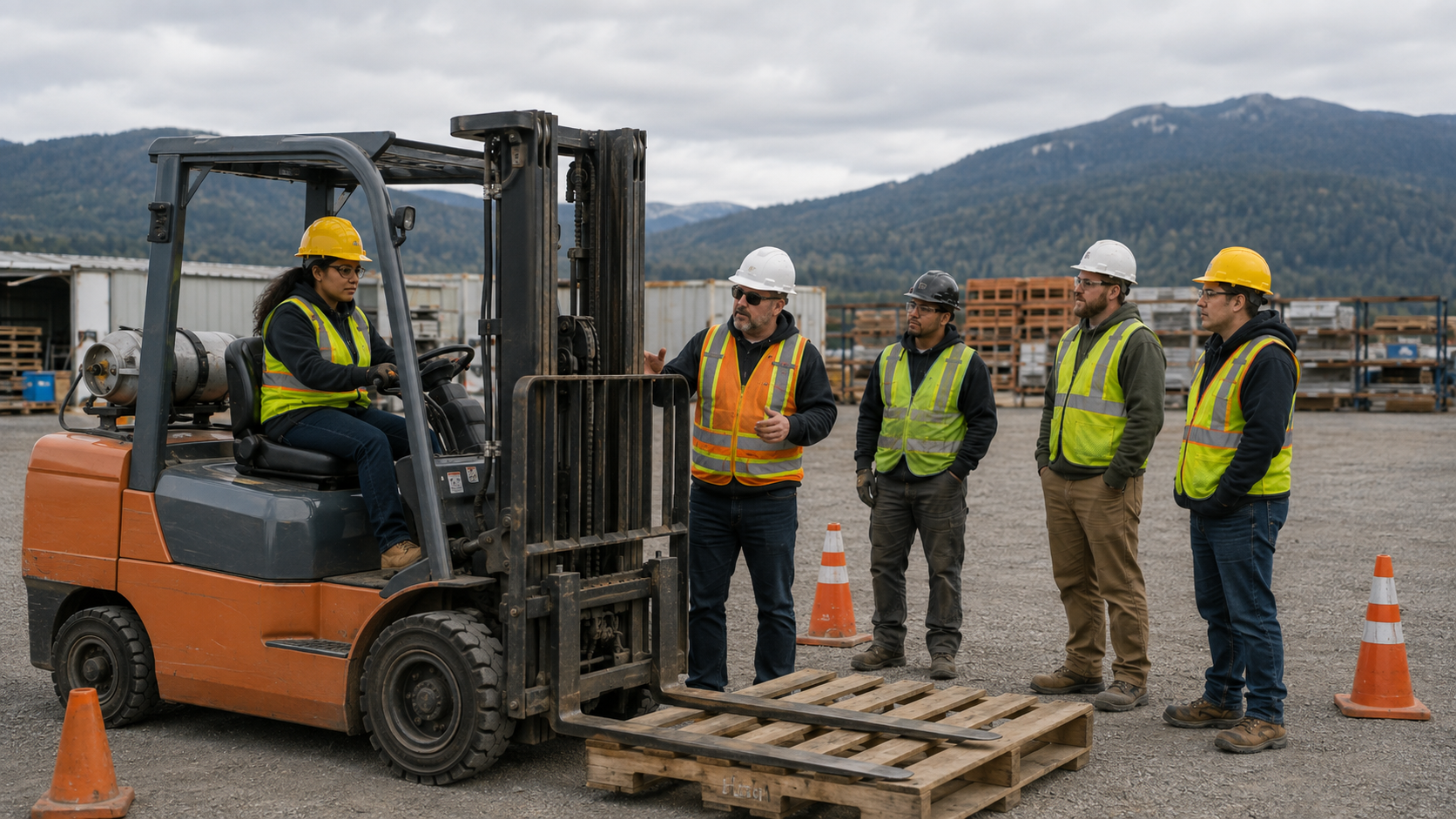
- CSA-compliant forklift certification
- On-site training at your facility, minimizing disruption
- Instruction by a Red Seal-certified tradesman and Canadian Forces veteran
- Options for refresher training and multi-equipment courses
- Certification is valid across BC
We train in Campbell River, Victoria, Nanaimo, and beyond — with practical, real-world instruction that keeps your team sharp and compliant.
Final Thought
Forklift training isn’t just a box to check — it’s a business-critical investment. Skipping it risks lives, damages your reputation, and exposes you to massive legal and financial liability.
So ask yourself: Is saving a few dollars worth risking your crew, your company, and your future?
Because when things go wrong, you can’t say you didn’t know better.
Ready to Train Smarter?Get your team certified the right way — the first time.
Call 250-889-2074 or contact us to book your forklift training session today.